Introduction
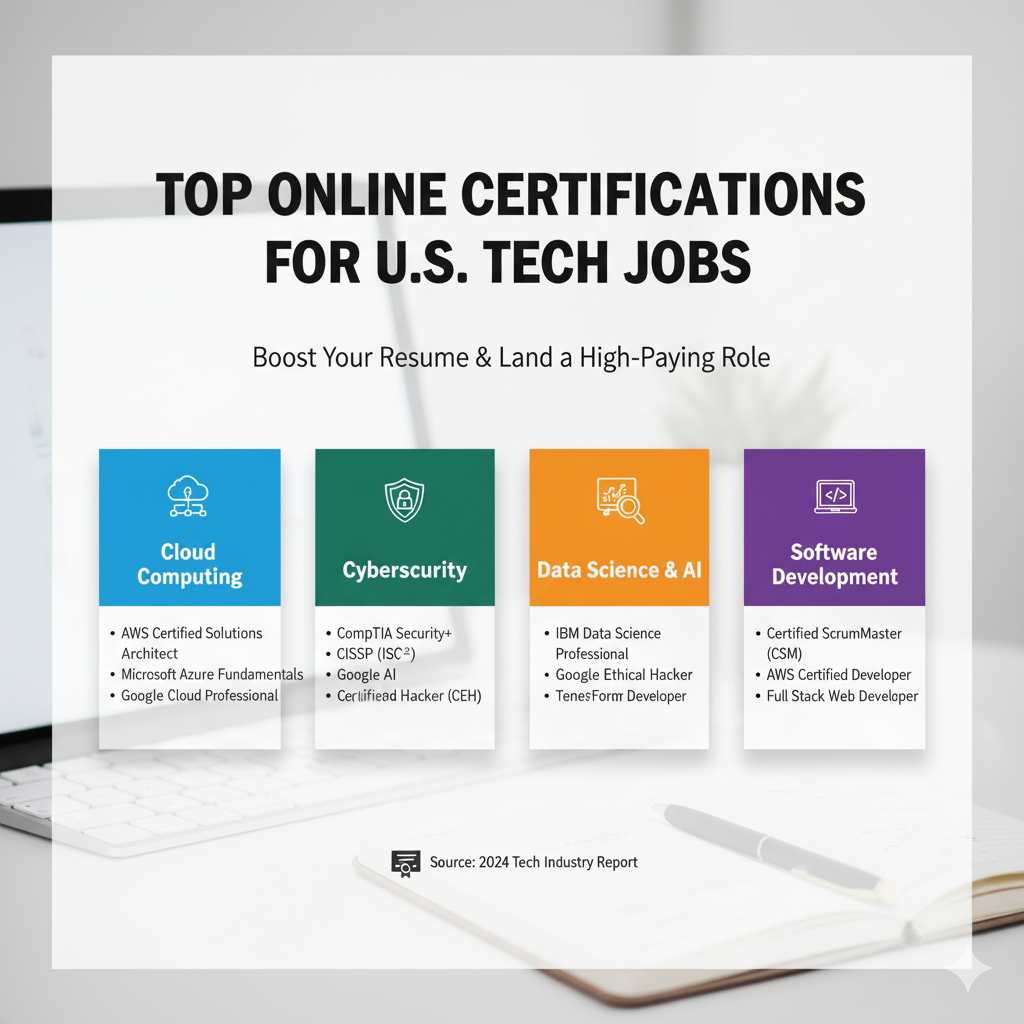
The U.S. tech industry is evolving faster than ever. From artificial intelligence to cybersecurity U.S. tech industry and cloud computing, every major innovation demands new skills and employers are watching closely. In this competitive job market, online certifications have become the gateway to better opportunities.
Whether you’re a fresh graduate, a career changer, or an international professional aiming for a U.S. job, certifications can validate your expertise and make your resume stand out. They not only showcase your technical proficiency but also prove your commitment to continuous learning something every tech employer values.
In the past, degrees dominated hiring decisions. Today, the focus has shifted to skills, portfolios, and practical knowledge. Recruiters increasingly prioritize candidates who hold recognized online certifications from trusted platforms like Google, AWS, Coursera, and Microsoft.
This blog explores the best online certifications to get hired in the U.S. tech industry in 2025 covering fields like AI, data science, cloud computing, cybersecurity, and software development. We’ll discuss why each matters, where to get it, and how it can fast-track your career in America’s most dynamic job sector.
AI and Machine Learning The Future of U.S. Tech Jobs
1. Google Professional Machine Learning Engineer
Google’s Machine Learning certification has become a gold standard for professionals aiming to build AI-driven solutions. It covers topics like model design, data preparation, and deploying machine learning pipelines all crucial skills in industries from U.S. tech industry healthcare to finance.
Why it stands out:
U.S. companies investing in AI-first strategies seek professionals who can design intelligent algorithms. Holding this certification shows employers that you can handle both technical complexity and real-world applications.
Platform: Google Cloud
Duration: 3–6 months (self-paced)
Average U.S. Salary: $130,000–$160,000 per year
2. IBM AI Engineering Professional Certificate (Coursera)
Offered through Coursera, this certification teaches deep learning, natural language processing (NLP), and neural networks. It’s beginner-friendly but comprehensive enough to prepare you for AI-based roles across various industries.
Why it’s valuable:
Employers in the U.S. respect IBM’s long-standing presence in AI research. Completing this course signals that you’ve received training aligned with enterprise-grade AI development standards.
Data Analytics and Cloud Computing The Heart of Digital Transformation
1. Google Data Analytics Professional Certificate
Data-driven decisions are at the core of every U.S. tech company. Google’s Data Analytics certification helps learners understand data cleaning, analysis, and visualization using tools like SQL, Tableau, and R. It’s ideal for entry-level candidates and freelancers who want to break into tech quickly.
Why it’s in demand:
More than 75% of U.S. employers value data analytics skills across marketing, sales, and operations. This certification demonstrates analytical thinking and technical fluency both crucial for mid-tier tech roles.
2. AWS Certified Solutions Architect – Associate
Amazon Web Services dominates the U.S. cloud market, and this certification is one of the most sought-after credentials in tech hiring. It validates your ability to design scalable, secure cloud systems and deploy real-world solutions.
Why it matters:
Cloud roles pay some of the highest salaries in the industry. Whether you aim for positions like DevOps Engineer, Cloud Architect, or System Administrator, AWS certification boosts your credibility with leading employers.
Platform: Amazon Web Services
Duration: 4–6 months
Average U.S. Salary: $140,000–$170,000 annually
3. Microsoft Certified: Azure Fundamentals (AZ-900)
Azure continues to grow alongside AWS, especially among enterprise clients. This certification provides foundational knowledge of cloud concepts, pricing, and governance ideal for beginners or non-technical professionals moving into tech.
Cybersecurity Protecting the Digital Economy
1. CompTIA Security+
Cybersecurity threats in the U.S. are increasing rapidly, and companies need certified experts to safeguard their data. CompTIA Security+ is an entry-level certification that introduces concepts like threat detection, encryption, and network protection.
Why it’s valuable:
This certification is approved by the U.S. Department of Defense, making U.S. tech industry it ideal for government and private sector roles. It’s widely recognized and serves as a stepping stone to advanced certifications like CISSP or CEH.
Platform: CompTIA
Duration: 3 months (self-paced)
Average U.S. Salary: $90,000–$120,000
2. Certified Ethical Hacker (CEH)
If you want to explore the “offensive” side of cybersecurity, CEH by EC-Council is perfect. It teaches penetration testing, system vulnerability analysis, and ethical hacking tools.
Why it stands out:
CEH-certified professionals are in high demand by U.S. startups, defense contractors, and Fortune 500 firms. It’s an advanced credential that proves you can think like a hacker and defend systems effectively.
Average Salary: $115,000–$140,000 annually
Software Development and Project Management Building Tech Careers
1. Meta Front-End Developer Professional Certificate
Offered by Meta (Facebook) through Coursera, this course teaches HTML, CSS, JavaScript, and React the building blocks of modern web apps. It also includes portfolio projects that help you stand out in interviews.
Why it’s popular:
The U.S. market for web developers is booming. Companies prefer candidates who can demonstrate real projects, and this certification helps you do just that. It’s perfect for freelancers and remote job seekers too.
2. Google Project Management Professional Certificate
Even in tech, not every professional codes. Project management skills are critical for team coordination, budgeting, and communication. Google’s Project Management certificate offers practical lessons aligned with Agile and Scrum methodologies.
Why it’s valuable:
Project managers with digital skills earn higher salaries and are essential to every U.S. tech company. Completing this certification can lead to roles like Project Manager, Scrum Master, or Operations Lead.
Average U.S. Salary: $85,000–$120,000
3. Certified ScrumMaster (CSM)
Scrum is the backbone of modern software development. This certification helps professionals manage iterative projects efficiently and improve team collaboration. It’s especially valued by software following Agile methodologies.
Choosing Right Certification for Your Career Goals
Align Certifications with Market Demand
Before choosing a course, research which roles are most in demand in the U.S. tech sector. AI, data analytics, and cloud computing are currently leading, while cybersecurity is expected to grow exponentially through 2030.
Consider Your Career Stage
If you’re a beginner, start with foundational certifications like Google Data Analytics or Azure Fundamentals. Intermediate professionals can opt for AWS, Security+, or Meta Front-End Developer programs. Experienced candidates aiming for senior roles can pursue CEH, Google ML Engineer, or ScrumMaster certifications.
Focus on Practical Learning
Employers value hands-on projects more than theory. Pick certifications that U.S. tech industry include real-world labs, case studies, or portfolio-building tasks. They help demonstrate your technical ability and initiative during interviews.
Leverage Global Platforms
Trusted providers like Coursera, edX, Udacity, and LinkedIn Learning partner with top U.S. universities and companies. Their certifications carry industry credibility, recognized by hiring managers across the country.
Conclusion: Your Certification Is Your Gateway to the U.S. Tech Industry
The U.S. tech job market rewards skills, adaptability, and continuous learning. Online certifications give you the competitive edge needed to stand out among thousands of applicants whether you’re applying for your first role or switching careers.
From AI and cloud computing to cybersecurity U.S. tech industry and project management, each certification opens a unique path to success. The key is to choose programs aligned with your long-term goals and invest consistent time in learning, practicing, and applying new skills.
In the new era of remote hiring and skill-based recruitment, your certification is more than a document it’s your passport to global tech opportunities. Start now, stay consistent, and let your expertise do the talking.
Find Your Dream Job Today Explore Endless Career Opportunities and Secure Your Next Role with Best Job Tool




Leave a Reply