Introduction: How Global Remote Work Is Changing Salary Expectations
The rise of remote work has redefined what “earning potential” means in today’s job market. Professionals are no longer remote international jobs confined by geography, and companies now recruit from a global talent pool. This shift has led many to ask: How do U.S. salaries compare to remote international jobs?
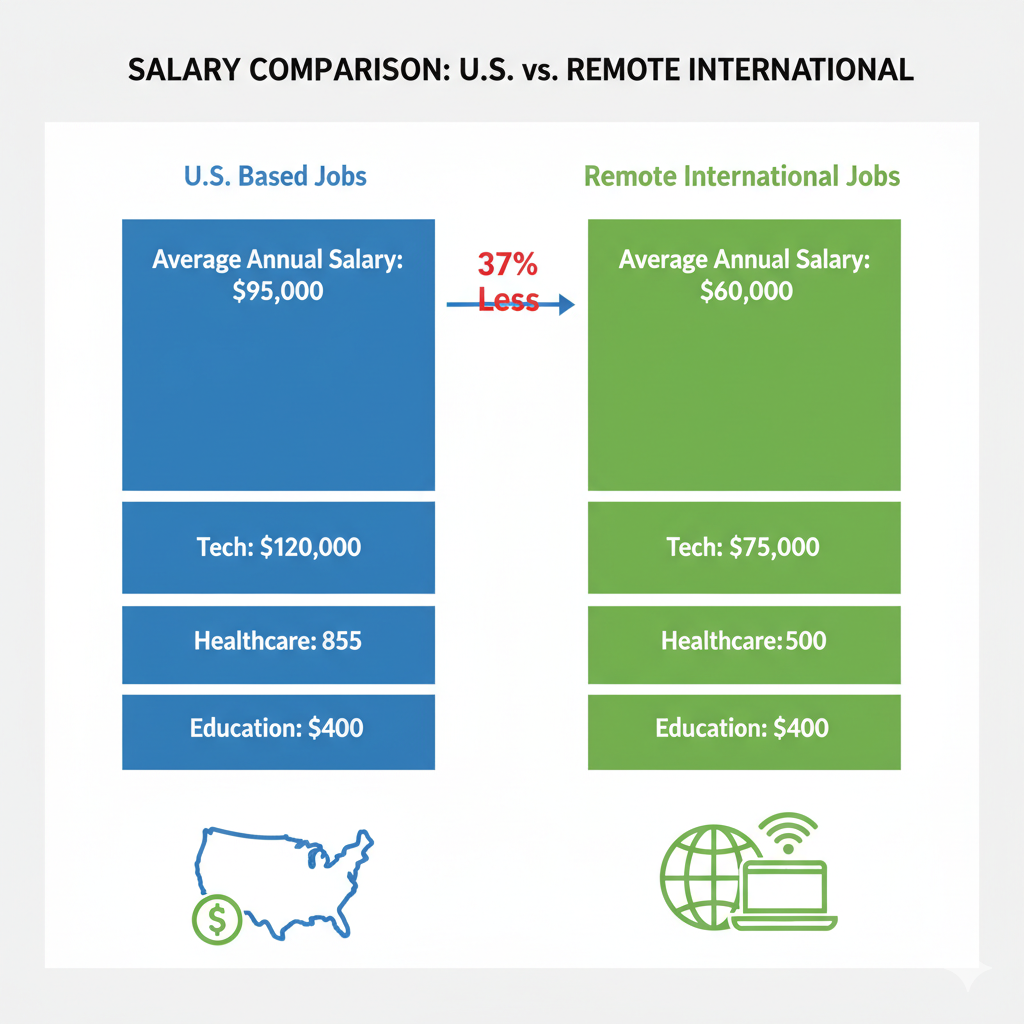
The answer isn’t simple. U.S. jobs have long been associated with higher pay, strong benefits, and career stability. Yet, remote international roles especially in fields like tech, marketing, and design are closing that gap fast. With cost-of-living adjustments, currency advantages, and performance-based compensation models, professionals worldwide are finding competitive alternatives outside traditional U.S. employment.
In this article, we’ll explore salary differences between U.S. and remote international jobs, why the gap is shrinking, and how professionals can strategically choose roles that align with both their financial goals and lifestyle preferences. Let’s dive deeper into the changing landscape of global pay.
The Evolution of Salary Structures in a Global Job Market
How Remote Work Redefined Compensation
Before the pandemic, location heavily influenced pay. U.S. employers offered higher salaries because they catered to regions with higher living costs. However, remote work changed this equation. Companies realized they could hire skilled professionals from regions like Eastern Europe, South Asia, or Latin America often at lower costs but with equal or even higher productivity.
Now, many organizations operate on a “value-based pay model” rather than strictly location-based salaries. That means your skills, output, and specialization matter more than your ZIP code. This evolution benefits both employers (who save on overhead costs) and employees (who gain access to better-paying opportunities globally).
The Impact of Cost-of-Living Adjustments
One key reason for salary variations is the cost of living. A $70,000 salary in the U.S. might seem generous, but in major cities like San Francisco or New York, it barely covers essentials. On the other hand, a $40,000 remote role for a professional living in India, Vietnam, or Poland can translate to a significantly higher standard of living.
Employers are also adapting to this reality. Some global companies, such as GitLab and Buffer, now use transparent salary calculators that factor in local economic conditions. The trend suggests that compensation parity is becoming more data-driven, ensuring fairer pay distribution across regions.
Comparing U.S. Salaries with Remote International Jobs
Tech and IT: The Global Equalizer
In the tech sector, remote international salaries are quickly catching up to U.S. standards. For example, software developers in the U.S. earn an average of $110,000–$130,000 annually. However, skilled developers working remotely from Eastern Europe or Latin America can make $60,000–$90,000 an impressive income relative to local costs.
What’s driving this shift? Global demand for developers, cybersecurity experts, and AI specialists. U.S. companies increasingly outsource to international professionals who provide comparable quality at lower rates, effectively balancing budgets without sacrificing talent.
Marketing and Creative Roles: Value over Location
Marketing, content creation, and design roles have also gone global. A U.S.-based digital marketer might earn $80,000 annually, while a remote marketer in Southeast Asia could earn $40,000–$50,000 for similar projects. Yet, the latter often experiences a better work-life balance and higher purchasing power due to lower living costs.
Moreover, international remote workers are building strong personal brands, freelancing across borders, and charging premium rates for specialized skills such as SEO strategy, UX writing, and motion design. The playing field is becoming more balanced and sometimes even tilts in favor of independent remote professionals.
Finance, HR, and Operations: The Salary Stability Factor
While tech and creative roles show flexibility, traditional fields like finance and HR still exhibit notable gaps. U.S. accountants or HR managers typically earn $75,000–$100,000, whereas remote professionals in similar roles may earn between $30,000 and $50,000. However, as automation tools streamline administrative work, many companies now reward international employees for strategic thinking, leadership, and cross-cultural collaboration skills that go beyond basic job titles.
Factors Influencing the Salary Gap
1. Skill Specialization and Experience
The more specialized your skill set, the less geography matters. A blockchain developer, AI researcher, or cybersecurity analyst can command global rates comparable to their U.S. counterparts. Niche expertise has become the great equalizer in global salary negotiations.
2. Company Size and Funding
Startups and small businesses often hire international talent to cut costs, while established corporations maintain higher pay scales for consistency. A U.S. startup might pay a remote engineer from Argentina $60,000, whereas a Fortune 500 firm could offer the same role at $90,000 or more, depending on internal policies and funding.
3. Currency Exchange and Taxation
Exchange rates play a hidden yet crucial role. For remote workers remote international jobs paid in U.S. dollars, a strong dollar means higher real income when converted to local currency. However, fluctuating rates and tax rules can affect net earnings. Remote professionals must understand how international tax treaties, digital nomad visas, and self-employment taxes influence their actual take-home pay.
4. Work Benefits and Flexibility
Salary is only one piece of the compensation puzzle. U.S. jobs often include benefits remote international jobs like healthcare, paid leave, and retirement contributions. In contrast, remote international jobs may offer flexibility, location independence, and freelance freedom instead. Many professionals now prioritize time freedom and personal autonomy over marginal pay differences, reshaping what “good compensation” truly means.
Why the Pay Gap Is Narrowing
Technology and Global Connectivity
The rise of collaboration platforms like Slack, Zoom, and Asana has erased geographical barriers. Companies no longer perceive remote workers as “outsiders” but as integral team members. This integration has naturally led to more equitable pay structures based on output, not origin.
Rise of Global Job Platforms
Platforms like Deel, Remote.com, and Oyster have made hiring across borders seamless and compliant. They handle payments, taxes, and contracts, allowing companies to pay fair, consistent salaries without the administrative burden. As more organizations adopt such tools, remote international salaries are stabilizing closer to U.S. benchmarks.
Demand for Global Talent
With industries like AI, data analytics, and cybersecurity expanding rapidly, talent shortages in the U.S. have forced employers to widen their reach. To attract the best global candidates, companies are offering competitive compensation packages sometimes even exceeding domestic averages for high-demand skills.
Shift Toward Outcome-Based Pay
More firms are measuring success through remote international jobs deliverables rather than hours worked. This performance-based approach rewards productivity and innovation, giving remote professionals the same earning potential as U.S.-based employees if they can demonstrate strong results.
Conclusion
The salary comparison between U.S. jobs and remote international roles reveals a clear trend: the world of work is flattening. While U.S. salaries remain higher on paper, international professionals increasingly enjoy similar financial outcomes once the cost of living, taxes, and lifestyle factors are considered.
For employees, the lesson is clear: focus on building specialized, high-demand skills. For employers, the opportunity lies in embracing diverse global talent while ensuring equitable pay practices.
Remote work has democratized opportunity. Today, earning a U.S.-level salary doesn’t always require living in the U.S. just the right skills, strategy, and connectivity.
As technology continues to bridge economies, the next era of work may not be defined by where you live, but by what you can deliver.
Find Your Dream Job Today Explore Endless Career Opportunities and Secure Your Next Role with Best Job Tool




Leave a Reply