Introduction
India’s job landscape is transforming rapidly. With the rise of technology, automation, and hybrid work models, the way companies compensate employees has changed drastically. Today, salary structures in India’s Tech, FMCG India’s tech FMCG and services sectors, and Services sectors reflect not just market demand but also skills, roles, and regional differences.
For professionals entering or switching industries, understanding salary breakdowns is crucial. Base pay, bonuses, allowances, and benefits can vary widely between sectors and knowing these details helps you negotiate better offers and make informed career decisions.
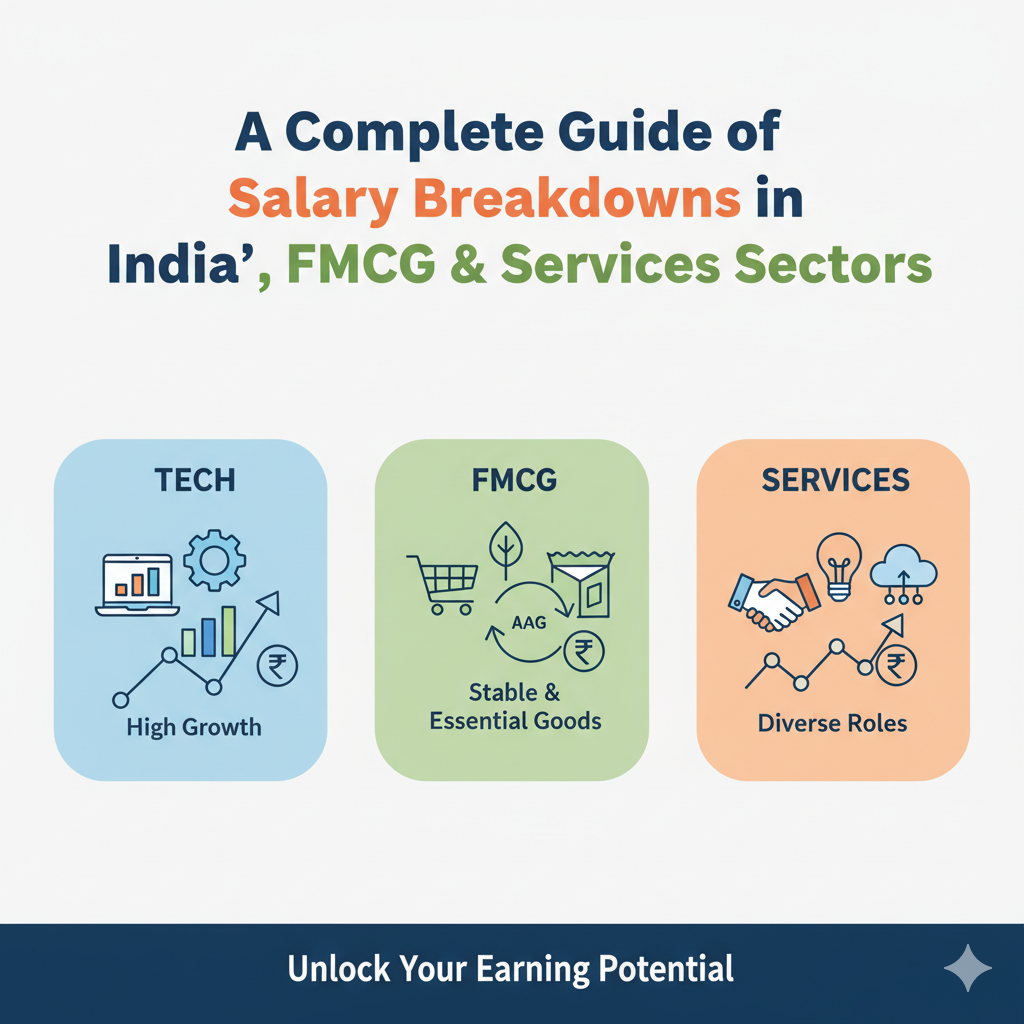
The tech industry continues to lead in high-paying roles, especially in software engineering, data science, and product management. The FMCG sector, on the other hand, rewards sales and operations professionals with performance-linked tech FMCG and services sectors incentives. Meanwhile, the services sector including BPO, consulting, and hospitality offers stability and rapid career growth through structured pay scales.
In this guide, we’ll dive deep into how salaries are structured across these three key industries in India, explore what drives pay differences, and highlight the most lucrative job roles in each field.
Salary Components What Makes Up Your Paycheck
Before comparing sectors, it’s important to understand the building blocks of an Indian salary package. Employers use the term CTC (Cost to Company) to represent the total amount spent on an employee annually. However, CTC is not the same as take-home pay.
1. Basic Salary
This is the fixed component and typically forms 35–50% of the total CTC. It’s fully taxable and serves as the foundation for other benefits like Provident Fund (PF) and gratuity.
2. Allowances
- House Rent Allowance (HRA): 40–50% of the basic pay (partially tax-exempt if you live in rented accommodation).
- Dearness Allowance (DA): Adjusts income for inflation (mostly applicable in public sector and manufacturing jobs).
- Transport and Special Allowances: Cover daily commute and miscellaneous expenses.
3. Bonuses and Variable Pay
Most private companies include a performance-based bonus, typically ranging from 10–30% of the annual package. In tech and FMCG, this can go even higher depending on results.
4. Provident Fund (PF) & Gratuity
Both are long-term savings contributions usually 12% of the basic salary for PF and around 4.8% of CTC for gratuity, payable after completing 5 years with an employer.
5. Perks and Benefits
These include health insurance, stock options (ESOPs), remote work allowances, and travel reimbursements all of which can significantly add to total compensation.
Salary Breakdown in India’s Tech Sector
Tech Industry Overview
India’s tech sector continues to be the highest-paying industry in 2025. Fueled by India’s tech FMCG and services sectors rapid digitization, AI adoption, and global outsourcing, tech companies are offering lucrative packages to skilled professionals in software development, cloud computing, data analytics, and cybersecurity.
According to NASSCOM, India’s IT industry is valued at over $245 billion, employing nearly 5 million professionals with salaries varying based on role, skill set, and company size.
Key Salary Drivers
- Skills & Certifications: Cloud (AWS, Azure), AI/ML, and cybersecurity certifications can increase pay by 20–30%.
- Employer Type: Global tech giants like Google, Microsoft, and Amazon pay premium packages compared to Indian service-based firms.
- Experience: Salaries jump exponentially after 5 years, especially for managerial or specialized technical roles.
Pro tip: Startups may offer slightly lower base pay but compensate with ESOPs (Employee Stock Options), which can lead to high long-term returns.
Salary Breakdown in India’s FMCG Sector
FMCG Industry Overview
The FMCG industry is one of India’s most dynamic and stable India’s tech tech FMCG and services sectors FMCG and services sectors employment sectors. From giants like Hindustan Unilever and Nestlé to emerging D2C brands, this sector thrives on sales performance, operational efficiency, and consumer insights.
While the base salary in FMCG may be lower than in tech, performance-linked bonuses and incentives make it highly rewarding. It’s a perfect fit for professionals in marketing, sales, supply chain, and brand management.
Key Salary Drivers
- Performance-Based Pay: Sales roles often include quarterly or annual bonuses based on revenue targets.
- Education: MBAs from top B-schools (IIMs, XLRI, SPJIMR) receive 25–40% higher offers.
- Geographic Location: Metro cities like Mumbai and Delhi command higher packages due to cost of living and brand headquarters.
Pro tip: FMCG careers emphasize long-term growth. Professionals who stay with a brand and consistently meet KPIs often move into regional leadership positions with significant pay hikes.
Salary Breakdown in India’s Services Sector
Services Sector Overview
The services sector which includes BPOs, consulting, hospitality, retail, and financial services accounts for over 55% of India’s GDP and remains a major employment generator. This sector rewards communication, customer handling, and process management skills.
Though entry-level salaries may appear modest, growth potential is high due to structured increments and opportunities for specialization or global transfers.
Key Salary Drivers
- Communication Skills: Fluency in English and client interaction abilities often determine promotion speed.
- Shift Flexibility: Night shifts or international process roles offer 20–25% higher pay.
- Employer Reputation: Leading firms like Accenture, Deloitte, and Infosys BPM offer India’s tech FMCG and services sectors better compensation and global exposure.
Pro tip: Continuous upskilling through certifications (like Lean Six Sigma, Business Analysis, or HR Analytics) can increase earning potential significantly within the services domain.
Comparing Salary Growth and Benefits Across Sectors
1. Salary Growth Rate
- Tech: Fastest growth; salaries can double within 3–5 years due to demand for digital skills.
- FMCG: Moderate growth; promotions depend on sales performance and market expansion.
- Services: Steady growth with strong long-term stability.
2. Work-Life Balance
- Tech: Flexible schedules and hybrid setups.
- FMCG: Frequent travel and target-driven roles.
- Services: Fixed shifts but often customer-dependent workloads.
3. Additional Perks
- Tech: ESOPs, remote work, learning budgets.
- FMCG: Company cars, travel allowances, and brand discounts.
- Services: Healthcare plans, incentives, and job security.
Insight: While tech professionals earn the highest average pay, FMCG professionals India’s tech FMCG and services sectors often enjoy better benefits and tangible rewards, and services employees gain consistent stability with global exposure.
Conclusion:
Each of India’s major sectors Tech, FMCG, and Services offers distinct salary structures and growth paths.
If you’re driven by innovation and technical expertise, the tech industry India’s tech FMCG and services sectors is your best bet for high-paying roles and rapid career progression. Those who thrive in leadership, sales, and marketing can excel in FMCG, where rewards are tied to results and brand performance. Meanwhile, if you value job security, structured growth, and global exposure, the services sector provides an excellent long-term career foundation.
The key is to align your skills, personality, and financial expectations with the right industry. Understanding salary breakdowns helps you plan strategically whether you’re negotiating your first job offer or aiming for a major career shift.
In today’s competitive landscape, knowledge is your best leverage. The more you understand the nuances of compensation, the better equipped you are to build a rewarding career in India’s diverse and ever-evolving job market.
Find Your Dream Job Today Explore Endless Career Opportunities and Secure Your Next Role with Best Job Tool



Leave a Reply