Introduction
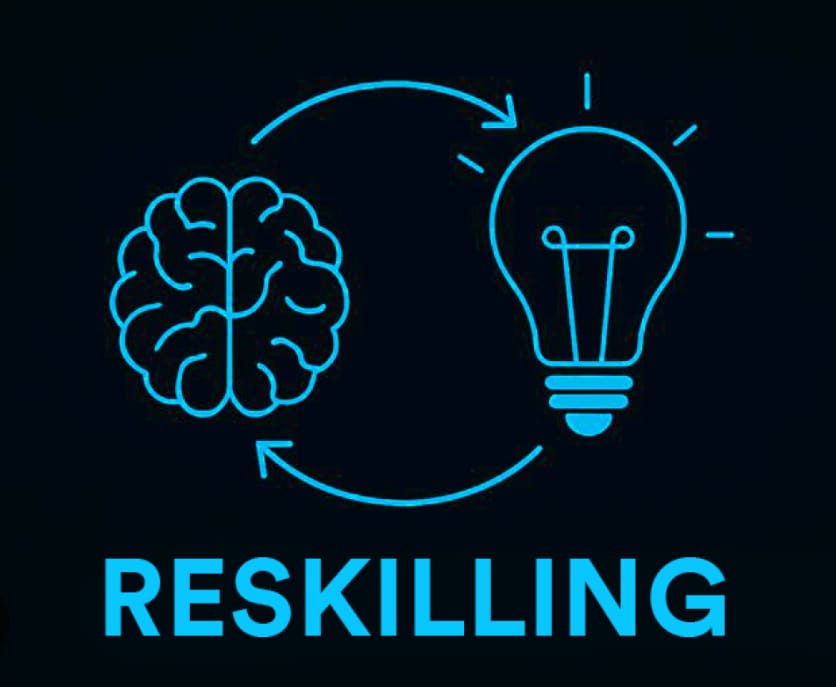
Automation refers to the use of technology—such as robots, artificial intelligence, and software—to perform tasks that were traditionally done by humans. This concept is not new; automation has existed since the Industrial Revolution when machines began replacing manual labor. However, today’s automation is far more advanced, driven by AI, robotics, data analytics, and machine learning. And reskilling with automation and AI is very important.
The global automation market has been expanding rapidly, with companies adopting technology to cut costs, boost productivity, and minimize human error. From manufacturing and logistics to banking and healthcare, every industry is incorporating some form of automation to improve efficiency.
Impact of AI and Automation on Jobs
By 2030, automation will have permanently transformed the global job market. Many roles we see today—such as factory workers, drivers, cashiers, and clerical staff—will either disappear or change beyond recognition.
1. Manufacturing and Factory Jobs
Manufacturing is one of the earliest sectors to embrace automation. Robotic arms, assembly-line robots, and smart sensors have replaced manual labor in factories around the world.
Tasks such as assembling parts, welding, and packaging can now be completed by machines faster and with fewer mistakes. This shift has already caused a decline in low-skilled factory jobs in countries like China, the U.S., and India.
2. Transportation and Delivery Jobs
The transportation sector is undergoing a massive technological revolution. Self-driving vehicles, drones, and automated logistics systems are becoming more reliable and cost-efficient.
Truck drivers, delivery drivers, and taxi drivers are among the most at-risk workers. Major companies such as Tesla, Waymo, and Uber are investing heavily in autonomous driving technologies. Once these systems become mainstream, the demand for human drivers will decrease significantly.
Similarly, warehouse and logistics roles—such as inventory sorting and parcel delivery—are increasingly handled by robots. Amazon, for example, uses robotic systems to move and organize packages more efficiently than humans.
3. Retail and Cashier Positions
The retail industry has been transformed by automation and e-commerce. Self-checkout kiosks, online payment systems, and cashier-less stores are becoming common.
Retail giants like Amazon Go and Walmart have introduced fully automated stores where customers can shop, scan, and pay without interacting with a cashier.
Traditional retail jobs such as cashiers, store clerks, and inventory checkers are gradually disappearing, replaced by digital systems that require minimal human intervention.
4. Administrative and Clerical Jobs
Office-based roles that involve repetitive tasks are particularly vulnerable. Positions like data entry clerks, payroll administrators, schedulers, and file clerks can easily be automated using AI software and cloud-based management systems.
With the rise of tools like chatbots, AI-powered scheduling assistants, and document automation platforms, administrative professionals are seeing many of their responsibilities replaced by machines.
To stay relevant, employees in these roles must learn digital tools, analytics, and project management skills that go beyond routine administrative work.
5. Customer Service and Support Roles
Customer service jobs are being rapidly automated with the help of AI chatbots and voice assistants. These systems can handle thousands of queries simultaneously, offer 24/7 service, and continuously improve through machine learning.
While complex issues may still require human empathy and problem-solving, most routine inquiries—such as order tracking, refund requests, or password resets—can now be resolved without human involvement.
Companies benefit from faster response times and lower costs, making automation an attractive choice in this area.
The Need for Reskilling
Reskilling is not just about adding new abilities to your resume—it’s about staying relevant, competitive, and confident in a fast-changing job market. By clearly identifying your dream job, analyzing skill gaps, choosing the right mix of hard and soft skills, and using modern learning methods, you can strategically prepare for career success. Leveraging technology, networking with industry professionals, and applying your skills through freelance projects or side hustles can accelerate your growth. The key is to keep learning continuously and adapting to emerging trends. When you actively invest in your personal and professional growth, you move closer to your dream job every day.
Reskilling and networking go hand in hand when it comes to achieving your dream job. While reskilling equips you with the latest hard and soft skills required in your industry, networking helps you showcase those skills to the right people. By joining professional communities, attending industry events, and connecting with experienced professionals, you gain valuable insights into emerging trends and in-demand abilities. These connections can lead to mentorship, job referrals, or collaborative projects that strengthen your portfolio. When you combine continuous learning with strong professional relationships, you not only improve your capabilities but also open doors to career opportunities faster.
Key Skills for the AI Age
1. Critical thinking, creativity, and problem-solving.
Critical thinking means analyzing a situation logically and making smart decisions. In future jobs, only seeing data will not be enough instead taking data-driven and creative decisions will be important. The people who find innovative solutions with a different perspective, their demand will increase in every industry.
2. Emotional intelligence
Emotional intelligence improves communication and understanding between team members. When team members understand the emotions of each other’s than communication becomes clearer and respectful. People can share ideas freely in this environment and collaboration becomes strong naturally, which improves productivity and creativity.
Conflict is normal in teamwork but emotionally intelligent people handle that calmly. They listen to others and try to understand the situation instead of reacting immediately. It helps to decrease unnecessary misunderstandings and problems get solved easily which helps to create a healthy and peaceful work environment.
When team members understand each other’s emotions and perspectives then they build trust for each other. Emotionally intelligent people show empathy and value everyone’s contribution. It creates mutual respect for everyone in the team and everyone feels important.
3. Adaptability
In today’s fast-changing world, adaptability and flexibility are the most important soft skills. These skills work when you need to adjust to new technology, tools, or a job role. People who accept changes quickly become successful in the future workforce. Also staying open for lifelong learning is important because knowledge and skills are never static.
4. Digital skills
A digital skill is the ability to use digital tools, technologies, and platforms to perform tasks, solve problems, create content, or communicate effectively in the digital world.
In simple words, digital skills are what you need to live, work, and succeed in today’s technology-driven environment.
Examples of Digital Skills:
- Basic digital skills: Using email, browsing the internet, creating documents, or using social media.
- Advanced digital skills: Coding, data analysis, digital marketing, graphic design, cybersecurity, and AI.
How Americans Are Reskilling?
Skill gaps mean the difference between the skills you currently have and the skills required for your dream job. To identify these gaps, research job descriptions, conduct a self-assessment of your skills, and seek feedback from industry professionals. Once you know which skills are missing, you can create a targeted learning plan to become fully prepared for your dream job.
Tools and platforms for skill gap analysis (LinkedIn Skills Assessment, Coursera, etc.)
Skill gap analysis means comparing your existing skills with the skills required for your desired job.
There are some helpful tools to analyse the skill gap.
Other platforms
There are many more platforms like Best Job Tool, Udemy, Skillshare, and LinkedIn learning, with the help of these platforms, you can also fill your skill gaps.
LinkedIn skills assessment
LinkedIn has a skill section in which you can give your online assessment, which includes MCQs. If you clear that online assessment, then you can see a ‘Verified Skill Badge’ on your profile.
Coursera
Coursera is an online learning platform that provides courses from the world’s best universities and companies.
You can do job role-specific courses to fill their skill gaps. For example, if you are preparing for a digital marketing role and you don’t have skill of Google Analytics, then you don’t have to worry, you just have to go on a coursera and take the online course on Google Analytics, and you will be done with the digital marketing role.
Emerging Career Paths After Reskilling
In 2025, job market is changing rapidly because of the AI, automation, and remote work trend. Some skills demand are growing day by day such as;
a) Technology & Data Skills
- AI & Machine Learning Basics
- Data Analytics & Visualization
- Cybersecurity Awareness
- Cloud Computing
- Automation Tools (Zapier, Power Automate)
b) Digital Communication Skills
- Remote Collaboration Tools (Notion, Trello, Slack) ka use
- Social Media Management
- Online Presentation and Public Speaking
c) Creative & Problem-Solving Skills
- Design Thinking
- Creative Content Creation
- Critical Thinking & Decision Making
Conclusion: The Great Reskilling
This article, “The Great Reskilling: How Americans Are Adapting to AI and Automation,” covered how technology, especially artificial intelligence and automation, is transforming the U.S. job market and why continuous learning has become essential. It explained which industries are changing, what new skills are in demand, and how people, companies, and the government are working together to prepare for the future of work.
By reading this article, you’ll understand the importance of reskilling to stay relevant in the modern job market. It will help you identify key skills to learn, explore new career opportunities, and take practical steps to adapt successfully in the age of AI and automation.
Read more informational blogs here.

Leave a Reply