
Why Soft Skills Matter More in 2026?
In 2026, soft skills have become more important than ever because workplaces are changing faster than we imagined. With the rise of AI and automation, many routine and repetitive tasks are now done by machines. This means companies rely more on people who can think creatively, solve problems, and make decisions that technology cannot handle.
Organizations are also giving greater value to human-centric skills—such as communication, empathy, teamwork, and leadership—because these qualities help build stronger relationships and create a positive work culture. Machines may improve productivity, but only humans can understand emotions, collaborate effectively, and bring innovative ideas.
Another major reason soft skills matter more in 2026 is the shift toward hybrid and remote work environments. When teams work from different locations, clear communication, adaptability, time management, and accountability become essential. Employees who can manage themselves well and work smoothly in digital environments are more likely to succeed and stand out.
Difference Between Hard Skills and Soft Skills
When selecting skills to learn, focus on those that align with your dream job’s requirements and your personal strengths. Maintain a balance between hard skills (technical, job-specific abilities) and soft skills (communication, problem-solving, teamwork). Research industry trends to identify which skills are in high demand now and in the future. Prioritize learning skills that will have the most impact on your employability and career growth. Continuously update your skills to stay competitive in the evolving job market.
Hard skills vs soft skills
| Basis | Hard Skills | Soft Skills |
| Definition | These are technical, measurable skills, which you learn by through training, courses, or from direct work experience. | These are personal traits and interpersonal abilities. It defines by your style of work and interaction with someone. |
| Examples | Coding, Graphic Design, Data Analysis, SEO, Accounting, Foreign Languages. | Communication, Problem-Solving, Time Management, Teamwork, Leadership, Emotional Intelligence. |
| Importance | Hard skills are directly job-related and are clearly mentioned in job descriptions. Recruiters can verify them through tests, assignments, or certifications. | Soft skills help you adapt, collaborate, and work efficiently. They are in demand in every industry, whether the role is technical or non-technical. |
Both the hard skills and the soft skills are equally important for our career growth.
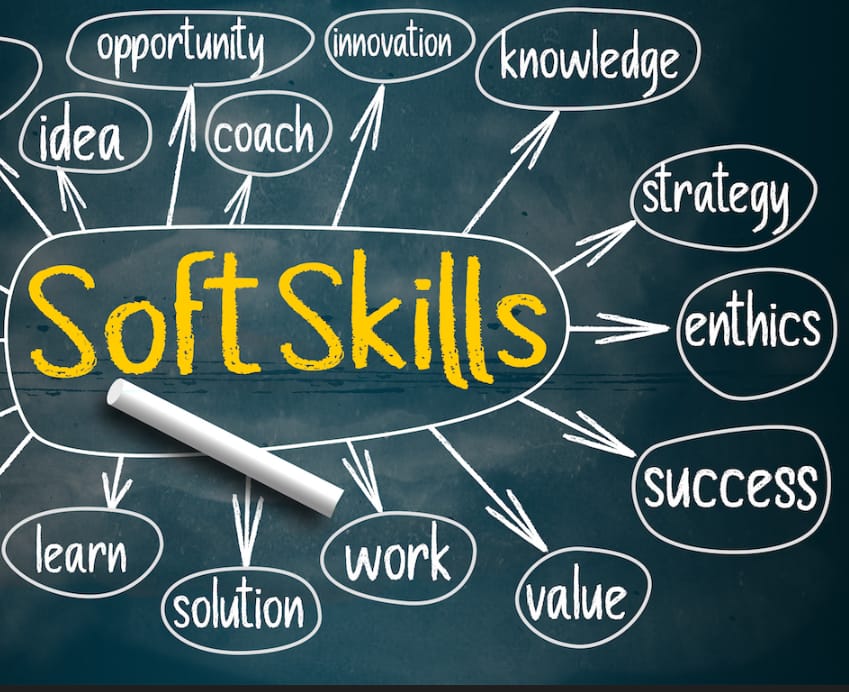
Essential Soft Skills in 2026
1. Emotional Intelligence (EQ)
Emotional intelligence improves communication and understanding between team members. When team members understand the emotions of each other’s than communication becomes clearer and respectful. People can share ideas freely in this environment and collaboration becomes strong naturally, which improves productivity and creativity.
Conflict is normal in teamwork but emotionally intelligent people handle that calmly. They listen to others and try to understand the situation instead of reacting immediately. It helps to decrease unnecessary misunderstandings and problems get solved easily which helps to create a healthy and peaceful work environment.
When team members understand each other’s emotions and perspectives then they build trust for each other. Emotionally intelligent people show empathy and value everyone’s contribution. It creates mutual respect for everyone in the team and everyone feels important.
2. Adaptability and Flexibility Skills
In today’s fast-changing world, adaptability and flexibility are the most important soft skills. These skills work when you need to adjust to new technology, tools, or a job role. People who accept changes quickly become successful in the future workforce. Also staying open for lifelong learning is important because knowledge and skills are never static.
3. Critical Thinking and Problem-Solving Skills
Critical thinking means analyzing a situation logically and making smart decisions. In future jobs, only seeing data will not be enough instead taking data-driven and creative decisions will be important. The people who find innovative solutions with a different perspective, their demand will increase in every industry.
4. Communication Skills
Whether you are in the office or doing remote work effective communication works everywhere. Clarity should be in every format of communication whether it’s verbal, written, or digital communication. Also, active listening is important because right communication does not happen just by speaking it also by understanding. Focusing on clarity and tones in digital messages or virtual meetings has also become an essential skill.
5. Creativity and Innovation Skills
Creative doesn’t mean art only, it also means thinking out of the box in every field. Innovative people find new ideas and unique perspectives which impact directly in the growth of the company. In the time of AI and automation, human creativity is one and only skill that is irreplaceable.
6. Leadership and Collaboration
Leadership does not only mean leading a team, it also means guiding people with empathy. In future workplaces, leaders will be the person who motivates the team, can work effectively with people from diverse backgrounds. Collaboration has become a key factor of success whether it’s remote or hybrid.
7. Time Management and Self-Discipline
Time management is the backbone of successful work. It allows you to stay focused, complete tasks efficiently, and meet deadlines without unnecessary stress. With proper planning and discipline, workers can maintain a healthy work-life balance, avoid burnout, and make the most of the flexibility that jobs offer. Moreover, mastering time management builds reliability and professionalism, helping you grow in your career while staying productive and motivated every day.
8. Resilience and Stress Management
In today’s dynamic world stress and uncertainty is a part of everyone’s life. Resilience means staying positive in situations as well. The professionals who know how to handle their emotions and stress achieve success in the long term.
9. Growth Mindset
A growth mindset means having a mind that says to learn from every situation. These people take feedback as a chance for improvement and to upgrade themselves continuously. In the future workplace, growth will be impossible without adaptability and continuous learning.
How Candidates Can Build Soft Skills?
1. Online courses and certifications
- Online course
With platforms like Coursera, Udemy, LinkedIn Learning, and Skillshare, you can learn skills anytime and anywhere. Here you can find courses from beginner to experience level. - Certification
A certificate from recognized institutions adds value to your profile. Like a Google Analytics certificate or a Microsoft Excel certificate, prove your expertise. - Workshop
Workshops are short-term interactive sessions where you can directly learn practical skills from experts. It’s also very useful for networking.
2. Real-life experiences and volunteer work
Volunteering: Taking unpaid roles or community projects in your field of interest, which helps you gain real-world experience and apply your skills practically. It also strengthens your portfolio and network.
Benefit: Real-world application of skills, practical exposure, and building industry connections — without always spending money on formal training.
3. Networking, mentorship, and feedback
Networking plays a crucial role in your upskilling journey because it connects learning with real-world opportunities. By joining professional communities, attending industry conferences, webinars, and workshops, and actively engaging with experts in your field, you gain insights into current trends, in-demand skills, and practical applications. These interactions often lead to mentorship, valuable career advice, and even job referrals. Networking also allows you to discuss your newly acquired skills, showcase your expertise, and collaborate on projects, which further enhances your portfolio. In short, networking bridges the gap between skill-building and career advancement, helping you grow faster and more effectively.
- LinkedIn networking
Connect with a professional with your targeted role. Message them politely to ask which skill is more useful in the field. - Informal interviews
Arrange a short online meeting where you would be asking about the career path and skill requirements. - Industry event
Attend industry events and seminars to know about the industry in detail and in person.
With these, you will understand which tools and software, soft skills are used why they are used in the actual work
Conclusion
Soft skills have become a defining factor for success in 2026. As technology continues to automate routine tasks, the skill that makes us human—communication, creativity, adaptability, emotional intelligence, and teamwork—are now more valuable than ever. These abilities help professionals grow, build meaningful workplace relationships, and stand out in a competitive job market.
Whether you are a student, job seeker, or working professional, focusing on developing strong soft skills will not only improve your performance but also prepare you for future opportunities. In a rapidly changing world, mastering soft skills is the key to building a stable, successful, and future-proof career.
You can read more informational blogs here,



Leave a Reply