
Introduction
Today we have come up with an amazing blog related to hiring manager interviews. Whether a person is a fresher or has experience, whether it’s their first interview or their hundredth one—just hearing the word interview makes most people nervous. Only a few people are not afraid of interviews because they know how to handle them, how to prepare for them, and what to do before giving their introduction.
Many people, when preparing for an interview—whether it is for a support role, hiring manager role, content writer role, accountant role, or any other position—only study about the role they are applying for. They research a little, prepare a little, and then give the interview. The result is usually rejection, because knowing only the job role is not enough.
A hiring manager expects that if you are coming for an interview, you should know everything from A to Z. You should understand the role, know about the company, and be aware of many other important things.
In this article, we will talk about all of this in detail. We will mainly focus on what you must do before the interview, during the interview, and after the interview when you are going for an interview with a hiring manager. So don’t ignore this article—just go through it once.
Understand the Role of a Hiring Manager
Hiring managers are the individuals responsible for selecting the right candidate for a specific position within a company. They ensure that the person being hired is a perfect fit for the team and the company.
The main roles of hiring managers are,
- Firstly hiring manager has to be aware of the job like which skills are needed, candidate will perform which task, and what type of person will be best for the role.
- They either approve the job description or make the job description themselves which explains skills, experience, and responsibilities clearly.
- Hiring managers create a shortlist which means they decide which candidate will perform the interview round after seeing their resume.
- They conduct an interview either alone or in a panel.
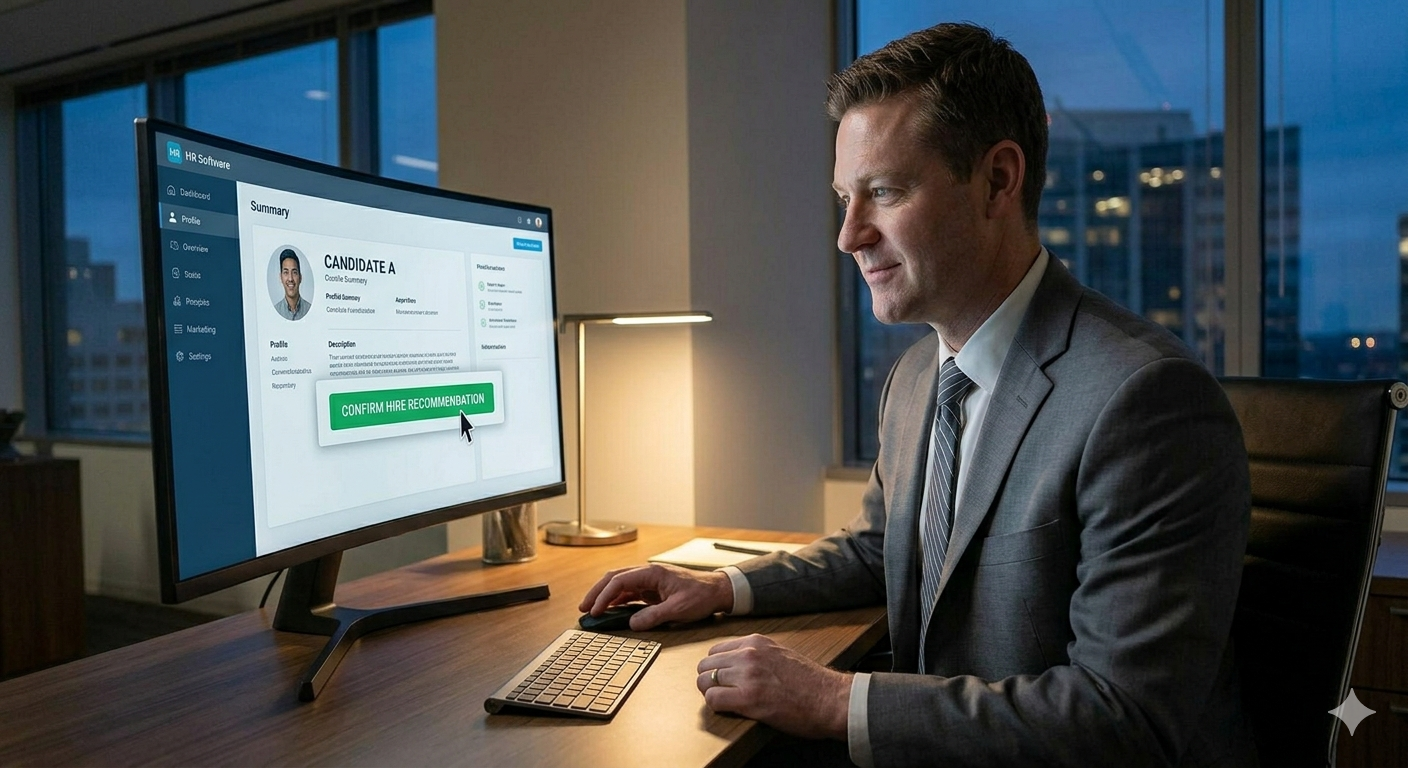
- The final decision is taken by the hiring manager whether the candidate will be hired or rejected.
Overall hiring managers are a “team builder” of a company, they decide who will join the team and grow the company.
How to Prepare for Hiring Manager Interviews?
1. Study the Hiring Manager Job Description Deeply
Understanding the job role is the first step to cracking a job interview. Many candidates directly start practicing, but without understanding the role and the expectations of the company, the preparation remains incomplete.
A job description works like a road map. The job description clearly mentions the type of candidate the company needs, such as coding skills, database, and system design knowledge. Skipping this means missing a chance.
Compare your skills with the job description. If any required skills are missing, then plan a short-term learning. For example, if the role requires SQL or Cloud, and you are weak in these skills, then focus on these.
2. Research the Company & Team
Researching about the company is important for every interview because the employer is not meeting you personally in the office. They have to trust only in your answers and in the interview.
- Firstly, you need to check the website and blog of the company. See which type of services are provided by them, their vision, and which values are important to them.
- Follow the social media pages of the company, such as LinkedIn or Twitter. Through this, you can understand their culture and communication style.
- If possible, read reviews of the company on Glassdoor or Indeed. Through this, you will get to know the company’s behavior with employees.
- Read the job description line by line. Link every skill and requirement with your experience.
3. Prepare a Strong Self-Introduction
Your introduction sets the tone for the entire interview, so it needs to be clear, confident, and concise. A strong introduction should include:
- Your name and background
- Your key skills and strengths
- A quick summary of your experience or achievements
- The value you can bring to the role or company
Keep it short—about 20–30 seconds—because interviews are usually fast-paced. A well-prepared introduction helps you start with confidence and creates a positive first impression on HR.
4. Prepare Stories Using the STAR Method
You can give structured answers to interview questions with the use of the STAR method.
Basically, STAR means Situation, Task, Action, and Result.
In a Situation, you have to explain the context or problem, the Task means what is your role or responsibility. The third one is Action, which means what steps you took to solve the problem, and the last one is Result, in which you have to share the outcome or learning.
This method makes your answers concise, clear, and impactful, and the interviewer can easily understand how you will perform in real situations.
If you want to practice and examples of interviews, then platforms like Best Job Tool provide you with tips and guides for mock interviews, which helps to improve soft skills and communication.
5. Show You Understand the Role of a Hiring Manager
During your interview, make sure the hiring manager knows that you clearly understand what the job is about. This means you should be familiar with the responsibilities, skills required, daily tasks, and how your role contributes to the company’s goals. When you show that you’ve researched the position well, it signals that you’re serious, prepared, and genuinely interested. It also helps the hiring manager feel confident that you can start quickly, adapt easily, and perform effectively from day one.
6. Prepare for Common Hiring Manager Questions
Giving an interview is an important part of our career. Interview questions can be confusing sometimes, whether you are a fresher or an experienced one. To remove this confusion and nervousness, you need to be prepared for it before the interview. Here are Common questions that are asked in an interview and their best answer which help interviewers understand your background and personality.
Examples:
Tell me about yourself – “I’m a graduate in [Your Field] with a passion for [Your Interest, e.g., digital marketing]. Over the past year, I’ve worked on projects that improved my skills in [Key Skill]. I’m now looking for an opportunity to apply my skills in a dynamic organization like yours.”
Why should we hire you? – “I believe my skills match your job requirements perfectly. I’m a quick learner, detail-oriented, and always eager to take on new challenges. I’m confident I can contribute to your team’s goals and add value from day one.”
Tell me about a time you faced a challenge at work.
“In my internship, I had to complete a report with limited data. (Situation) I gathered additional information from team members and online sources. (Task) I stayed late to ensure accuracy. (Action) The final report was well-received and used in the final presentation.
What are your strengths and weaknesses? – “My strength is strong communication — I can clearly convey ideas and work well in a team. My weakness was public speaking, but I’ve been actively working on it by attending workshops and practicing regularly.”
Describe a time when you worked under pressure.
“During college exams, I also had a project deadline. I made a clear schedule, divided my time efficiently, and stayed focused. I submitted the project on time and performed well in exams too.”
Where do you see yourself in 5 years?
“In five years, I aim to take on more responsibility, lead projects, and grow as a professional in this field. I want to continuously learn and help the organization achieve its long-term goals.”
7. Prepare Questions to Ask the Hiring Manager
An interview is not just a one-sided process; in fact, it’s a conversation. When you ask questions of the interviewer, it shows your genuineness and interest in the role. And you get a better idea about the role and work culture. It creates a professional impression which is why we have to ask one to two questions at the end of the interview. This shows confidence and seriousness.
Sample questions that you can ask are,
- Can you tell me what a typical day in this role looks like?
- What are the main goals or expectations for someone in this position?
- How is success measured for this role?
- What are the biggest challenges someone in this position might face?
- Are there opportunities for learning, growth, or career development?
- How would you describe the company culture?
- Is there any training provided for new joiners?
- What are the next steps in the interview process?
- What do you enjoy most about working here?
- What does the team structure look like, and who will I be working closely with?
These are the 10 sample questions, you can also ask these questions if you are going for an interview.
8. Present Yourself as “Job Ready”
Even without formal work experience, you can show employers what you’re capable of through projects, assignments, or personal initiatives. This demonstrates practical application of your skills and your ability to deliver results.
How to Highlight:
- Personal Projects: Examples include building a website, creating graphics, writing a blog, or developing a small app.
- Academic Work: Mention college or school projects that are relevant to the role. For instance, a marketing campaign project or a data analysis assignment.
- Competitions & Challenges: Participating in hackathons, design contests, or writing competitions adds credibility.
- Freelance or Volunteer Work: Even small freelance gigs or volunteer contributions count as experience.
Tip: Whenever possible, share links, screenshots, or portfolios. This gives employers concrete proof of your abilities and shows initiative.
9. Practice Communication Skills
Speaking clearly and confidently is very important for career growth. You do not need a strong accent or big vocabulary. Basic and clear English is good enough.
Ways to improve speaking:
Speak slowly and clearly
Fast speaking makes you sound nervous. Slow speaking makes you sound confident.
Use simple words
People understand you better when your language is simple and direct.
Practice speaking daily
You can practice with friends, family, or even in front of a mirror.
Join English speaking or communication groups
Practice improves fluency.
Work on your tone
Your tone should be calm, friendly, and respectful.
Record your voice
This helps you notice mistakes and improve.
Speaking is a skill that improves with regular practice. The more you speak, the better you become.
10. Dress Appropriately & Maintain Professional Etiquette
In a job interview, along with skills, professional behavior is equally important. The interviewer also notices your professionalism, punctuality, and communication style. Even if you are strong, a weak etiquette can leave a negative impression. Arriving on time for an Interview is very important. If the interview is virtual, then ensure that your setup is ready and you have a stable internet connection. Dressing should be professional, whether it is online or offline. It will reflect your seriousness and professionalism. At the time of the interview, present your answers clearly and confidently.
Develop the habit of giving short and concise answers. If you don’t know the answer to any question, then tell them honestly and explain your approach or logic. This honesty will highlight a problem-solving approach. Maintaining eye contact, upright posture, and a smile is important in a face-to-face interview. It shows your confidence and positivity. In online interviews, being attentive and engaging in front of the camera is also very important.
11. Stay Professionally Engaging
Pay attention to your body language. Make eye contact, smile slightly, and avoid unnecessary hand gestures. Sit straight, and be confident. Even if a question is difficult, stay calm and polite. Avoid negative comments about past experiences. Poor body language can lead to rejection. Never badmouth a previous company or boss. It makes you look unprofessional, no matter how bad the experience was. Don’t bring up salary or benefits at the start of the interview. Wait until the employer does or until later rounds.
So:
- Smile naturally
- Keep your posture open
- Nod when others speak
- Show active listening
People skills matter as much as technical skills.
12. Follow-Up After the Interview
our work does not end with the end of the interview.
- Send a thank you email within 24 hours.
- Mention highlights of the interview to feel personal.
- Highlight your interests and skills again.
Example: “Thank you for today’s conversation. I love to know about your communication strategy. I am excited to support the goals of your team through my content strategy and collaboration skills”.
An interview is your first chance to prove yourself as a strong candidate. Not only technical knowledge but also communication style, discipline, and adaptability are judged.
Every step is equally important, whether researching about the company, practicing interview answers, asking smart questions, or following up. If you take these seriously then you will leave a strong impression in your interview..
Common Mistakes to Avoid for Hiring Manager Interviews
Being overconfident or underconfident
Over-selling yourself or appearing too nervous can both work against you. Maintain a balanced and confident tone.
Speaking negatively about past jobs or managers
Never badmouth a previous company or boss. It makes you look unprofessional, no matter how bad the experience was
Not researching the company
If you haven’t researched anything about the company, then it is a big mistake. You should know the company’s LinkedIn page, website, or any recent news. You must know about the services that the company offers, the mission of the company, and the work culture of the company. Go with a proper research.
Not asking any questions
Asking 1-2 questions in the end of interview makes a good impression on interviewer. When you ask questions of an interviewer, it shows your genuineness and your interest in the role. And you get a better idea about the role and work culture. It’s a professional impression.
Poor body language
Poor body language can lead to rejection. Pay attention to your body language. Make eye contact, smile slightly, and avoid unnecessary hand gestures. Sit straight, and be confident.
For more interview tips, read our detailed guide on “Interview Preparation: QUESTIONS and How to Answer them”.
Conclusion
The role of a hiring manager is crucial in building a strong and capable team. They are responsible for understanding job requirements, evaluating candidates, conducting interviews, and making the final hiring decisions. Their work goes beyond selecting a candidate—they ensure the entire hiring process runs smoothly from job posting to onboarding. A good hiring manager helps the company bring in skilled, motivated, and culturally aligned talent that contributes to long-term growth and success.

Leave a Reply