Introduction
Education is changing very fast. In the past, students mainly learned from books and teachers in classrooms. They listened, memorized, and then gave exams to show what they learned. But the world today is very different. Technology is growing fast, jobs are changing quickly, and the skills needed for success are no longer only about remembering information. Today, students need to think, solve problems, work with others, and apply their knowledge in real life. This is why project-based learning (PBL) is becoming very important and is slowly becoming mandatory in schools and colleges.
What is Project-Based Learning?
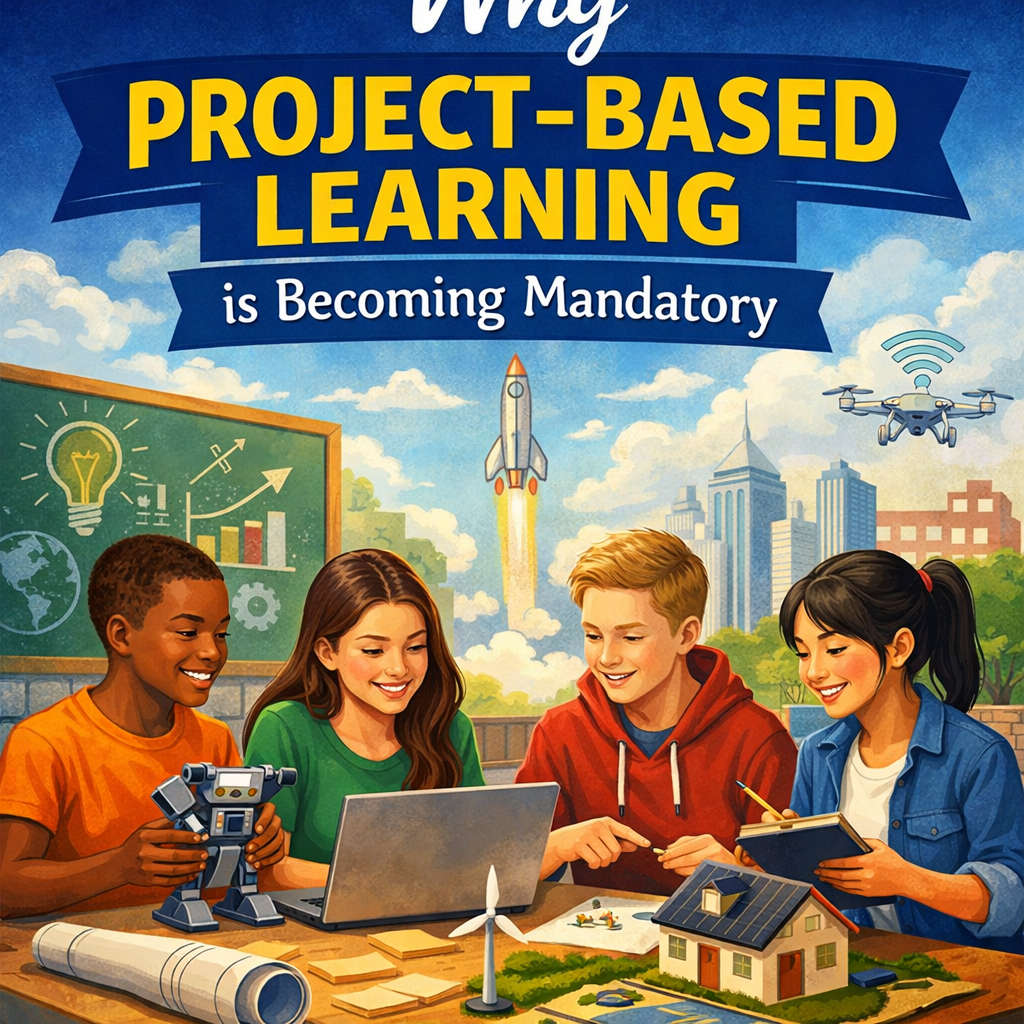
Project-Based Learning is a method of learning where students learn by doing projects. Instead of only reading from textbooks, students work on real-world problems or questions. They research, plan, and create solutions. They work in teams, use different resources, and present their results. In simple words, it is learning by experience and practice, not only by memorizing.
In PBL, students might:
- Build a model or a machine
- Conduct an experiment
- Create a website or an app
- Write a report about an issue in their community
- Design a solution for a problem
The key point is that students actively participate in learning and create something useful.
Traditional Learning vs Project-Based Learning
In traditional learning:
- Students mostly listen to teachers.
- Learning is often theoretical.
- Memorization is given more importance than understanding.
- Students often work alone.
- Assessment is based on exams and tests.
In project-based learning:
- Students participate actively.
- Learning is practical and hands-on.
- Understanding and applying knowledge is more important than memorization.
- Students often work in teams.
- Assessment is based on projects, presentations, and real outcomes.
This shows that PBL is more focused on real-life skills, not only academic knowledge.
Importance of Project-Based Learning
There are many reasons why project-based learning is becoming mandatory in modern education. Some of the main reasons are:
1. Develops Problem-Solving Skills
In project-based learning, students are given real problems to solve. They cannot just memorize answers from textbooks. They need to analyze the situation, think critically, and find solutions. This helps them develop problem-solving skills, which are very important in real life and in the workplace.
2. Encourages Critical Thinking
When students work on a project, they need to ask questions, gather information, and evaluate options. They learn to think carefully and make decisions based on evidence. This improves critical thinking, which is one of the most demanded skills today.
3. Improves Teamwork and Communication
Many projects require students to work in groups. They must share ideas, listen to others, and collaborate. This teaches students teamwork, leadership, and communication skills, which are essential in almost every career.
4. Enhances Creativity and Innovation
Project-based learning encourages students to come up with new ideas. They are not just following instructions; they are creating solutions in their own way. This improves creativity and innovation, which are highly valued in modern workplaces.
5. Makes Learning Relevant and Interesting
When students work on real problems or projects related to real-life situations, learning becomes more meaningful. They understand why they are learning something. This also increases their interest and motivation to study.
6. Builds Self-Management Skills
Projects often have deadlines and require planning, organization, and time management. Students learn to manage their work, set goals, and complete tasks efficiently. These are essential life skills.
7. Encourages Lifelong Learning
In PBL, students learn how to learn. They research, explore, and find answers independently. This encourages curiosity and lifelong learning, which is crucial in a world where knowledge and technology are constantly changing.
8. Prepares Students for Real-World Jobs
Many modern jobs do not only require knowledge but also skills like problem-solving, teamwork, creativity, and communication. Project-based learning prepares students for these challenges. Students who have experienced PBL can adapt better to real workplaces.
9. Develops Responsibility and Accountability
When students work on projects, they are often responsible for completing tasks and meeting deadlines. They learn accountability, responsibility, and the importance of doing quality work.
10. Encourages Use of Technology
Most projects today require students to use technology tools such as computers, software, and the internet. This helps students become tech-savvy, which is essential in today’s digital world.
Examples of Project-Based Learning
Project-based learning can be applied in almost every subject. Here are some examples:
- Science: Students can create a small garden to study plant growth.
- Mathematics: Students can design a budget plan for a school event.
- History: Students can research and present a local historical event.
- English: Students can write and perform a play or create a blog.
- Computer Science: Students can build an app or a website.
These projects make learning practical and interesting. Students can see the results of their work, which increases their confidence.
Benefits for Teachers
Project-based learning is not only good for students, but it also helps teachers. Teachers can:
- Observe student skills and strengths better
- Encourage active participation in class
- Make lessons more engaging and interactive
- Identify students’ weaknesses and help them improve
This makes teaching more rewarding and effective.
Challenges of Project-Based Learning
Even though PBL has many benefits, there are some challenges:
- Time-Consuming: Projects take more time than traditional lessons.
- Resource-Intensive: Some projects require materials, technology, or space.
- Teacher Training: Teachers need training to design and guide projects effectively.
- Assessment Difficulty: Evaluating projects can be more subjective than exams.
Despite these challenges, many schools are adopting PBL because the benefits outweigh the difficulties.
Why Schools Are Making PBL Mandatory?
Several reasons make PBL mandatory in modern education systems:
- Skills Demand: Employers want skilled employees, not just people with theoretical knowledge.
- Student Engagement: PBL keeps students motivated and reduces boredom.
- Global Competitiveness: Students with PBL experience are better prepared for global challenges.
- Holistic Development: PBL helps in developing intellectual, social, and emotional skills.
- Education Policies: Many countries are changing their education policies to include PBL in the curriculum.
Making PBL mandatory ensures that all students get the chance to develop real-life skills, not only academic knowledge.
How to Implement Project-Based Learning?
To successfully implement PBL, schools and teachers can follow these steps:
- Select a Real Problem: Choose a problem that is relevant to students’ lives.
- Plan the Project: Define goals, steps, resources, and timelines.
- Guide Students: Teachers should mentor and guide, not just give instructions.
- Encourage Collaboration: Promote teamwork and group discussions.
- Use Technology: Integrate digital tools to research, create, and present.
- Assess Effectively: Use rubrics, presentations, and reports for fair assessment.
- Reflect: Encourage students to reflect on what they learned and how they can improve.
Conclusion
Project-based learning is more than a teaching method; it is a modern approach to education. In today’s fast-changing world, students need more than books and exams. They need skills to think critically, solve problems, work in teams, and innovate. PBL provides these skills by letting students learn through experience.
Because of these benefits, many schools and education systems are making PBL mandatory. It helps students become responsible, skilled, and confident individuals who are ready for the challenges of the future. Project-based learning is not just about creating projects; it is about creating thinkers, innovators, and problem solvers.
In the future, students who learn through PBL will be better prepared to succeed in higher education, careers, and life. It is a step forward in making education practical, meaningful, and enjoyable.
Project-based learning is not just an option anymore; it is becoming a necessity for the 21st-century learner.
You can read more blogs here.




Leave a Reply