Introduction
First impressions matter more than most people realize. In interviews, networking events, or even casual conversations, you often get only a few seconds to explain who you are and what you do. That short window is where a personal elevator pitch becomes powerful.
A personal elevator pitch is a brief, clear introduction that explains your value quickly. It helps others understand your skills, goals, and strengths without confusion. When done well, it opens doors to opportunities, conversations, and connections.
Understand the purpose of an elevator pitch
Before writing your pitch, you need to understand why it exists. An elevator pitch is not a full life story. It is a focused summary designed to spark interest.
Its main purpose is to communicate value. You want the listener to understand what you do, what you’re good at, and why it matters. A strong pitch invites curiosity and follow-up questions rather than trying to explain everything at once.
Keeping this purpose in mind helps you stay concise and relevant.
Start with who you are and what you do
Every elevator pitch should begin with clarity. Start by introducing yourself and your professional identity. This could be your current role, field, or career direction.
Avoid vague statements. Instead of saying you “work in many areas,” be specific. Clear language builds confidence and credibility.
This opening sets the context. It helps the listener quickly place you and understand the direction of your experience.
Highlight the value you bring
After stating what you do, focus on the value you offer. This is the most important part of your pitch.
Explain how your skills help solve problems or create results. Employers and professionals listen closely to impact, not just responsibilities. Value-driven statements make your pitch memorable.
This section answers an unspoken question: “Why should I care?” When you address that clearly, your pitch becomes powerful.
Keep it simple and conversational
An elevator pitch should sound natural, not rehearsed or robotic. Simple language works best. Short sentences improve clarity and confidence.
Avoid industry jargon unless you are sure the listener understands it. A conversational tone helps build connection quickly.
When your pitch sounds like a normal conversation, people feel more comfortable engaging with you.
Tailor your pitch to your audience
One pitch does not fit every situation. Your elevator pitch should change slightly depending on who you’re speaking to.
When talking to recruiters, focus on skills and career goals. In networking settings, emphasize interests and strengths. For internal conversations, highlight collaboration and growth.
Adapting your pitch shows awareness and professionalism. It also increases relevance, which improves impact.
Add a future-focused element
A strong elevator pitch does not only describe the present. It also hints at where you are headed.
Mention your career direction or interests briefly. This shows ambition and clarity. Employers appreciate candidates who know what they want.
Future-focused statements also guide the conversation naturally toward opportunities and alignment.
Practice without memorizing
Practice improves delivery, but memorization reduces authenticity. Your pitch should feel flexible, not scripted.
Practice saying it out loud. Adjust words that feel uncomfortable. Focus on flow rather than perfection.
The goal is confidence, not flawless wording. When you sound comfortable, people listen more closely.
Common mistakes to avoid
Many people make simple mistakes that weaken their elevator pitch. Being too long is one of the most common issues. Overloading details confuses listeners.
Another mistake is focusing only on job titles instead of value. Titles change, but skills and impact matter more.
Avoid sounding unsure or apologetic. Confidence does not mean arrogance. It means clarity and belief in your skills.
Example of a strong elevator pitch structure
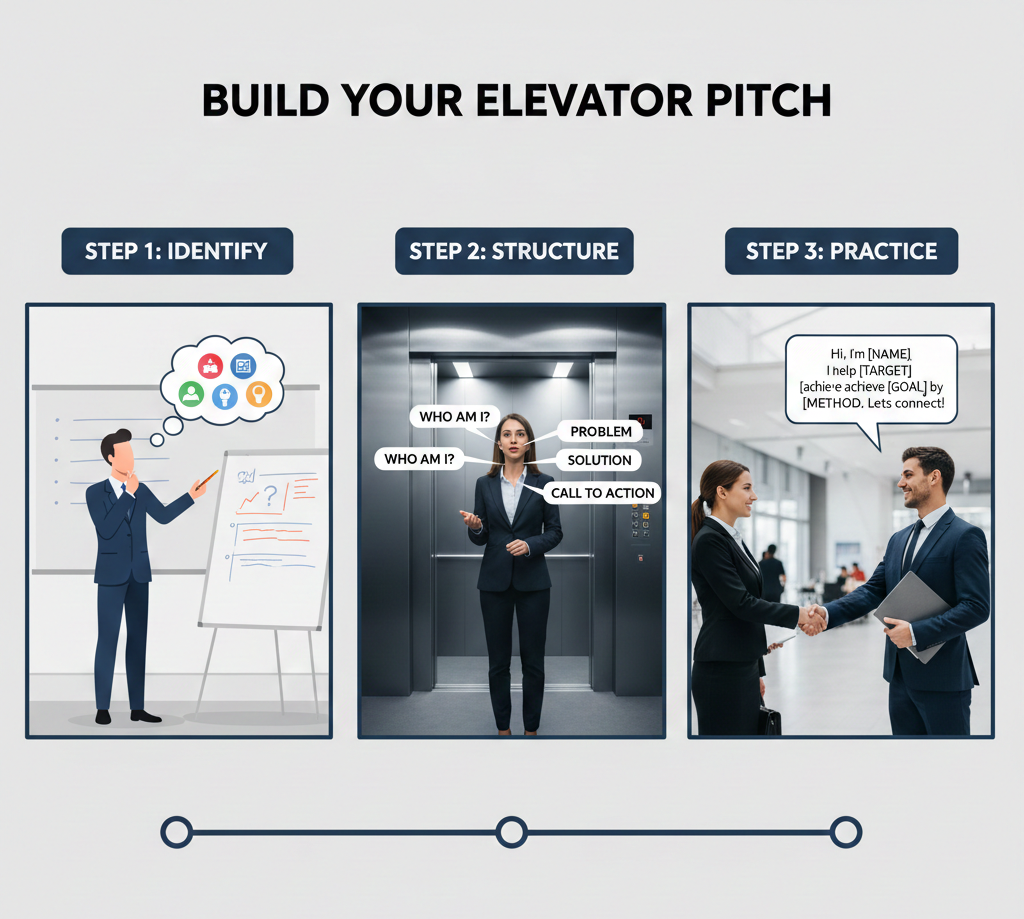
A clear structure makes building your pitch easier. First, introduce who you are professionally. Next, explain what you do or specialize in. Then, highlight the value or impact you create. Finally, mention your direction or interest.
This structure keeps your pitch focused and easy to follow. You can adapt it across situations while keeping the core message intact.
Why a strong elevator pitch boosts career growth
A strong elevator pitch improves visibility. It helps people remember you for the right reasons. It also builds confidence during interviews and networking.
Professionals with clear pitches communicate better. They handle introductions smoothly and guide conversations effectively. Over time, this clarity leads to better opportunities.
Career growth often starts with being understood. An elevator pitch helps make that happen.
Conclusion
Building a personal elevator pitch is a career essential. It helps you communicate value clearly, confidently, and quickly. With the right structure, tone, and practice, your pitch can open doors in interviews, networking, and professional conversations.
Focus on clarity, relevance, and authenticity. Keep it simple, adaptable, and value-driven. When your message is clear, opportunities follow.
To apply your elevator pitch where it matters most, explore roles that align with your skills and goals using the best job tool.
Find Your Dream Job Today – Explore Endless Career Opportunities and Secure Your Next Role with Best Job Tool.




Leave a Reply