Introduction
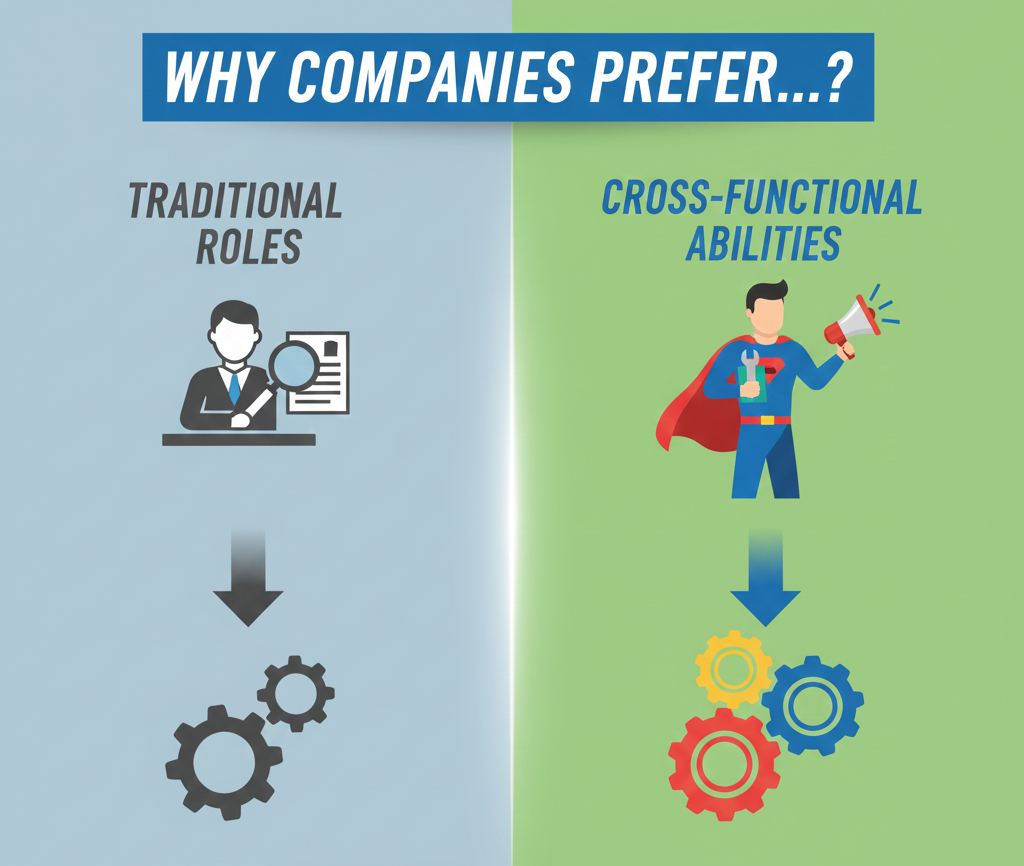
The modern workplace is changing faster than ever. Job roles are no longer limited to narrow responsibilities. Instead, companies now value professionals who can contribute across multiple functions. This shift explains why cross-functional abilities have become a key hiring priority.
Employers want people who understand more than just their job title. They want employees who can collaborate, adapt, and think beyond silos. As a result, candidates with cross-functional skills often stand out, even in competitive job markets.
The evolution of work demands broader skill sets
Traditional job structures relied heavily on specialization. Each department worked independently. However, that model now slows innovation and decision-making.
Today’s businesses operate in dynamic environments. Teams must respond quickly to market changes, customer needs, and technology shifts. Because of this, employees who understand multiple functions add greater value.
Cross-functional employees help bridge gaps between teams. They reduce dependency and improve overall efficiency. Therefore, companies actively seek such professionals.
Cross-functional abilities improve collaboration and communication
Poor communication often causes workplace delays. Cross-functional employees help solve this problem naturally.
When someone understands how different teams operate, they communicate more effectively. They translate ideas clearly across departments. This reduces misunderstandings and friction.
Moreover, these employees build stronger relationships. They respect diverse perspectives and workflows. As a result, teamwork improves and projects move faster.
Companies prefer such employees because collaboration directly impacts productivity.
Businesses value adaptability in fast-changing environments
Change is constant in today’s workplace. New tools, processes, and strategies appear frequently. Employees who rely on a single skill often struggle during transitions.
Cross-functional professionals adapt faster. They already understand multiple systems and ways of working. Therefore, learning new responsibilities feels easier for them.
This adaptability reduces training time and resistance to change. For employers, that flexibility is extremely valuable. It keeps teams resilient during uncertainty.
Cross-functional skills reduce operational risk
Relying too heavily on one person for one task creates risk. If that person leaves, productivity suffers.
Employees with cross-functional abilities reduce this risk. They can step in when needed. They ensure continuity during absences or transitions.
This flexibility supports smoother operations. It also helps companies manage workloads more effectively. As a result, employers feel more secure investing in such talent.
Innovation grows when employees think beyond one role
Innovation rarely comes from isolated thinking. It thrives when ideas intersect.
Cross-functional employees bring insights from different domains. They connect dots others may miss. This leads to creative problem-solving and better solutions.
For example, someone who understands both technology and customer experience can design smarter products. Employers recognize this advantage clearly.
That is why companies prefer employees who can think holistically.
Leadership potential is stronger in cross-functional professionals
Leadership requires perspective. Managers must understand how decisions affect multiple teams.
Employees with cross-functional exposure develop this awareness early. They see the bigger picture. They balance priorities more effectively.
Because of this, companies often promote such employees faster. They trust them with responsibility. They see them as long-term assets.
Cross-functional abilities, therefore, signal leadership readiness.
Cross-functional employees deliver higher long-term value
Hiring is expensive. Companies want maximum return on talent investment.
Cross-functional employees grow with the organization. They shift roles as business needs evolve. This reduces the need for frequent hiring.
Additionally, these employees engage more deeply with work. They feel involved beyond one function. That engagement improves retention.
From a business perspective, this long-term value matters greatly.
How job seekers can develop cross-functional abilities
Cross-functional skills do not require changing careers. They require curiosity and initiative.
Job seekers can start by learning adjacent skills. Collaboration on cross-team projects also helps. Even understanding basic workflows of other departments adds value.
Over time, this exposure builds confidence and versatility. Employers notice this mindset quickly during interviews.
Developing cross-functional abilities is a smart career strategy.
Conclusion
Companies prefer employees with cross-functional abilities because they solve modern business challenges. These professionals collaborate better, adapt faster, reduce risk, and drive innovation. They also grow into leaders who understand the organization as a whole.
For job seekers, building cross-functional skills increases employability and career stability. It opens doors to better roles and long-term growth.
To find companies that value versatile talent, use the best job tool to explore smarter opportunities.
Find Your Dream Job Today – Explore Endless Career Opportunities and Secure Your Next Role with Best Job Tool.



Leave a Reply