Introduction
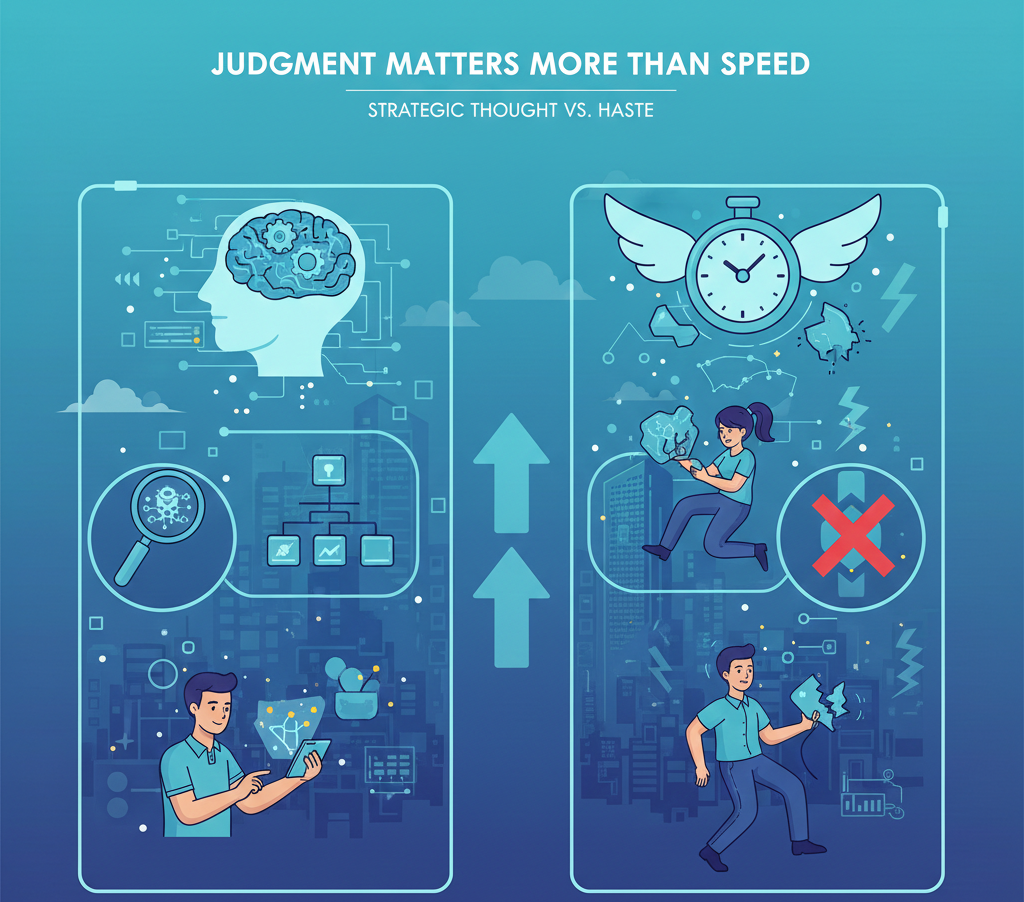
Speed can help you finish tasks quickly. But rushing decisions creates problems that take longer to fix. So, the “fast” route often becomes the slowest path.
For example, a quick email with the wrong tone can damage trust. A rushed design can confuse users. A fast hire can become an expensive mistake.
Judgment helps you pause before committing. It helps you ask, “Is this correct?” not just “Is this done?”
Also, people remember outcomes more than effort. They may forget how fast you worked. But they won’t forget the impact of your choices.
Judgment builds trust faster than performance
Trust is the real currency at work. You can be fast and still unreliable. On the other hand, you can be steady and respected.
When your judgment is strong, people feel safe around your work. They stop double-checking your tasks. They give you bigger responsibilities.
That’s how careers grow quietly. Not through noise, but through confidence.
Judgment also improves your communication. You choose the right words at the right time. As a result, you sound more professional instantly.
Speed without judgment creates confusion. Judgment without speed creates progress with stability.
How top performers balance urgency and clarity
High performers do not ignore urgency. They simply handle it with discipline. They know when to sprint and when to slow down.
Here’s what they do differently:
- They clarify the goal before starting
- They ask one smart question instead of ten random ones
- They focus on impact, not activity
- They check risks before they click “send”
They also understand priorities. Therefore, they don’t waste speed on low-value tasks. They save energy for work that matters.
This balance is a career advantage. It makes you dependable under pressure. It also makes you calm when others panic.
Why judgment matters more than speed in leadership
Leaders don’t get paid for speed alone. They get paid for decisions. Even a small decision can affect an entire team.
That is exactly why judgment matters more than speed when you lead. A fast decision can feel powerful. Yet a wrong decision can create months of cleanup.
Great leaders slow down at the right moments. They listen carefully before reacting. They also consider people, timing, and long-term impact.
Judgment helps leaders manage conflict better. They don’t fuel drama. Instead, they reduce tension with clarity.
It also helps leaders protect their team. They say no to unrealistic demands. They push back with logic, not emotion.
Speed might win a day. Judgment wins a year.
The habits that sharpen your judgment daily
Judgment is not luck. It’s a skill you build with practice. The best part is you can improve it every week.
Start with small habits. Then, let them compound over time.
Try these simple habits:
- Review your decisions after key tasks
- Notice patterns in mistakes, not just mistakes
- Ask for feedback from people you trust
- Pause before replying when emotions rise
- Write quick notes on what worked and why
Also, consume better inputs. Read industry updates. Watch how experts solve problems. Over time, your brain learns stronger decision patterns.
Most importantly, protect your focus. Judgment needs a calm mind. So, reduce distractions when you handle important work.
When speed helps and when it hurts
Speed is not the enemy. In fact, speed can be powerful when the risk is low. It helps you execute faster and learn quicker.
However, speed becomes dangerous when:
- The decision affects money
- The decision affects people
- The decision affects brand reputation
- The decision is hard to reverse
In these moments, slow thinking saves you. It prevents regret and rework.
Still, you don’t need perfection. You need clarity. Judgment helps you choose the best option with the information available.
That’s how you stay confident. You move forward without guessing blindly.
Judgment makes you more valuable in any role
Every company wants people who solve problems. They don’t just want people who finish tasks. That’s a big difference.
Judgment turns you into a problem-solver. It helps you see what matters first. It helps you choose the right approach.
This skill works in every role. It works for designers, marketers, developers, HR teams, and managers. It even works for freshers.
Judgment also improves teamwork. You understand what to say and when to say it. You support others without creating friction.
And yes, it helps you stand out in interviews too. You give better answers because you think deeper. You share examples that show maturity.
So, if you want a stronger career path, focus on decisions. Speed will follow naturally.
Conclusion: choose judgment, and speed will come
At work, fast action looks exciting. But long-term growth needs smarter choices. That’s the real reason why judgment matters more than speed in every modern career.
When you build judgment, you reduce mistakes. You gain trust faster. You also become the person people rely on.
Over time, your confidence improves. Your results improve too. And your opportunities grow naturally.
If you’re ready to build a career that lasts, start with better decisions. Then use the best job tool to find roles that match your strengths.
Find Your Dream Job Today – Explore Endless Career Opportunities and Secure Your Next Role with Best Job Tool.






Leave a Reply