Introduction
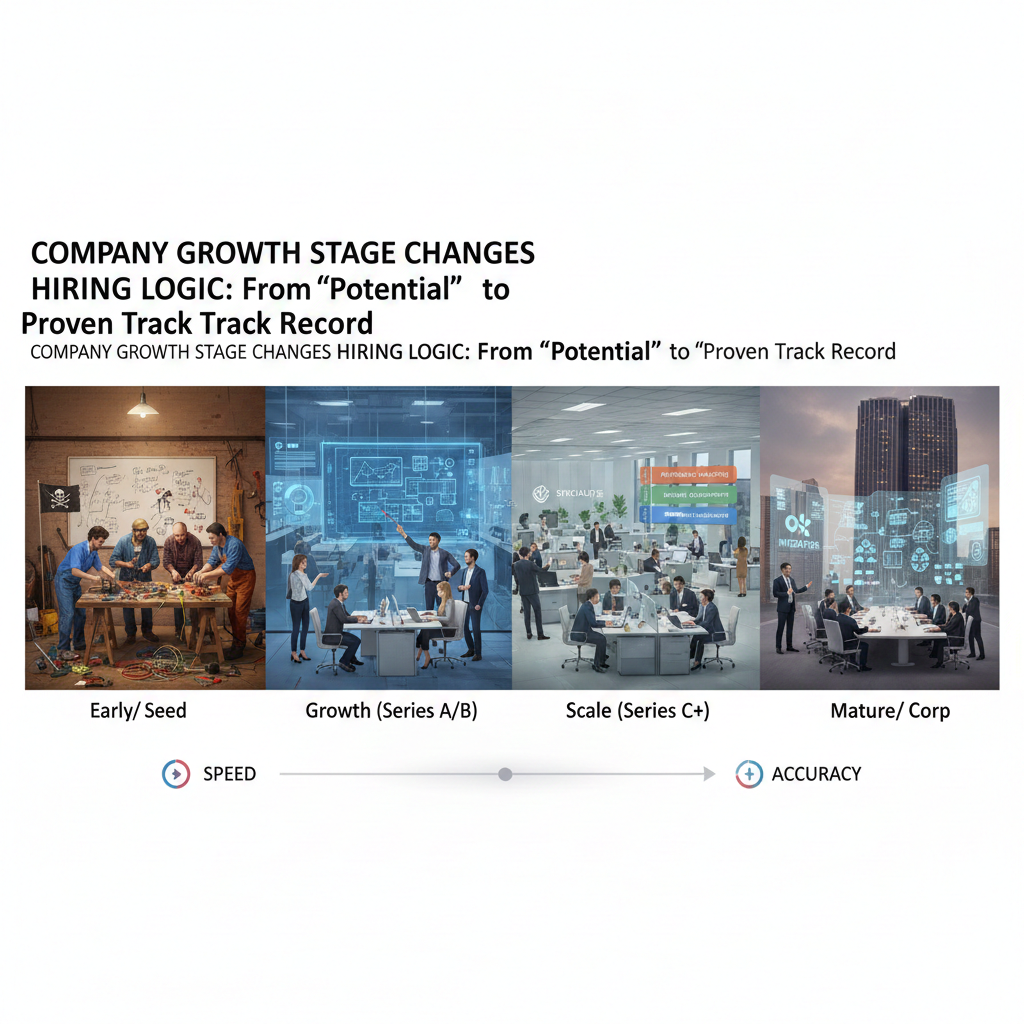
Hiring is never “one-size-fits-all.” The same role can mean very different things depending on where a company is in its journey. A startup may hire one person to do five jobs. Meanwhile, a mature company may hire one person for one clear responsibility. That’s exactly why company growth stage changes hiring logic and shapes how recruitment decisions are made.
Also, growth stage impacts budgets, urgency, team structure, and leadership expectations. Therefore, hiring becomes a reflection of business needs, not just talent requirements. When job seekers understand this, they apply smarter and choose roles that fit their working style.
Early-stage companies hire for speed and survival
In the early stage, companies focus on building something that works. They need people who can execute quickly, solve problems independently, and adapt daily. That’s why early-stage hiring often values mindset over perfect experience. A candidate who can learn fast becomes more valuable than someone who only works within fixed processes.
Also, early-stage teams are small. So, every hire matters more. One wrong hire can slow down the entire company. Therefore, founders often look for ownership, flexibility, and strong communication. This is a key reason why company growth stage changes hiring logic from the very beginning.
In addition, early-stage companies hire based on immediate needs. If a product launch is coming, they hire builders. If sales are needed, they hire closers. Everything is urgent and practical.
Scaling companies hire to build systems and repeatable growth
When a company starts scaling, hiring priorities change. The goal becomes growth with structure. The company needs people who can create processes, train teams, and maintain quality while the workload increases. This stage often brings new layers of management, new tools, and stronger reporting systems.
Also, scaling companies hire for specialization. Instead of one person handling everything, they break roles into clear functions. For example, one marketer may focus on performance ads, while another handles content and brand. Therefore, the hiring logic becomes more targeted and skill-specific.
This is exactly why company growth stage changes hiring logic during the scaling phase. The company is no longer just surviving. It’s building repeatable results.
Mature companies hire to protect stability and reduce risk
Mature companies usually have established products, customers, and revenue streams. Their hiring logic is based on stability and risk management. They prefer candidates with proven experience, strong domain knowledge, and the ability to work within structured systems. Therefore, hiring may feel slower, but it is often more controlled.
Also, mature companies care deeply about compliance, reporting, and performance metrics. They hire people who can maintain standards and deliver consistent outcomes. In addition, they focus on culture fit because teams are larger and coordination matters more.
So, while early-stage companies hire for speed, mature companies hire for predictability. That difference clearly explains why company growth stage changes hiring logic across industries.
Budget, runway, and revenue decide hiring urgency
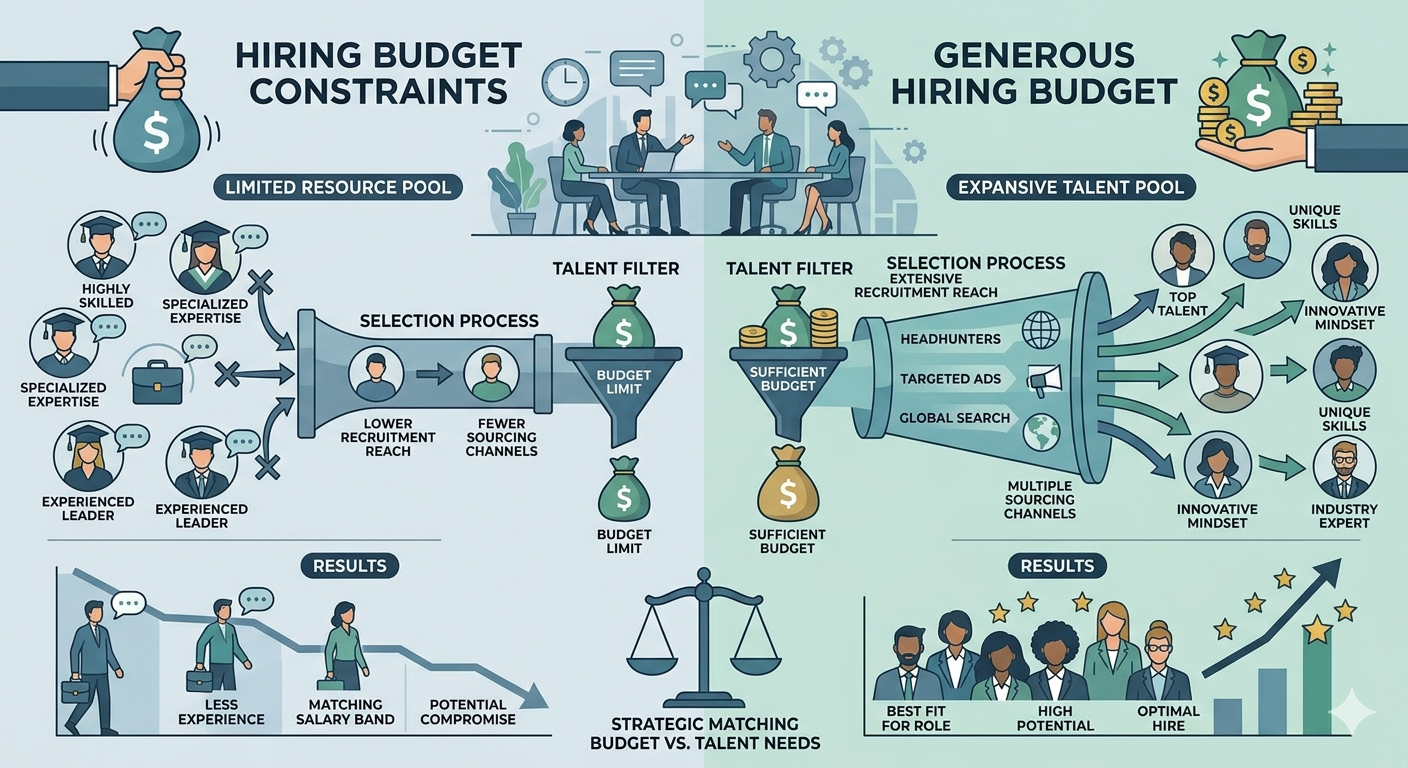
Company stage affects money. Early-stage companies rely on funding and runway. Scaling companies may be investing heavily in expansion. Mature companies usually manage budgets based on quarterly planning. Therefore, hiring urgency changes with financial pressure.
If runway is limited, early-stage companies hire only when necessary. They may also choose multi-skilled candidates to reduce headcount. Meanwhile, scaling companies hire aggressively when growth opportunities are strong. They invest in teams that support expansion, like sales, customer success, and operations.
In mature companies, hiring often depends on approvals and forecasts. It can take longer because multiple stakeholders are involved. This financial reality is another major reason why company growth stage changes hiring logic so clearly.
Job roles evolve as teams grow bigger
A job title may look the same, but the work changes based on company size. For example, a “Marketing Manager” in a startup might write content, run ads, and manage social media. In a mature company, the same title may focus only on campaign strategy and reporting.
Also, responsibilities become narrower as the company grows. That can be good for people who prefer focus. However, it can feel limiting for people who love variety. Therefore, job seekers should evaluate role scope, not just job titles.
This is why company growth stage changes hiring logic from the candidate side too. The same position can offer totally different learning and growth experiences.
Hiring signals change: potential vs proof
Early-stage companies often hire based on potential. They look for energy, problem-solving, and the ability to figure things out. They may accept less experience if the candidate shows strong ownership and learning ability.
However, scaling and mature companies usually want proof. They expect measurable achievements, strong portfolios, and role-specific expertise. In addition, they may require industry experience because the systems are complex and mistakes are costly.
So, your hiring strategy as a job seeker should match the company stage. If you have strong adaptability, startups may be a great fit. If you have deep expertise, mature companies may value you more.
Culture and leadership style impact hiring decisions
Company stage shapes leadership behavior. In early-stage companies, founders are deeply involved. Decisions happen fast, and communication is direct. In scaling companies, leaders focus on delegation and performance tracking. In mature companies, leadership becomes more structured with layers of management.
Therefore, hiring decisions also change. Early-stage companies may prioritize attitude and culture fit. Scaling companies may prioritize execution speed and process thinking. Mature companies may prioritize collaboration and stability.
Also, leadership expectations affect how interviews are conducted. Some companies test practical skills. Others focus on behavior and teamwork. This is another strong reason why company growth stage changes hiring logic in real hiring environments.
How job seekers can choose the right stage for their career
The best career move is not always the biggest brand. It’s the best environment for your growth. If you want fast learning and responsibility, early-stage companies can be powerful. If you want structured growth and promotion paths, scaling companies are a great choice. If you want stability, strong benefits, and clear systems, mature companies can be ideal.
Here are quick ways to decide:
- Choose early-stage if you want ownership and variety
- Choose scaling if you want fast growth with structure
- Choose mature if you want stability and specialization
- Match your skills to what the company stage needs most
- Ask interview questions about role scope and expectations
Also, don’t chase hype. Choose what matches your working style and long-term goals.
Final thoughts on why company growth stage changes hiring logic
Hiring decisions are shaped by business needs, not just talent availability. Early-stage companies hire for survival, scaling companies hire for repeatable growth, and mature companies hire for stability and risk control. That’s the real reason why company growth stage changes hiring logic and why job seekers must understand the stage before applying.
If you want better job matches and faster interview calls, focus on roles that fit your strengths and career goals. To explore opportunities across startups, scaling firms, and established companies, use the best job tool and apply with confidence.
Find Your Dream Job Today – Explore Endless Career Opportunities and Secure Your Next Role with Best Job Tool.



Leave a Reply