Introduction
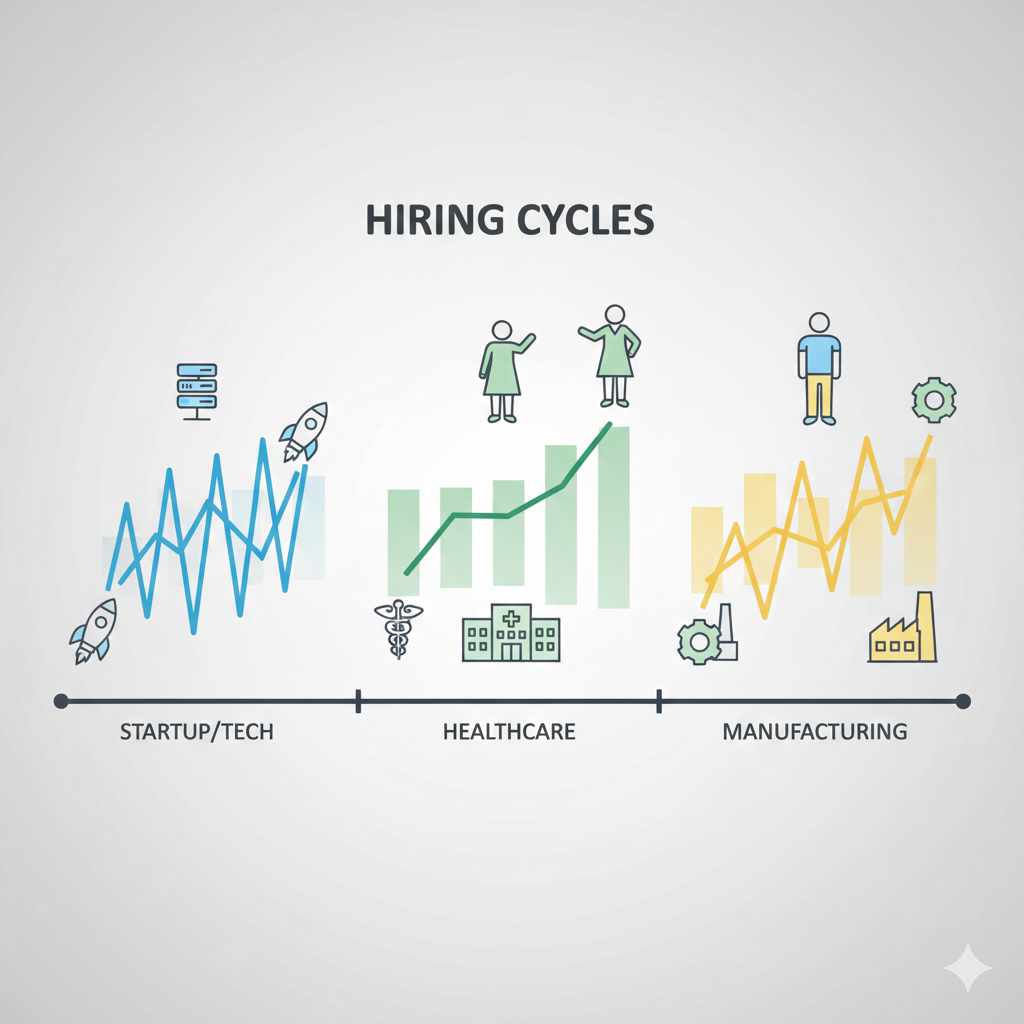
Job hunting becomes easier when you understand one key truth: not every industry hires the same way. Some sectors hire all year, while others follow seasonal patterns. Some industries move fast, while others take months to decide. That is exactly how hiring cycles differ across industries, and it explains why your applications may feel “lucky” in one sector but slow in another.
Also, industry hiring depends on budgets, customer demand, and workload peaks. Therefore, timing can improve your chances without changing your skills. When you match your job search to industry cycles, you get better response rates and faster interviews.
Corporate hiring cycles often follow budgets and planning seasons
Most corporate companies follow structured hiring cycles. They plan headcount in advance and hire based on quarterly goals. As a result, hiring often increases at the start of a quarter when budgets open and teams receive approvals.
However, hiring can slow down near quarter-end due to reporting pressure and budget reviews. Also, decision-making takes longer because approvals go through multiple managers. Therefore, corporate hiring may feel slow, but it is predictable.
If you are applying to corporate roles, focus on early-quarter windows. In addition, keep your follow-ups professional because timelines can stretch.
Tech hiring is fast, but it changes suddenly
Tech companies often hire quickly when growth is strong. They may run fast interview cycles and close roles in days. This is common for product, engineering, sales, and customer success roles. However, tech hiring can also slow down suddenly due to budget shifts, investor pressure, or strategy changes.
That is how hiring cycles differ across industries, especially in tech. The same company may hire aggressively one month and pause the next month. Also, tech companies often keep job posts live even when hiring slows. Therefore, job seekers should track real recruiter activity, not just job listings.
If you want better results in tech, apply early and keep multiple options active.
Retail and e-commerce hiring follows peak seasons
Retail hiring is heavily seasonal. Demand rises during festivals, holiday seasons, and major sales events. Companies hire more staff for stores, warehouses, delivery operations, and customer support. Therefore, hiring increases before peak shopping periods.
Meanwhile, hiring can slow down after the season ends. Companies reduce temporary staff and return to normal operations. This pattern is a strong example of how hiring cycles differ across industries because retail demand is tied directly to consumer buying behavior.
If you are targeting retail or e-commerce roles, apply before peak seasons. You will find more openings and faster decisions.
Healthcare hiring stays active because demand is constant
Healthcare is one of the most stable industries for hiring. Hospitals, clinics, labs, and healthcare service providers often hire year-round. This is because patient demand does not pause. In addition, healthcare organizations must maintain staffing levels for safety and compliance.
Also, healthcare includes many roles beyond doctors and nurses. It includes medical billing, administration, operations, HR, and IT support. Therefore, opportunities remain consistent across skill levels.
This is how hiring cycles differ across industries in a positive way. Healthcare hiring is less seasonal and more continuous.
Education hiring follows academic calendars
Education hiring often follows fixed cycles. Schools and colleges usually hire before new sessions begin. This includes teachers, coordinators, admin staff, and support roles. Therefore, the biggest hiring wave often happens before the academic year starts.
However, mid-year hiring can happen due to resignations or expansion. Still, most education hiring remains calendar-based. This can make the job search feel slow if you apply at the wrong time.
So, if you are targeting education, plan early. Apply before session starts and keep your documents ready.
Manufacturing and logistics hire based on production demand
Manufacturing hiring depends on production volume, supply chain requirements, and business contracts. When demand rises, companies hire more operators, supervisors, quality teams, and warehouse staff. Logistics hiring also increases during high shipping periods.
In addition, manufacturing roles may open when new plants start or new clients are onboarded. Meanwhile, hiring can slow down during downtime or cost-control phases.
This is another clear example of how hiring cycles differ across industries. Production demand controls recruitment timing more than public job trends.
Finance and banking hiring is structured and compliance-driven
Banking and finance hiring is usually formal and process-heavy. Many roles require background checks, documentation, and strict approvals. Therefore, hiring can take longer even when the company is actively recruiting.
Also, finance hiring often increases around expansion plans, product launches, or new compliance requirements. In addition, some hiring happens in cycles based on yearly planning and campus recruitment.
So, if you are applying in finance, expect longer timelines. Stay patient, follow up politely, and keep your profile strong.
How job seekers can use industry cycles to apply smarter
Once you understand hiring patterns, you can build a better strategy. Instead of applying randomly, you apply with timing and focus. That increases your interview chances and reduces frustration.
Here are practical steps that work:
- Identify the industry you are targeting and study its peak hiring months
- Apply early when hiring waves begin, not after they peak
- Keep your resume tailored to industry-specific keywords
- Track hiring speed by watching recruiter response patterns
- Stay open to contract roles in seasonal industries
- Build a pipeline across multiple industries to stay flexible
In addition, keep learning skills that transfer across sectors. Communication, reporting, and problem-solving help in every industry.
Final thoughts on how hiring cycles differ across industries
Different industries hire differently because their business cycles are different. Tech reacts to strategy and funding. Retail follows seasons. Healthcare stays steady. Education follows calendars. Corporate hiring follows budgets. That is how hiring cycles differ across industries, and understanding this gives you a serious advantage.
If you want to get hired faster, align your applications with industry timing and stay consistent. For daily fresh openings across industries and smarter job discovery, explore opportunities using the best job tool.
Find Your Dream Job Today – Explore Endless Career Opportunities and Secure Your Next Role with Best Job Tool.



Leave a Reply