Introduction
An interview is a very important step for all of us to start our career. But if we present bad interview answer in an interview, the opportunity to build our career can get ruined.
Bad interview answers happen for many reasons. For example, if a candidate is nervous or under pressure, they may start giving irrelevant answers in the interview, which creates a negative impression on the recruiter.
However, it is very easy to recover from a bad interview answer if you go through this article, because it includes tips on how to recover from a bad interview answer.
What Is a “Bad Interview Answer”?
A bad interview answer does not mean that all your answers are wrong. Bad interview answers are those that do not clearly explain your thoughts and skills. Sometimes, even a correct answer can become a bad interview answer if it is not presented properly.
If your answers are irrelevant, unclear, too short, give incorrect information, or include negative points, they are considered bad interview answers.
A candidate always tries to give the right answer, but they give bad interview answers when they are nervous, do not understand the question, are not well prepared, or take too much pressure.
Why Bad Answers Happen in Interviews?
- Nervousness and pressure
- Misunderstanding the question
- Lack of preparation
- Overthinking or speaking too fast
- Unexpected or tricky questions
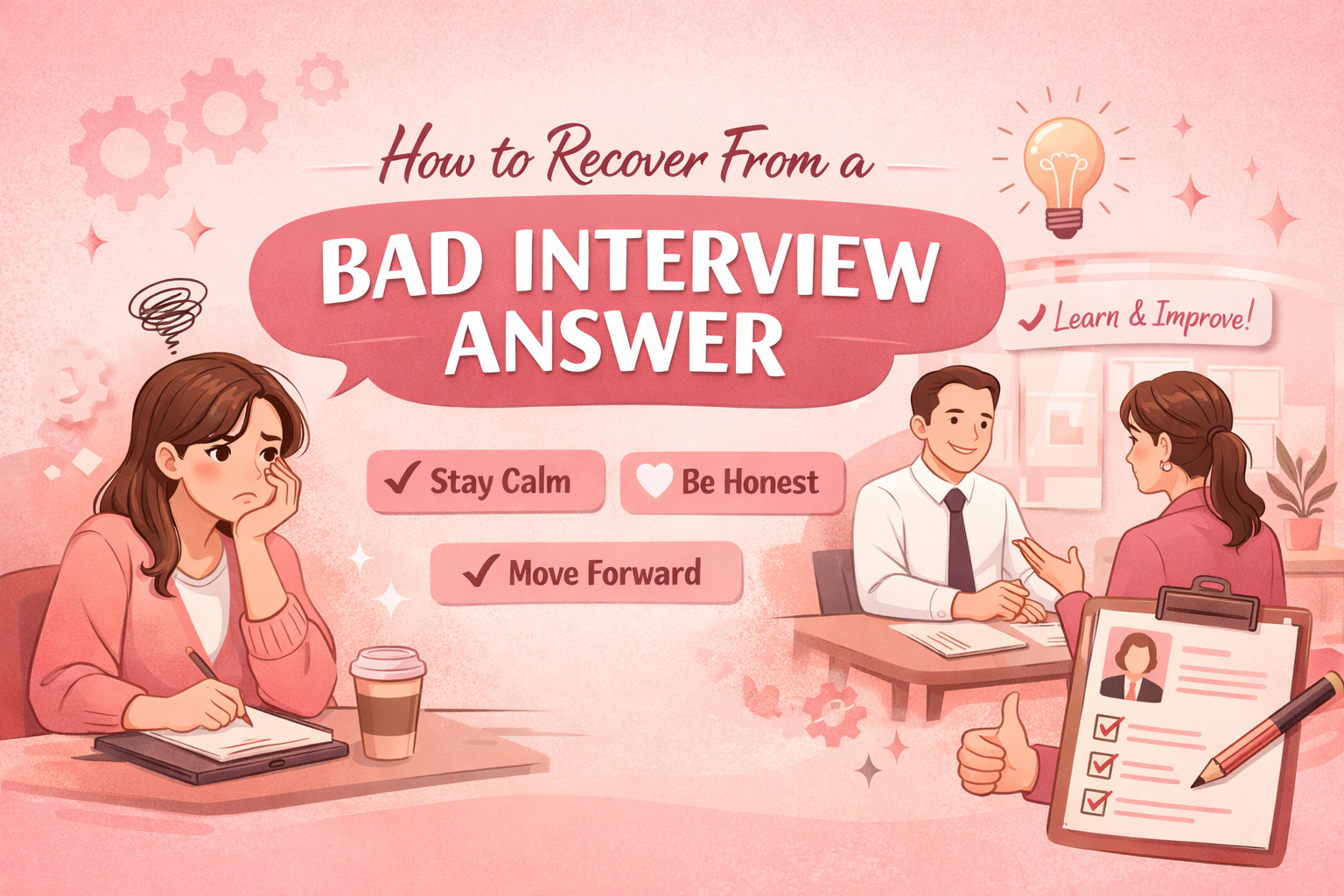
How to Recover From a Bad Interview Answer?
1. First Rule: Stay Calm and Don’t Panic
The most effective way to handle such questions is this: whenever a recruiter asks you a question that confuses you or makes you unsure about how or what to answer, do not panic. First, calm yourself and relax your mind. Take a moment to think about the best possible answer, and then start speaking.
If you panic and fail to stay calm, you may answer without thinking. This can lead to irrelevant or completely off-topic responses. In moments of confusion, it becomes difficult to understand what to say and what not to say, and because of panic, we often speak in a hurry.
Therefore, stay calm and do not panic while answering questions.
2. Listen to Questions Carefully to Recover from Bad Interview Answer
Whenever you hear question, do not rush to answer it immediately. First, listen to the question carefully and understand what the recruiter is actually asking. Do not misunderstand the question in a hurry, because careful listening is very important for giving a good answer.
By listening attentively, you can identify the main focus of the question. Based on that, you can frame and present your answer clearly. This will impress the recruiter and increase your chances of getting hired.
3. Pause, Acknowledge, and Reset
Do not rush to answer as soon as you hear the question. If you answer immediately without thinking, your response may be incorrect or irrelevant. That is why, after hearing the question, you should take a little time to understand it and frame your answer. Then, present your response clearly to the recruiter.
This gives you two major benefits. First, when you understand the question properly before answering, your response will be more relevant and strong. Second, when you take time to think before answering, the recruiter sees you as a candidate who understands problems first and then finds the best solution, instead of making quick and wrong decisions. This increases your value, impresses the recruiter, and improves your chances of getting hired.
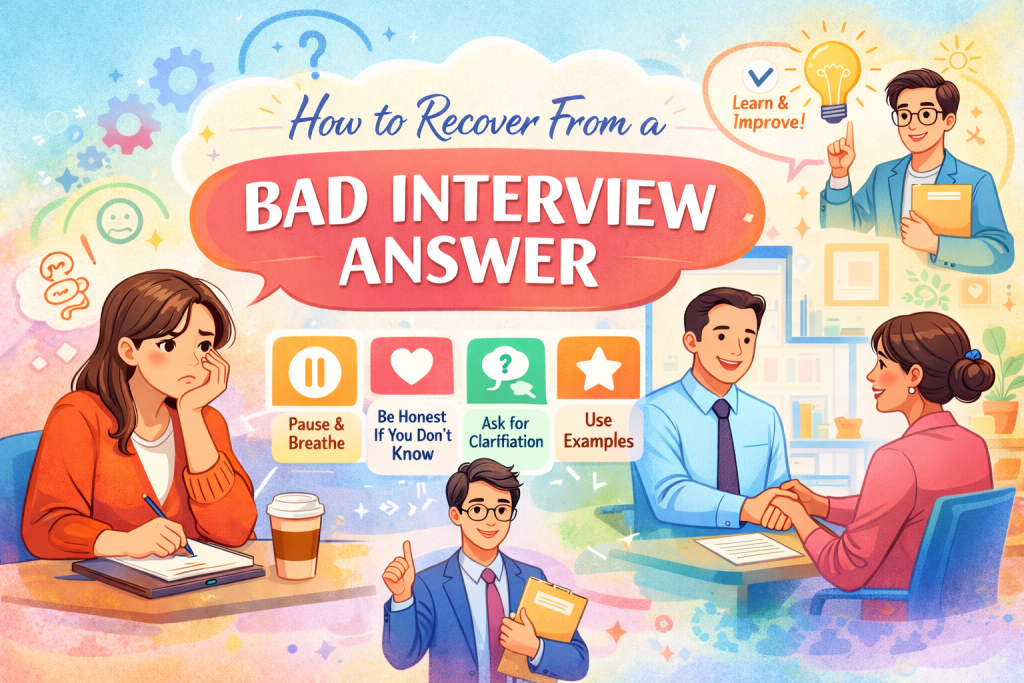
4. Ask for Clarification to Avoid Bad Interview Answer
Many candidates answer a question even when they do not fully understand it. They do this because they think that asking the recruiter for clarification will create a negative impression and may even lead to rejection.
But this thinking is completely wrong. If you answer without understanding the question and without clarification, it automatically creates a negative impression on the recruiter. The recruiter may feel that you are more interested in giving memorized answers than actually understanding the question.
So, if you do not understand a question, always ask the recruiter for clarification. Only answer after you clearly understand the question.
When you ask for clarification, it actually impresses the recruiter. It shows that you want to understand the question properly, you value the interview, and you take your answers seriously. This also increases your chances of getting hired.
You can also read “How to Handle Rapid-Fire Interview Questions”.
5. Be Honest If You Don’t Know Something
The most important thing is honesty. With honesty, you can build trust with the recruiter, which is very important in interviews. When a recruiter asks you a question that you do not understand or do not have any knowledge about, instead of giving irrelevant answers or trying to twist the topic, you should honestly tell the recruiter that you do not have an idea about it or that you do not know. This helps the recruiter understand that you are an honest candidate. Recruiters often prefer candidates who are honest and have good behavior rather than those who give incorrect answers.
Conclusion
No candidate intentionally gives a bad answer in an interview, and giving a bad answer does not mean that the candidate is not capable of the role. Sometimes a person gets nervous and is unable to handle the situation, which leads to giving a poor answer.
But now it is very easy to handle such situations and recover from a bad interview answer through this article.
Just stay calm, be honest, and show confidence to perform better in the interview.
To explore more such blogs, visit here.




Leave a Reply