Introduction
In today’s fast-changing professional world, learning new skills has become a necessity, not an option. Technology is evolving rapidly, job roles are changing, and competition is increasing in almost every field. Professionals are often confused about which skills to learn first, which skills matter the most, and how to invest their time wisely. Learning everything is impossible, so prioritizing the right skills is the key to long-term career growth. This is where a Skill Prioritization Framework becomes useful.
It helps professionals identify, evaluate, and prioritize skills that deliver maximum value for their career goals. Instead of randomly learning skills, this framework allows you to make strategic decisions.
This article explains what skill prioritization means, why it is important, and how professionals can build a practical framework to prioritize skills effectively.
What Is Skill Prioritization?
Skill prioritization is the process of identifying and ranking skills based on their importance, relevance, and impact on your career. It helps you decide which skills to learn now, which to learn later, and which skills are not necessary at all.
Many professionals make the mistake of following trends blindly. They start learning skills just because others are learning them. Skill prioritization focuses on your goals, your industry, and your strengths, not just trends.
Why Skill Prioritization Is Important for Professionals?
Professionals today face multiple challenges such as limited time, mental fatigue, and information overload. Skill prioritization helps solve these problems.
1. Saves Time and Energy
Learning skills takes time and effort. When you prioritize skills, you focus only on what truly matters. This prevents burnout and wasted effort.
2. Improves Career Growth
When you focus on high-impact skills, you grow faster in your career. These skills increase your value and make you more competitive.
3. Reduces Confusion
There are thousands of courses available online. Skill prioritization gives clarity and direction.
4. Aligns Skills With Career Goals
Every professional has different goals. Prioritization ensures your skills support your long-term vision.
Understanding the Skill Prioritization Framework
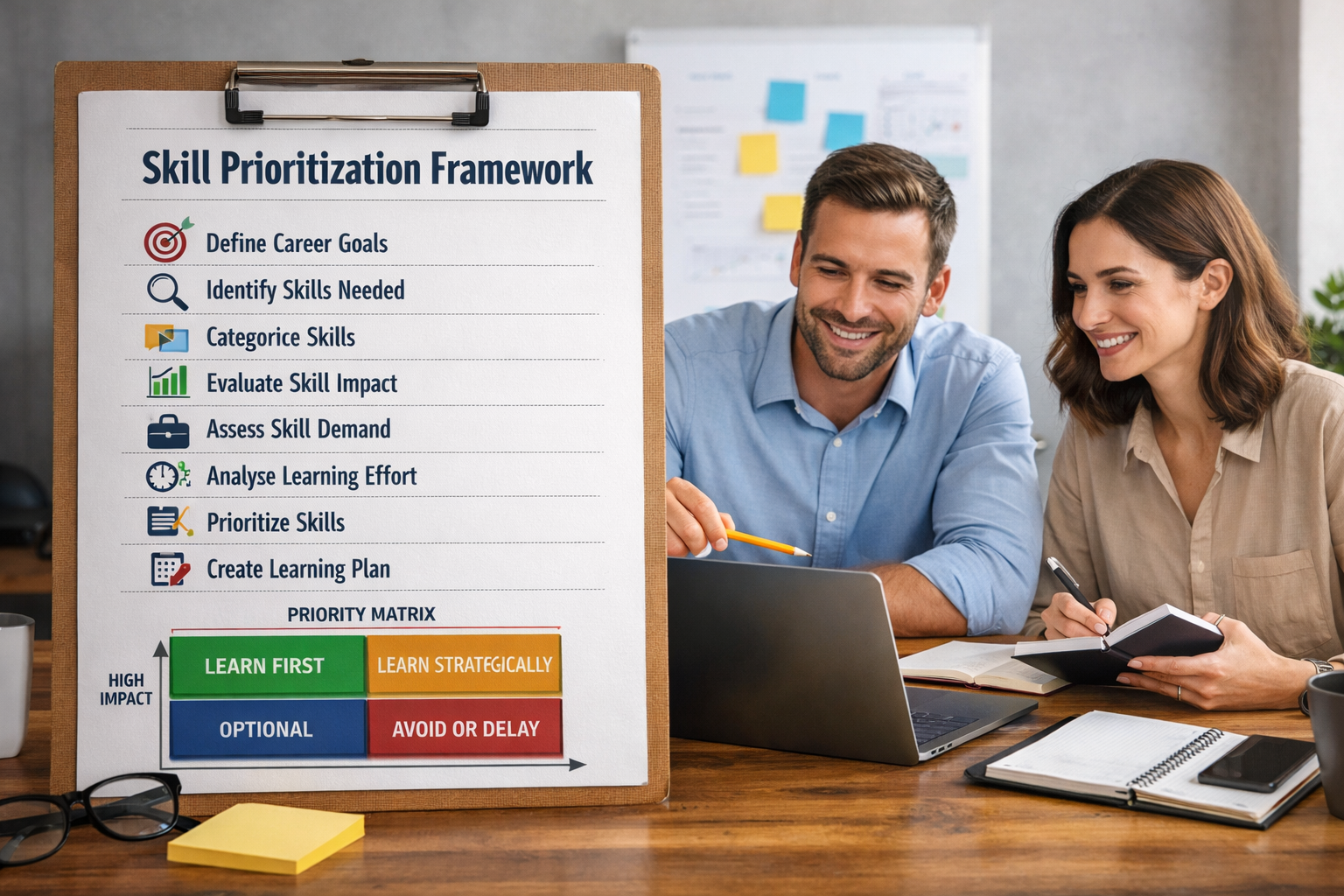
A Skill Prioritization Framework is a structured approach to evaluate skills using clear criteria. It helps professionals decide what to learn, when to learn, and why to learn.
The framework can be divided into the following steps:
- Define career goals
- Identify required skills
- Categorize skills
- Evaluate skill impact
- Assess skill demand
- Analyze learning effort
- Prioritize skills
- Create a learning plan
Let us understand each step in detail.
Skill Prioritization Framework for Professionals
Step 1: Define Your Career Goals Clearly
Skill prioritization starts with clarity. Without clear goals, skill selection becomes random.
Ask yourself:
- Where do I want to be in the next 2–5 years?
- Do I want a promotion, career switch, or freelancing?
- What type of work do I enjoy the most?
For example:
- A content writer may aim to become a content strategist.
- A software developer may want to move into leadership roles.
- A freelancer may want higher-paying clients.
Your goals decide which skills are important and which are not.
Step 2: Skill Prioritization by Identifying Skills Required for Your Role
Once goals are clear, identify the skills needed to achieve them. These skills can be technical or non-technical.
Sources to identify skills:
- Job descriptions
- Industry reports
- Senior professionals
- LinkedIn profiles of successful people in your field
For example, a digital marketer may need:
- SEO
- Data analysis
- Paid ads
- Copywriting
- Communication skills
List all relevant skills without judging them at this stage.
Step 3: Categorize Skills Into Skill Types
Now categorize skills into different groups. This helps in better evaluation.
1. Core Skills
These are essential skills required to perform your current job effectively.
Example:
- Writing for a content writer
- Coding for a developer
2. Supporting Skills
These skills improve your performance but are not mandatory.
Example:
- Graphic design for a marketer
- Presentation skills for a manager
3. Future Skills
These skills prepare you for future roles and industry changes.
Example:
- AI tools
- Leadership skills
- Strategic thinking
Step 4: Evaluate the Impact of Each Skill
Skill impact means how much difference a skill can make in your career.
Ask:
- Will this skill increase my income?
- Will it open new opportunities?
- Will it improve job security?
Rate each skill on a scale of 1 to 5 based on impact.
High-impact skills should always be prioritized over low-impact skills.
Step 5: Assess Market Demand for Skills
A skill is valuable only if the market needs it.
To assess demand:
- Check job portals
- Analyze freelancing platforms
- Follow industry trends
- Study salary reports
High-demand skills provide:
- Better job opportunities
- Higher pay
- Long-term relevance
Avoid spending too much time on skills with low demand unless they align strongly with your passion or niche.
Step 6: Analyze Learning Effort and Time Required
Not all skills take the same effort to learn. Some skills require months of practice, while others can be learned quickly.
Consider:
- Learning time
- Complexity
- Required resources
- Practice intensity
Low-effort and high-impact skills should be learned first. High-effort skills can be planned for long-term learning.
Step 7: Prioritize Skills Using a Simple Matrix
You can use a Skill Priority Matrix based on two factors:
- Impact
- Effort
Skill Categories:
- High Impact + Low Effort → Learn First
- High Impact + High Effort → Learn Strategically
- Low Impact + Low Effort → Optional
- Low Impact + High Effort → Avoid or Delay
This matrix gives clarity and prevents poor decisions.
Step 8: Create a Skill Development Plan
Once skills are prioritized, create a learning plan.
Your plan should include:
- Skill name
- Learning resources
- Time commitment
- Practice method
- Milestones
For example:
- Skill: SEO writing
- Time: 1 hour daily
- Resource: Online course + blogs
- Practice: Writing 2 articles weekly
A structured plan increases consistency and results.
Balancing Technical and Soft Skills
Many professionals focus only on technical skills and ignore soft skills. This is a mistake.
Technical Skills
- Job-specific
- Measurable
- Role-dependent
Soft Skills
- Communication
- Problem-solving
- Emotional intelligence
- Time management
Soft skills improve leadership, teamwork, and career longevity. A good skill framework balances both.
Conclusion
In a world full of endless learning options, skill prioritization is a powerful advantage. A Skill Prioritization Framework helps professionals make smart choices, focus on what truly matters, and build meaningful careers.
Instead of learning randomly, professionals should learn intentionally. By defining goals, evaluating impact, understanding demand, and planning learning strategically, anyone can grow with confidence.
Skill prioritization is not about learning more skills. It is about learning the right skills at the right time. When done correctly, it leads to sustainable growth, better opportunities, and long-term success.



Leave a Reply