Introduction
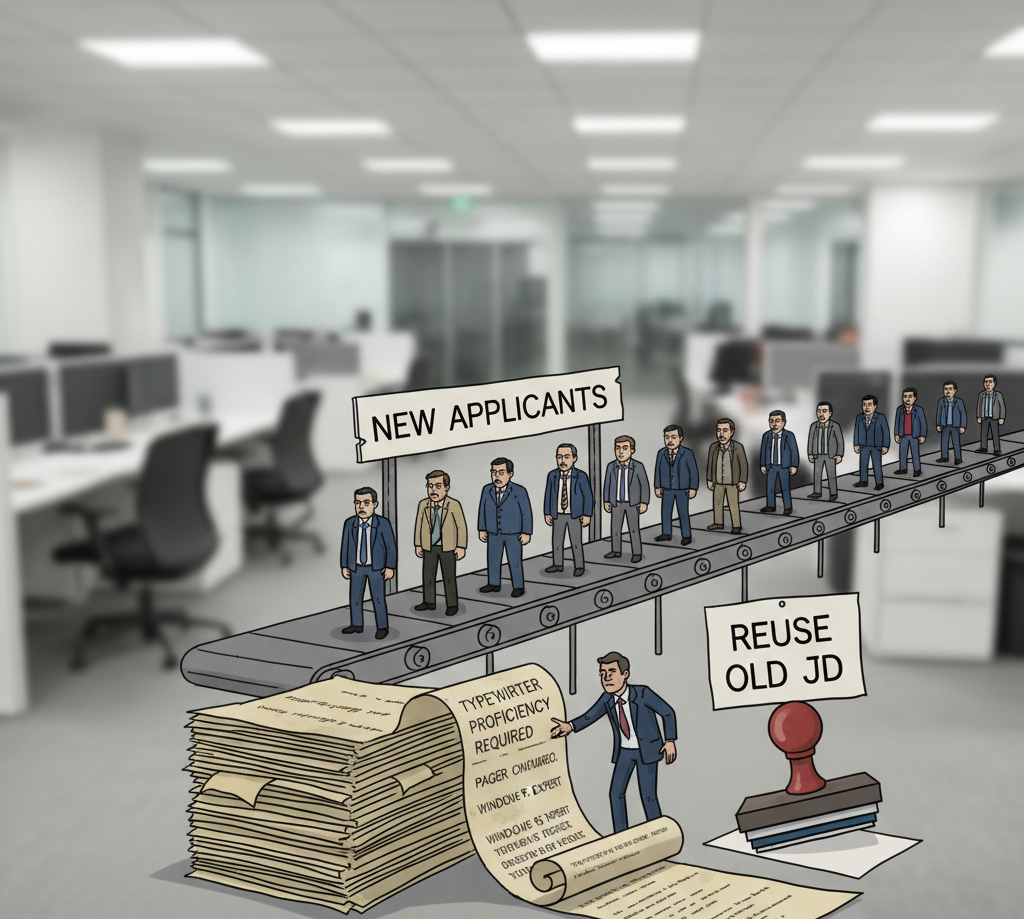
Many job descriptions feel generic, outdated, or disconnected from the actual role. Candidates often notice that listed tools, responsibilities, or experience levels do not match current industry realities. This is rarely intentional negligence. Instead, it is a result of internal hiring processes and time constraints. That is exactly why hiring teams reuse outdated job descriptions more often than organizations openly admit.
Reusing old descriptions seems efficient on the surface. However, it creates misalignment between expectations, applicants, and actual work. Understanding why this happens helps both employers improve hiring quality and candidates interpret job postings more realistically.
Time pressure in the hiring process
Hiring is usually urgent. Teams need replacements quickly, projects are delayed, and workloads increase when roles remain vacant.
In such situations, writing a fresh job description from scratch feels time-consuming. Hiring teams often copy a previous version and make minor edits. This saves time but preserves outdated requirements, tools, and responsibilities.
Speed becomes the priority, and accuracy takes a secondary role.
Reliance on internal templates
Most organizations maintain standardized job description templates. These templates ensure consistency across roles and departments.
While useful, templates are rarely updated as frequently as the market evolves. As a result, outdated skills, generic competencies, and old role structures remain embedded.
This template dependency is a major reason why hiring teams reuse outdated job descriptions without realizing their limitations.
Lack of role re-evaluation before hiring
When a role opens, teams often focus on filling the vacancy rather than reassessing the role itself. They assume the previous description still applies.
However, business needs, tools, and workflows may have changed significantly since the role was last filled. Without a fresh analysis, the old description gets reused by default.
This creates a gap between listed expectations and actual daily responsibilities.
Organizational memory and documentation habits
Companies rely heavily on existing documentation. Previous job descriptions act as reference points for new hires.
Instead of redesigning the role definition, hiring teams treat past documentation as a reliable baseline. Over time, small inaccuracies accumulate and become normalized.
This institutional memory makes outdated descriptions feel “official” even when they no longer reflect reality.
Approval processes discourage frequent updates
Updating job descriptions often requires multiple approvals from HR, leadership, and compliance teams. This process can be slow and bureaucratic.
To avoid delays, teams reuse approved descriptions that have already passed internal checks. Even if improvements are needed, they prefer speed over revision.
This approval friction reinforces the cycle of reuse.
Fear of misalignment across departments
Hiring managers sometimes avoid rewriting descriptions because different departments depend on standardized role definitions.
Changing one description may create confusion about hierarchy, compensation bands, or performance expectations. To maintain alignment, teams stick to existing formats.
Consistency becomes more important than accuracy.
Market awareness gaps within hiring teams
Not all hiring teams track evolving industry trends regularly. Skills, tools, and job scopes change rapidly, especially in tech and digital roles.
When teams rely on older documents, they unintentionally list outdated tools or irrelevant experience requirements. Candidates then feel confused about the role’s relevance.
This lack of continuous market benchmarking contributes to outdated postings.
Minimal feedback loops after hiring
After a role is filled, organizations rarely revisit whether the job description was accurate. The hiring process moves on to other priorities.
Without feedback from new hires or managers, outdated descriptions remain unchanged for future hiring cycles. The same document gets reused repeatedly.
This absence of review sustains the cycle over time.
The illusion of completeness in old descriptions
Older job descriptions often appear detailed and comprehensive. This creates a false sense of reliability.
Hiring teams assume that a long, structured document must still be valid. In reality, detailed does not always mean accurate.
This illusion of completeness is another subtle reason why hiring teams reuse outdated job descriptions.
Impact on candidate quality and hiring outcomes
Outdated job descriptions attract mismatched candidates. Some apply based on irrelevant requirements, while qualified candidates hesitate due to outdated expectations.
This increases screening time and reduces hiring efficiency. It also creates disappointment when the actual role differs from the posting.
Misalignment begins before the first interview.
Why reuse is convenient but risky
Reusing job descriptions reduces immediate effort but increases long-term hiring risk. It saves time upfront but can lead to poor role clarity and slower onboarding.
Clear and updated descriptions, on the other hand, improve alignment and candidate fit significantly.
Convenience often drives reuse, but strategy demands revision.
Conclusion
Outdated job descriptions are rarely reused out of carelessness. They persist due to time pressure, templates, approval barriers, and organizational habits. That is why hiring teams reuse outdated job descriptions across many industries and roles.
Recognizing this pattern helps candidates interpret postings more realistically and encourages organizations to prioritize role clarity. Updating descriptions regularly leads to better alignment, stronger applicants, and more efficient hiring outcomes.
To explore opportunities with clearer expectations and up-to-date role definitions, use the best job tool to discover jobs aligned with real-world responsibilities and growth potential.
Find Your Dream Job Today – Explore Endless Career Opportunities and Secure Your Next Role with Best Job Tool.





Leave a Reply