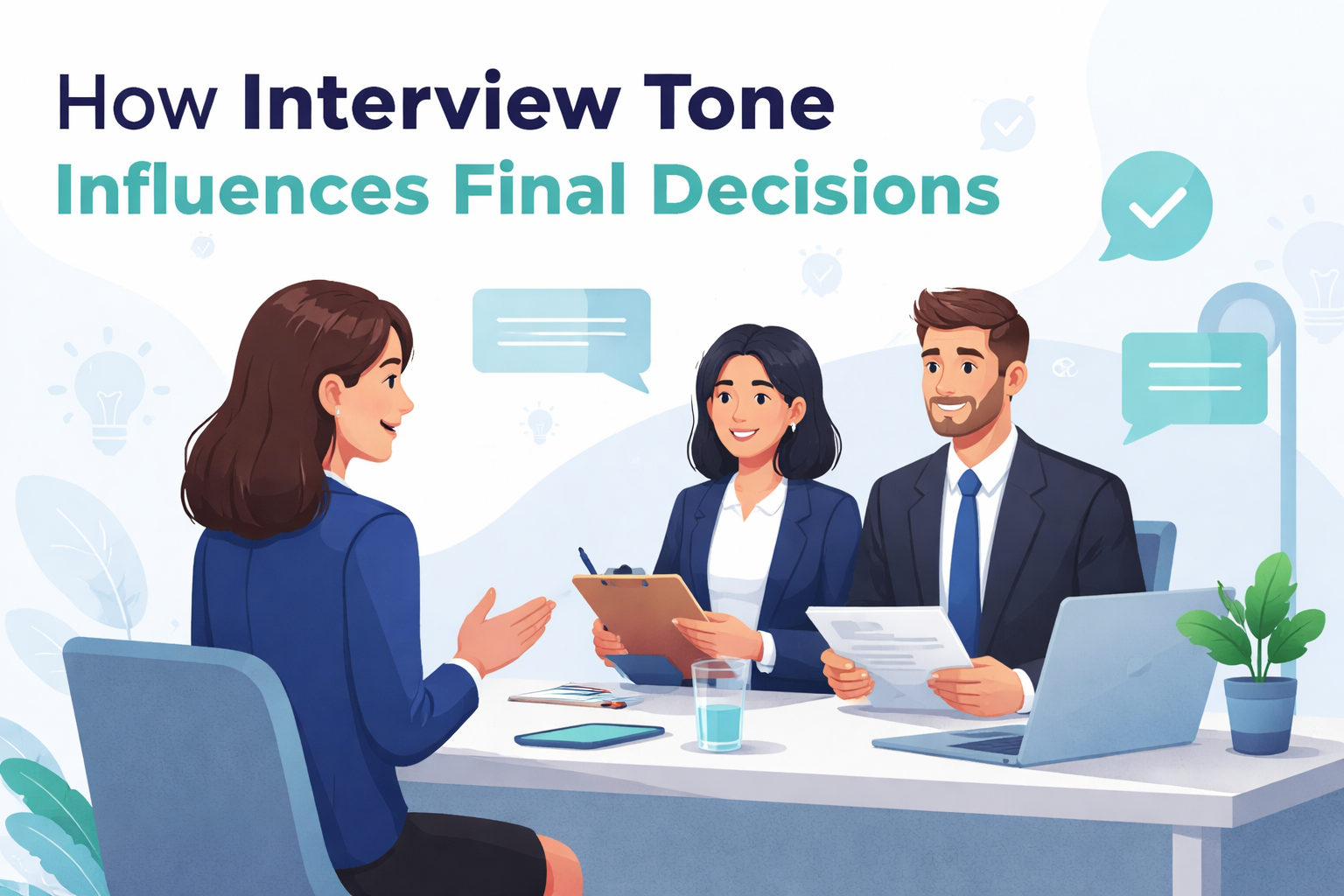
Introduction: Interview Tone
When we talk about interviews, most people think about answers, skills, experience, and qualifications. But there is one more important factor that many candidates ignore. That factor is interview tone.
Tone means the way you speak. It includes your voice, your speed, your confidence, your attitude, and your emotional control. Two candidates can give the same answer, but their tone can create completely different impressions.
Interview tone plays a powerful role in final hiring decisions. Recruiters do not only listen to what you say. They also observe how you say it. Your tone can show confidence, respect, honesty, and interest. It can also show fear, arrogance, confusion, or carelessness.
In this article, we will understand how interview tone influences final decisions and why it matters more than many candidates think.
What Is Interview Tone?
Interview tone is the emotional and vocal quality of your communication during an interview. It includes:
- The volume of your voice
- The speed of your speech
- The clarity of your words
- The energy in your voice
- The emotional balance in your answers
Tone is not about speaking English fluently. A person with simple English but calm and confident tone can impress more than someone with perfect grammar but negative tone.
Recruiters try to understand your personality through your tone. They want to know if you will fit in the team, handle pressure, and communicate professionally.
How Interview Tone Influences Final Decisions?
1. First Impression Is Strongly Connected to Interview Tone
The first few minutes of an interview are very important. Research shows that interviewers form opinions quickly. Even before you finish answering your first question, they may already have a basic idea about you.
If your tone is:
- Calm and respectful, they feel comfortable.
- Confident but not arrogant, they feel positive.
- Nervous and shaky, they may doubt your readiness.
- Overconfident and loud, they may see you as difficult to manage.
Your tone sets the mood of the interview. A positive tone creates trust. A negative tone creates distance.
2. Interview Tone Shows Confidence
Confidence is one of the main qualities employers look for. But confidence is not only about saying “I am confident.” It is about sounding confident.
A confident tone usually has:
- Steady voice
- Normal speed
- Clear pronunciation
- Balanced energy
On the other hand, an unconfident tone may include:
- Very low volume
- Fast speaking due to nervousness
- Frequent “umm” and “ahh”
- Hesitation before every sentence
When your tone is steady and balanced, recruiters feel that you believe in yourself. They feel that you can represent the company well.
3. Tone Reflects Emotional Intelligence
Emotional intelligence means the ability to manage your emotions and understand others. During interviews, recruiters test this quality indirectly.
If you talk about a past conflict in an angry tone, it shows that you still hold negative feelings. If you speak calmly and professionally, it shows maturity.
For example, when answering questions like:
- “Why did you leave your previous job?”
- “Tell me about a difficult manager.”
Your tone matters more than your words. A negative or blaming tone can reduce your chances. A respectful and balanced tone can increase trust.
4. Tone Shows Seriousness
Recruiters want candidates who are serious about the role. Your tone can show whether you really care about the job.
A serious tone is:
- Focused
- Clear
- Engaged
- Interested
If you speak in a careless or lazy tone, it can make you look uninterested. Even if your answers are correct, your tone can send the wrong message.
For example, if you say, “Yes, I am interested in this job,” but your tone is flat and dull, the interviewer may not believe you.
5. Tone Affects Perceived Competence
Competence means the ability to do the job well. Surprisingly, tone can affect how competent you appear.
A candidate with strong tone sounds prepared and capable. A candidate with weak tone may sound unsure, even if they have good skills.
If you explain your project with clarity and structured tone, it creates an image of professionalism. But if you speak in a confused or rushed way, the recruiter may feel that you lack clarity in your thinking.
Tone influences how your knowledge is received.
6. Tone Builds Trust
Trust is a big factor in final decisions. Employers want someone they can trust with responsibility.
Trust is built through:
- Honest tone
- Consistent voice
- Natural expression
If your tone sounds fake or rehearsed, interviewers may feel something is not real. Overacting confidence or memorizing answers can make your tone unnatural.
Natural tone builds authenticity. Authenticity builds trust.
7. Interview Tone Impacts Team Fit
Hiring managers do not only hire skills. They hire people who can work with the team.
Your tone shows your communication style. If your tone is aggressive or dominating, it may create doubt about teamwork.
If your tone is cooperative, respectful, and positive, recruiters imagine you working well with others.
Many times, final decisions are based on cultural fit. Tone plays a silent but strong role in this.
8. Tone During Difficult Questions
Interviews often include difficult questions such as:
- “What is your weakness?”
- “Why should we hire you?”
- “Why were you unemployed for six months?”
In these moments, your tone becomes very important.
If your tone becomes defensive, irritated, or sarcastic, it can reduce your chances. If your tone remains calm and thoughtful, it shows emotional control.
Recruiters observe how you handle pressure. Your tone during challenging questions tells them how you might react in stressful situations at work.
9. Interview Tone in Virtual Interviews
Today many interviews happen online. In virtual interviews, tone becomes even more important because body language is limited.
On platforms like Zoom or Google Meet, voice clarity and tone create a major part of impression.
If your voice sounds dull or low-energy, it can feel disconnected. If your tone is clear and engaging, it keeps the interviewer interested.
In online interviews, your tone carries more weight because visual signals are reduced.
10. Tone and Leadership Potential
Even if you are applying for an entry-level role, recruiters check your growth potential.
Leadership tone includes:
- Clarity
- Calmness
- Confidence
- Responsibility
When you describe your achievements in a balanced tone, it shows self-awareness. If you exaggerate loudly, it may sound insecure.
A mature tone signals future leadership qualities.
11. Tone Reveals Attitude Toward Learning
When interviewers ask about mistakes or failures, your tone reveals your attitude.
If your tone sounds ashamed or defensive, it shows fear. If your tone sounds reflective and positive, it shows growth mindset.
Employers prefer candidates who learn from mistakes. Tone helps them judge this quality.
12. Tone Influences Memory
Interviewers meet many candidates in one day. They may forget exact answers, but they remember feelings.
If your tone makes them feel comfortable and positive, they are more likely to remember you positively.
A strong, calm tone creates emotional impact. Emotional impact influences final decision.
13. Tone Can Balance Small Mistakes
Sometimes candidates make small mistakes in answers. But if their tone remains confident and composed, interviewers may overlook those mistakes.
On the other hand, even a small hesitation with nervous tone can make a simple mistake look bigger.
Tone can reduce or increase the effect of errors.
Conclusion
Interview tone is a silent influencer in hiring decisions. It shapes first impressions, builds trust, shows confidence, and reflects emotional intelligence.
Your tone can make your answers stronger or weaker. It can show seriousness or carelessness. It can create comfort or discomfort.
Good tone is not about speaking loudly or using complex English. It is about balance, clarity, calmness, and authenticity.
When you prepare for interviews, do not only prepare answers. Prepare your tone. Practice speaking with confidence and emotional control.
Because in the end, recruiters may forget some words you said. But they will remember how you made them feel.
And often, that feeling decides the final result.



Leave a Reply