Introduction
In today’s competitive job market, a single job posting can receive hundreds or even thousands of applications within days. Candidates often assume that every resume gets equal attention, but the reality is very different. Recruiters work under intense time pressure and must make fast, structured decisions. That is exactly how recruiters shortlist under high application volume in real hiring environments.
Shortlisting is not random. It follows a filtering logic based on relevance, clarity, risk, and efficiency. Understanding this process helps candidates position their resumes strategically instead of relying on luck.
Recruiters use layered screening, not full resume reading
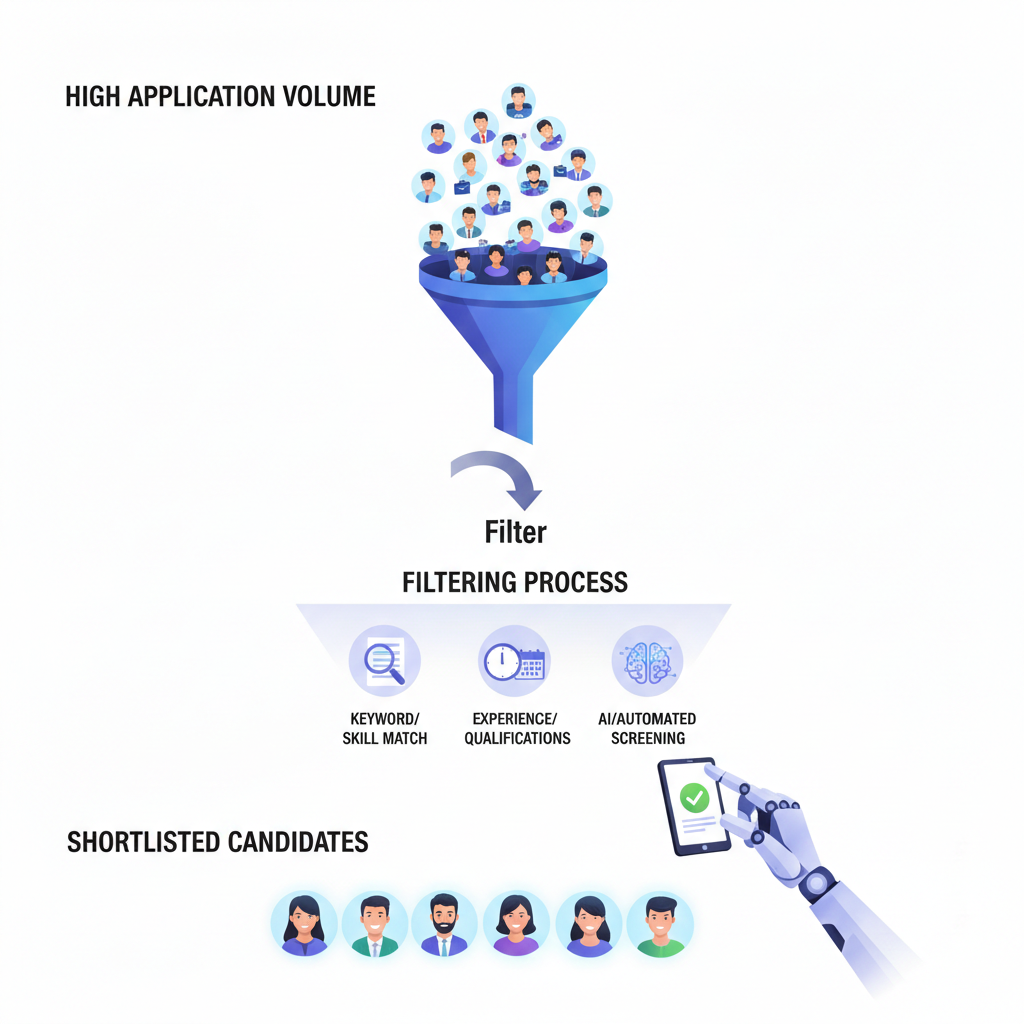
When application volume is high, recruiters do not read every resume in full detail. Instead, they use layered screening methods to manage time efficiently.
The first layer involves quick scanning for role alignment, job titles, and core skills. Only resumes that pass this initial scan move to deeper evaluation. This approach allows recruiters to reduce hundreds of applications to a manageable shortlist quickly.
Time efficiency drives the entire shortlisting structure.
The first six seconds determine initial selection
Research and hiring practices show that recruiters often spend only a few seconds on the first scan of a resume. During this brief review, they look for clarity and immediate relevance.
Clear job titles, structured formatting, and visible skills increase the chances of progressing to the next stage. Dense or confusing resumes may be rejected even if the candidate is qualified.
First impressions heavily influence shortlist outcomes.
Keyword alignment helps in early filtering
Many recruiters use Applicant Tracking Systems or search filters to manage high application volume. These systems prioritize resumes that match job-related keywords.
However, keyword presence alone is not enough. Recruiters still review context and relevance after the automated filtering stage.
This system-driven filtering is a major part of how recruiters shortlist under high application volume.
Role relevance outweighs total experience
Recruiters prioritize candidates whose experience directly matches the job requirements. A candidate with moderate but highly relevant experience may be shortlisted over a more experienced but less aligned applicant.
Relevance reduces training time and hiring risk, making it a key shortlisting factor. This is especially important when recruiters must narrow large applicant pools quickly.
Clear and structured resumes get priority
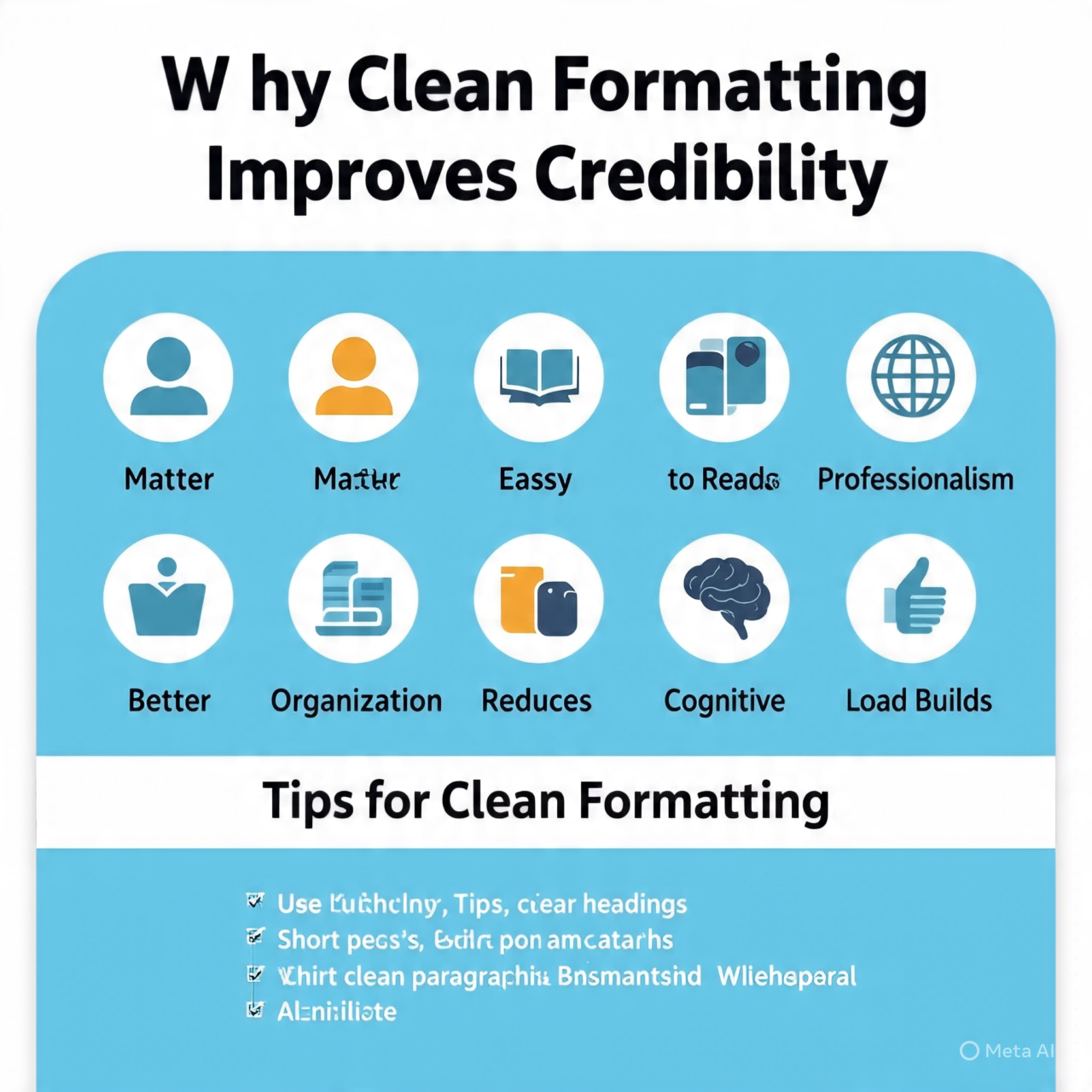
Under high volume, readability becomes a major advantage. Recruiters prefer resumes that are easy to scan and understand.
Clear headings, concise bullet points, and logical structure help recruiters extract key information quickly. Poor formatting slows down review and reduces shortlist chances.
Clarity improves processing speed and selection likelihood.
Recruiters eliminate based on risk signals
Shortlisting is not only about selecting strong candidates. It is also about eliminating perceived risks.
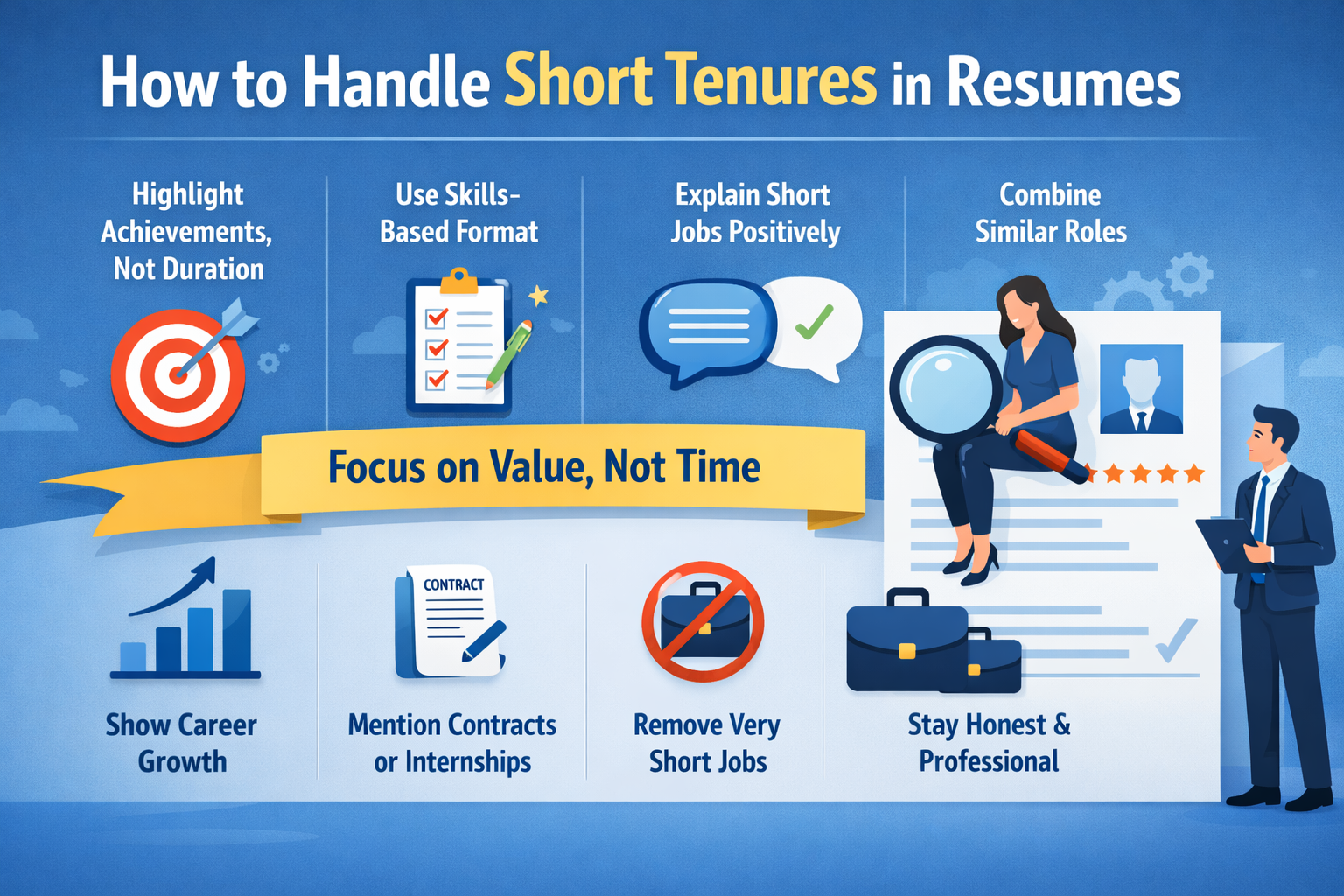
Frequent job changes, unclear career direction, or inconsistent information may raise concerns during quick screening. Even strong profiles can be filtered out if they appear risky under time pressure.
Risk management plays a silent role in shortlisting decisions.
ATS and manual review work together
Applicant Tracking Systems help narrow the pool, but human judgment still drives final shortlisting. Recruiters combine automated filtering with manual scanning.
They look for achievements, communication clarity, and alignment with job scope. This hybrid approach balances speed and quality during high application volume.
Technology supports efficiency but does not replace human evaluation.
Job title matching influences shortlist speed
Recruiters often search by job titles that match the open role. Candidates with directly relevant titles are easier to identify and shortlist.
Even if skills are transferable, mismatched titles may reduce visibility during quick searches. Title alignment improves discoverability and shortlist probability.
This is a practical shortcut used during large-scale screening.
Customization increases shortlist chances
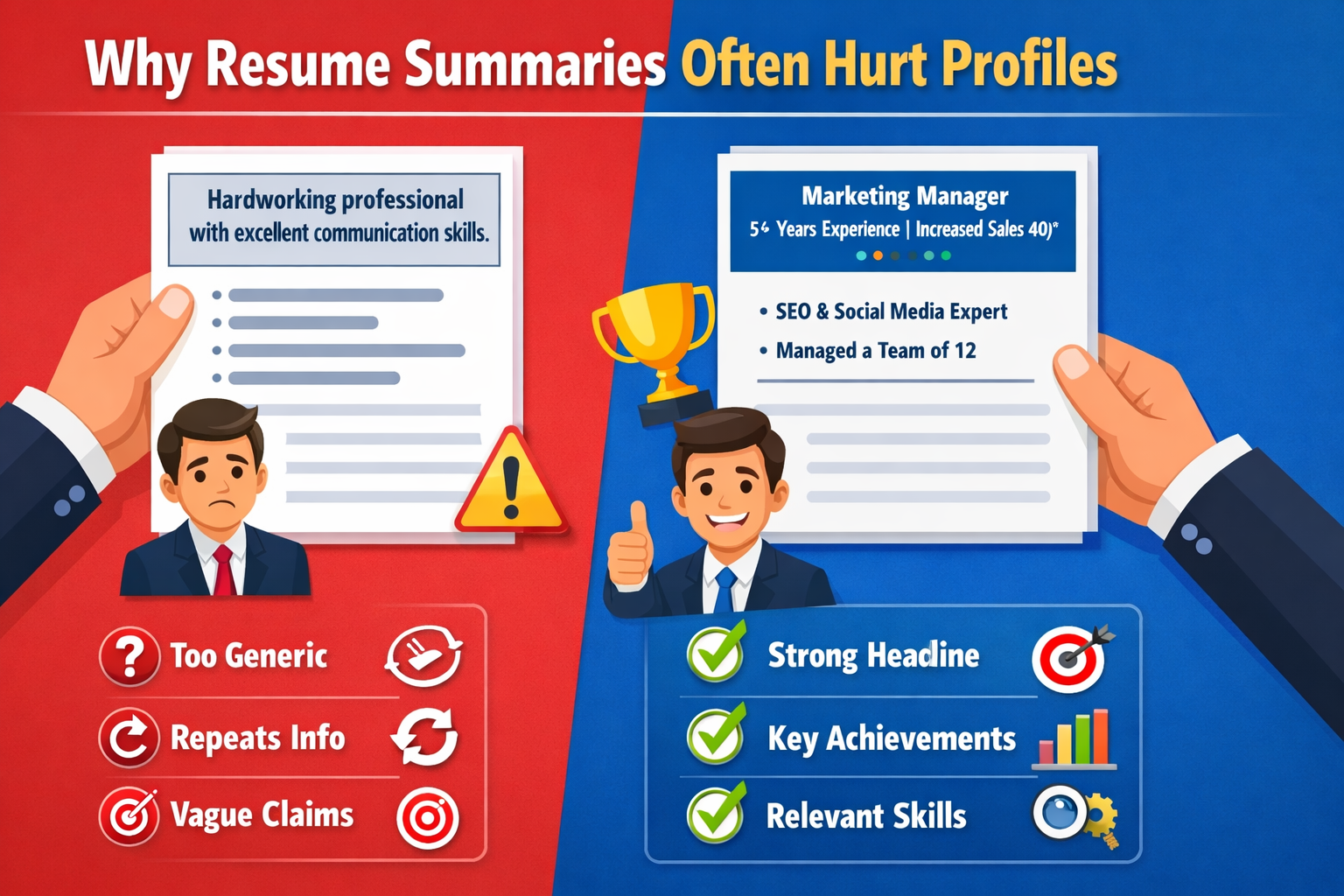
Generic resumes struggle in high-volume applicant pools. Tailored resumes that reflect the job description stand out faster.
Recruiters notice alignment in skills, experience, and language. Customization signals effort and relevance, which improves shortlisting likelihood.
Targeted applications outperform mass applications significantly.
Recruiter workload shapes decision speed
High application volume increases recruiter workload and decision fatigue. To manage this, recruiters rely on patterns and quick signals instead of deep analysis.
They prioritize clarity, alignment, and ease of evaluation. Resumes that require less interpretation are more likely to be shortlisted.
Efficiency becomes the deciding factor when volume is overwhelming.
Why timing of application matters
Early applications often receive more attention than late ones. Recruiters typically review resumes in batches and may shortlist strong early candidates quickly.
As the pipeline fills, later applications face stricter filtering. Timing can influence visibility during high-volume hiring cycles.
Applying early increases review probability.
Conclusion
Shortlisting under high application volume is a structured and time-driven process. That is precisely how recruiters shortlist under high application volume using layered screening, keyword filters, relevance checks, and quick risk evaluation.
Candidates who focus on clarity, alignment, and customization significantly improve their chances of being noticed in crowded applicant pools. To manage applications smarter, track opportunities, and apply strategically, use the best job tool to discover relevant roles and stay ahead in competitive hiring markets.
Find Your Dream Job Today – Explore Endless Career Opportunities and Secure Your Next Role with Best Job Tool.



Leave a Reply