Introduction
In today’s fast-changing job market, short tenures are becoming more common. Many professionals switch jobs within one or two years. Some people leave even earlier due to personal reasons, company issues, or better opportunities. However, short tenures on a resume can sometimes create concern in the minds of recruiters.
Recruiters may wonder:
- Why did this person leave so quickly?
- Is this candidate unstable?
- Will they leave our company too?
But the truth is, short tenures do not always mean something negative. What matters is how you present them.
In this article, we will understand how to handle short tenures in resumes in a smart and professional way.
What Is a Short Tenure?
A short tenure usually means working in a company for less than one year. In some industries, even 1–2 years may be considered short.
However, the definition depends on:
- Industry type
- Career level
- Job role
- Company culture
For example, startups often see faster movement compared to government jobs or traditional companies.
Why Do Short Tenures Happen?
Before learning how to manage them, we must understand why they happen.
1. Company Shutdown
Sometimes companies close due to financial problems.
2. Layoffs
Economic downturns can cause layoffs.
3. Better Opportunity
Some professionals move for higher salary or growth.
4. Role Mismatch
Sometimes the job is not what was promised.
5. Toxic Work Culture
Unhealthy environment forces employees to leave.
6. Personal Reasons
Health issues, relocation, family responsibilities.
7. Contract-Based Jobs
Short contracts naturally create short tenures.
So short tenure is not always a red flag. But poor presentation can make it look like one.
How to Handle Short Tenures in Resume?
Now let’s discuss practical strategies.
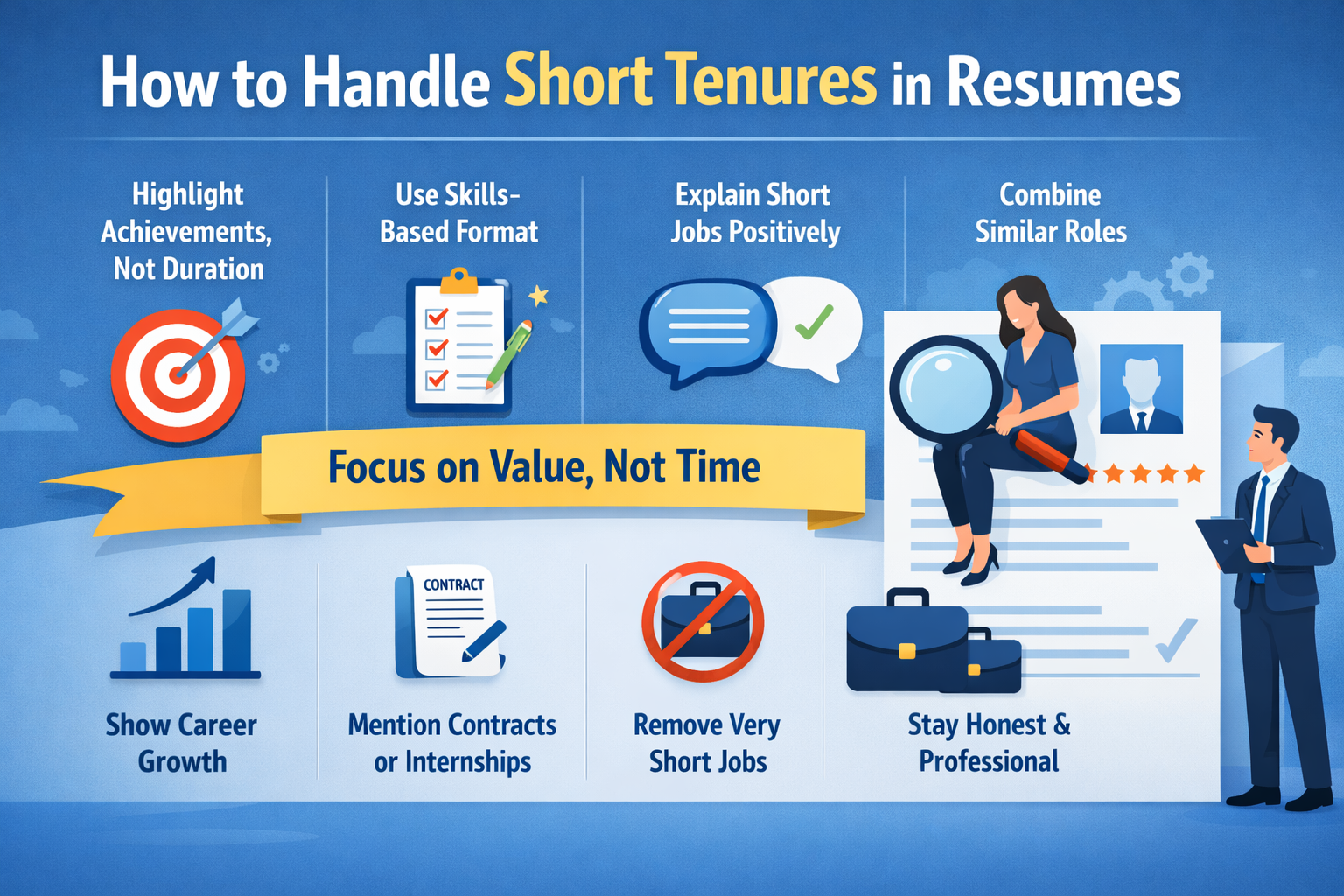
1. Focus on Achievements, Not Duration
Instead of highlighting how long you worked, highlight what you achieved.
Wrong way:
Worked for 6 months in marketing team.
Better way:
Increased social media engagement by 40% within 5 months.
When recruiters see measurable results, duration becomes less important.
2. Use Years Instead of Months (When Appropriate)
Instead of writing:
March 2023 – September 2023
You can write:
2023 – 2023
This reduces attention to short gaps. But do not lie. Just simplify formatting.
3. Combine Similar Roles for Short Tenures
If you worked in similar roles in multiple companies for short time, you can combine them.
Example:
Marketing Executive (2022–2024)
Worked with multiple startups on performance marketing campaigns.
Then mention achievements without focusing on each short period separately.
4. Use a Skills-Based Resume Format for Short Tenures
Instead of a strict chronological format, you can use a functional or hybrid format.
Start with:
- Key skills
- Major achievements
- Projects
Then mention work history briefly.
This shifts attention from timeline to capability.
5. Be Honest but Positive about Short Tenures
Never hide or lie about short tenures. Background verification can expose that.
If asked in interview, explain clearly:
Wrong answer:
I did not like the manager.
Better answer:
The role was different from what was discussed, so I decided to move to a position aligned with my skills.
Keep explanation short and professional.
6. Remove Very Short Roles (If Not Important)
If you worked for 1–2 months and gained no major experience, you may remove it.
However:
- Do not create large unexplained gaps.
- Be ready to explain gap if asked.
7. Mention Contract or Internship Clearly
If the role was temporary, clearly mention:
- Contract-based
- Project-based
- Internship
- Freelance
This automatically explains short duration.
Example:
Content Writer (Contract – 6 Months)
Now recruiter understands it was not permanent.
8. Show Career Direction
If your short tenures show random switching, it looks negative.
But if your career shows improvement, it looks strategic.
Example:
- Sales Executive
- Senior Sales Executive
- Team Lead
Even if each role was short, growth shows progression.
9. Address Frequent Job Changes Smartly
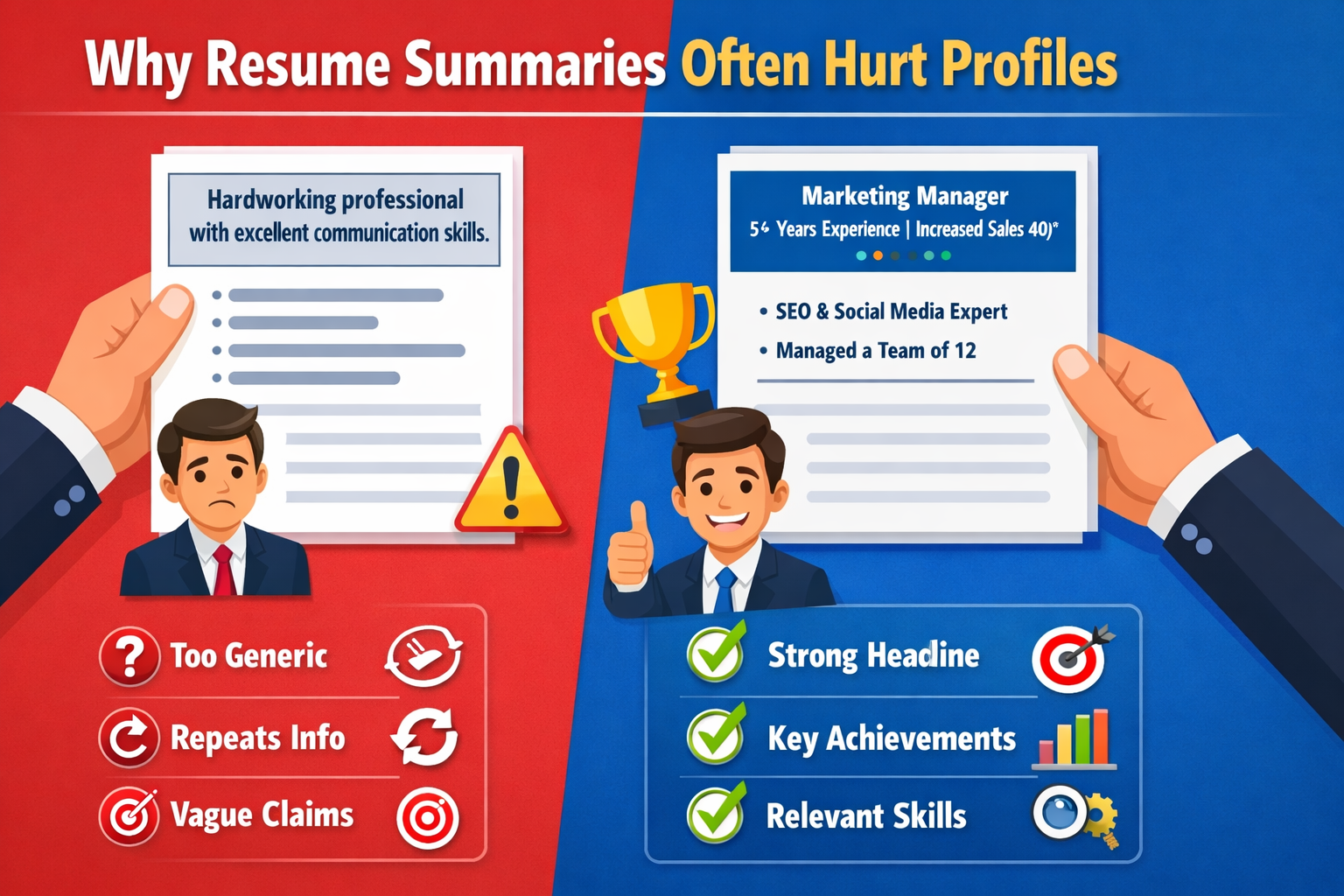
If you have 3–4 short jobs in a row, add a strong summary at top.
Example:
Results-driven marketing professional with experience in fast-growing startups. Skilled in launching campaigns and scaling digital presence in high-pressure environments.
This creates a positive first impression.
10. Use LinkedIn Wisely
Make sure your resume and LinkedIn match.
Since you are active on LinkedIn, Nagma, and building your professional network, your profile should:
- Clearly mention contract roles
- Highlight achievements
- Show consistency in career goals
Consistency builds trust.
Conclusion
Short tenures are common in today’s professional world. Economic shifts, startups, remote jobs, and changing priorities have made careers more flexible.
What truly matters is:
- Honesty
- Clarity
- Achievement
- Growth
- Professional explanation
Do not panic if your resume has short roles. Instead, present them smartly.
Your resume is not just a timeline. It is a story of value you created.
And if your story shows impact, learning, and direction — recruiters will focus on your potential, not your duration.
To explore more such blogs, you can visit the Best Job Tool.



Leave a Reply