Introduction
When we apply for a job, scholarship, promotion, or any opportunity, we usually write about our experience. Many people only list their duties. They write what they were responsible for. They mention what they did every day. But they do not clearly show what they achieved. This is where achievement framing becomes important.
Achievement framing means presenting your work in a way that highlights results, impact, and value. Instead of only telling what you did, you show what difference you made. This simple change can strongly improve your selection chances.
In this article, we will understand why achievement framing improves selection odds and how you can use it effectively.
What Is Achievement Framing?
Achievement framing is the method of describing your work by focusing on outcomes instead of tasks.
For example:
- Task-based statement:
“Handled social media accounts.” - Achievement-based statement:
“Increased Instagram engagement by 40% in three months by creating targeted content.”
Both statements talk about social media. But the second one shows results. It shows growth. It shows measurable impact.
Selectors are not just looking for people who can do tasks. They are looking for people who can create results.
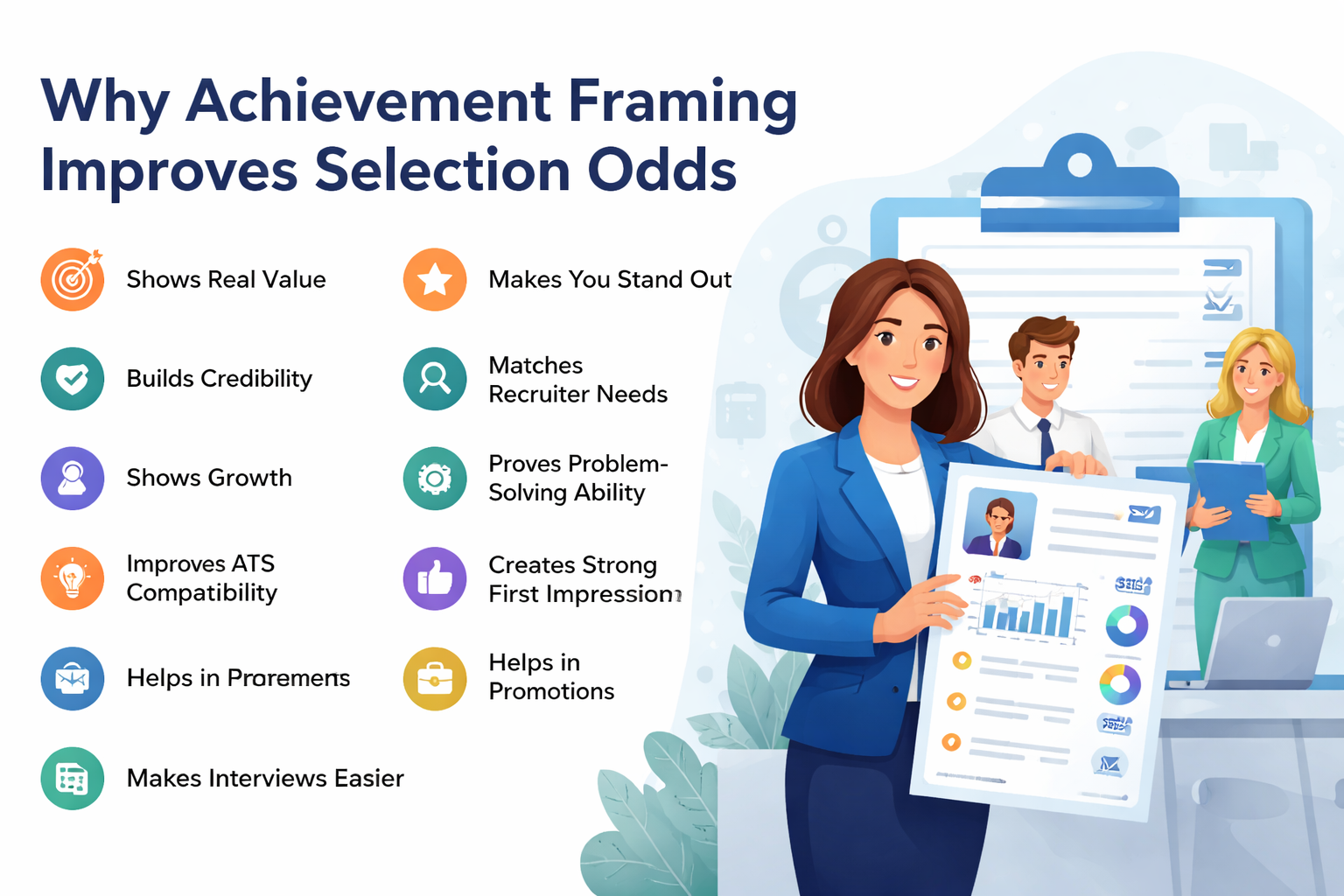
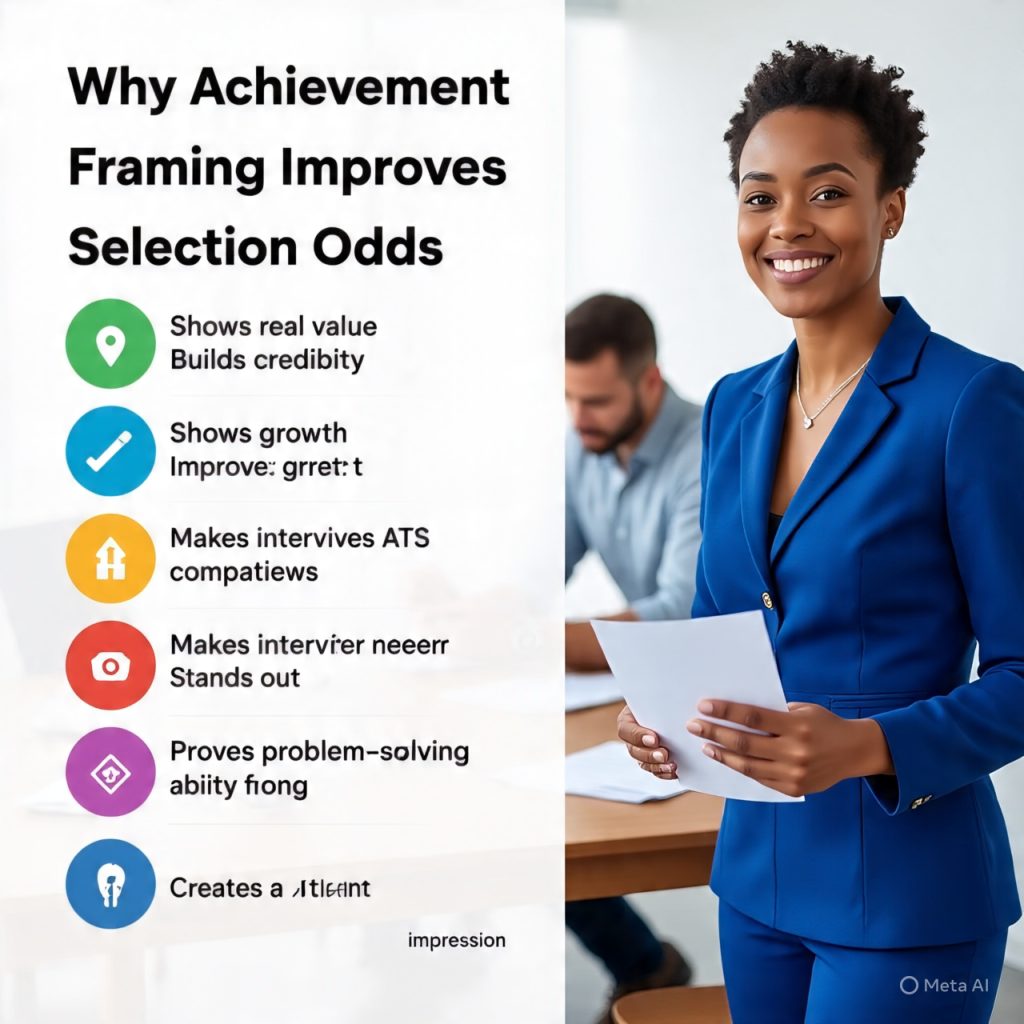
Why Achievement Framing Improves Selection Odds?
1. Achievement Framing Shows Real Value
Every company wants value. Every organization wants improvement. When you frame your experience as achievements, you show the value you brought.
If you write:
- “Managed a team of 5 members.”
It sounds normal.
But if you write:
- “Led a team of 5 members and completed projects 20% before deadline.”
Now it shows impact.
Achievement framing answers an important question:
“What changed because you were there?”
This makes your profile stronger.
2. Achievement Framing Makes You Stand Out from Other Candidates
Many candidates write similar job descriptions. Recruiters read hundreds of resumes every week. Most resumes look the same.
For example:
- Responsible for sales
- Responsible for customer service
- Responsible for reporting
These lines do not show uniqueness.
But if you write:
- “Achieved 120% of monthly sales target for six consecutive months.”
- “Improved customer satisfaction score from 3.5 to 4.6.”
Now your profile becomes different.
Achievement framing helps you stand out in a competitive market.
3. It Builds Credibility and Trust
When you mention numbers, results, and specific outcomes, it builds trust.
Selectors trust data more than general words.
Compare these two:
- “Excellent communication skills.”
- “Resolved 50+ customer complaints per week with 95% positive feedback.”
The second one feels more believable. It shows proof.
Achievement framing reduces doubt. It increases credibility.
4. It Matches What Recruiters Actually Look For
Recruiters and hiring managers are trained to look for results. They ask questions like:
- Did this person improve performance?
- Did this person increase revenue?
- Did this person reduce costs?
- Did this person solve problems?
If your resume already answers these questions, you make their work easier.
When your profile clearly shows achievements, recruiters can quickly see your impact. This improves your selection odds.
5. Achievement Framing Shows Growth and Progress
Achievement framing can also show growth over time.
For example:
- “Promoted from Junior Executive to Senior Executive within two years after consistently exceeding targets.”
This shows:
- Hard work
- Performance
- Trust from management
Growth is attractive. Companies want people who improve.
When you highlight achievements, you show progress, not just experience.
6. It Demonstrates Problem-Solving Ability
Every organization faces problems. They want employees who can solve them.
Achievement framing allows you to show how you solved problems.
Instead of:
- “Worked on process improvement.”
You can write:
- “Reduced processing time by 30% by redesigning workflow system.”
Now you are not just someone who worked. You are someone who improved things.
This shows problem-solving skills clearly.
7. It Works Well with ATS (Applicant Tracking Systems)
Many companies use systems like Workday and Taleo to filter resumes.
These systems look for keywords and measurable results.
When you write achievement-based statements with clear metrics, it increases the chances that your resume will pass the system filters.
For example:
- Increased revenue
- Reduced costs
- Improved efficiency
- Achieved target
These words match job descriptions better than simple task descriptions.
8. It Creates a Strong First Impression
Recruiters usually spend only a few seconds reviewing each resume.
If they quickly see strong results like:
- “Generated ₹5 lakh in new business within first quarter.”
- “Improved website traffic by 60%.”
It creates a powerful first impression.
Achievement framing helps you communicate strength quickly.
And first impression matters a lot.
9. Achievement Framing Shows Confidence Without Saying “I Am Confident”
Many people write:
- “Hardworking”
- “Dedicated”
- “Team player”
- “Motivated”
But these are just words. Anyone can write them.
When you show achievements, you prove these qualities.
For example:
- “Completed project 2 weeks before deadline while managing multiple clients.”
This shows dedication and time management without directly saying it.
Achievement framing allows your work to speak for you.
10. It Makes Interviews Easier
When you frame your resume around achievements, interviews become easier.
Why?
Because every achievement becomes a story.
If you wrote:
- “Increased sales by 35%.”
The interviewer may ask:
“How did you do that?”
Now you can explain your strategy, actions, and learning.
Achievement framing gives you ready examples for behavioral questions.
It helps you answer confidently.
11. It Aligns with Business Language
Business language is focused on:
- Results
- Performance
- Impact
- Data
- Growth
When your resume speaks the same language, it shows professionalism.
Achievement framing aligns your profile with business thinking.
You start sounding like someone who understands value creation.
12. It Helps Freshers Too
Many freshers think they do not have achievements.
But achievement framing is not only about big numbers.
Even small achievements count.
For example:
- “Completed internship project ahead of schedule and received appreciation from supervisor.”
- “Improved class project score from 70% to 90% through research and presentation skills.”
Even academic and volunteer achievements can be framed properly.
The key is to show outcome.
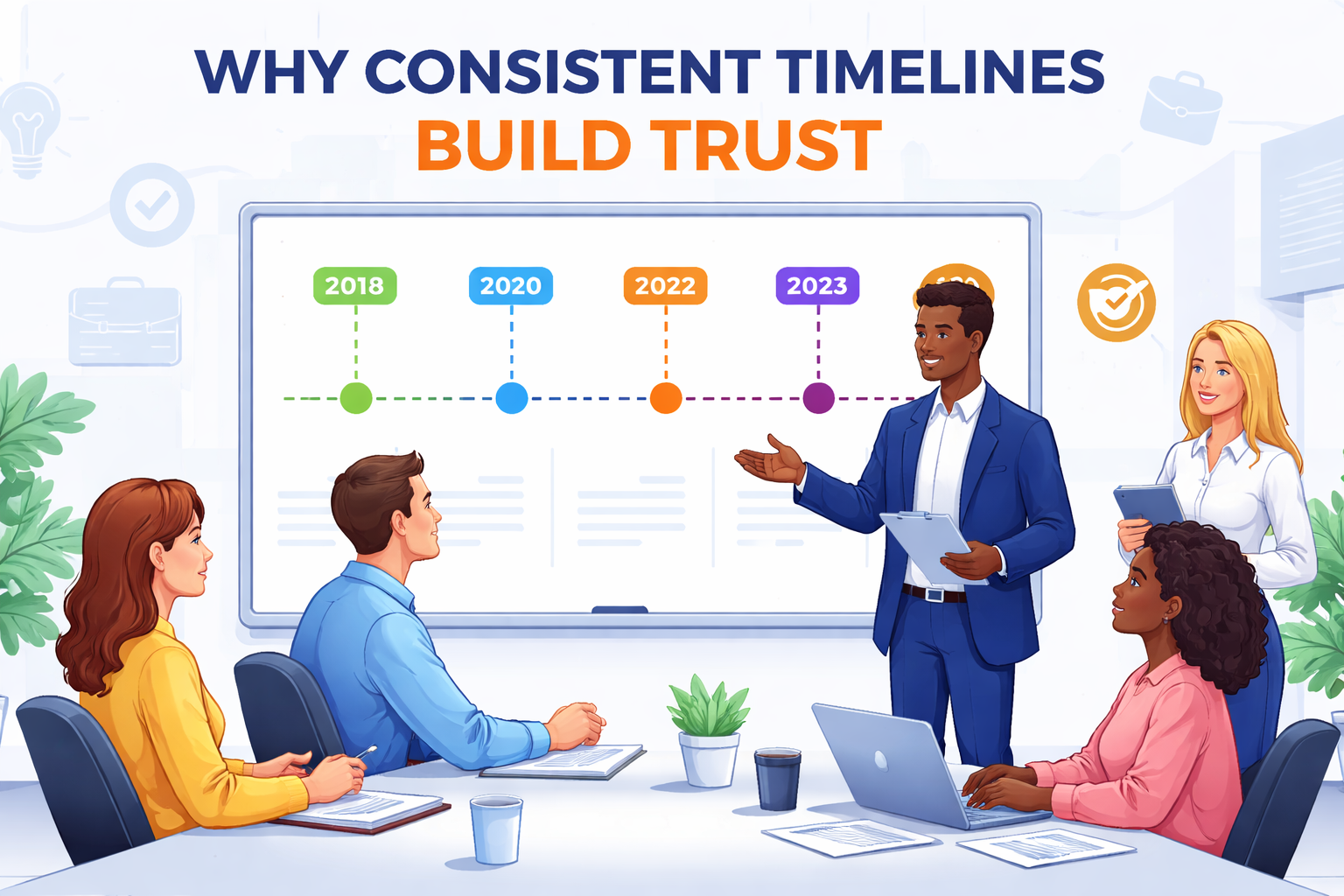
13. Achievement Framing Reduces Resume Weakness
If you have:
- Short job tenures
- Career gaps
- Career changes
Achievement framing can reduce the negative impact.
When your resume clearly shows strong results, recruiters focus more on value and less on small issues.
Strong achievements can shift attention from weaknesses to strengths.
14. It Reflects Professional Maturity
Writing achievements shows that you understand your role in a bigger picture.
Instead of thinking:
“My job was to send emails.”
You think:
“My work improved communication efficiency.”
This shows maturity and awareness.
Professionals who think in terms of impact are often preferred for higher roles.
15. It Increases Promotion Chances Too
Achievement framing is not only for new jobs.
If you are asking for promotion, your manager wants proof of performance.
If you present your yearly work as:
- “Handled team operations.”
It sounds average.
But if you present:
- “Reduced team errors by 25% and improved client retention rate.”
It becomes powerful.
Achievement framing increases selection odds inside organizations too.
Conclusion
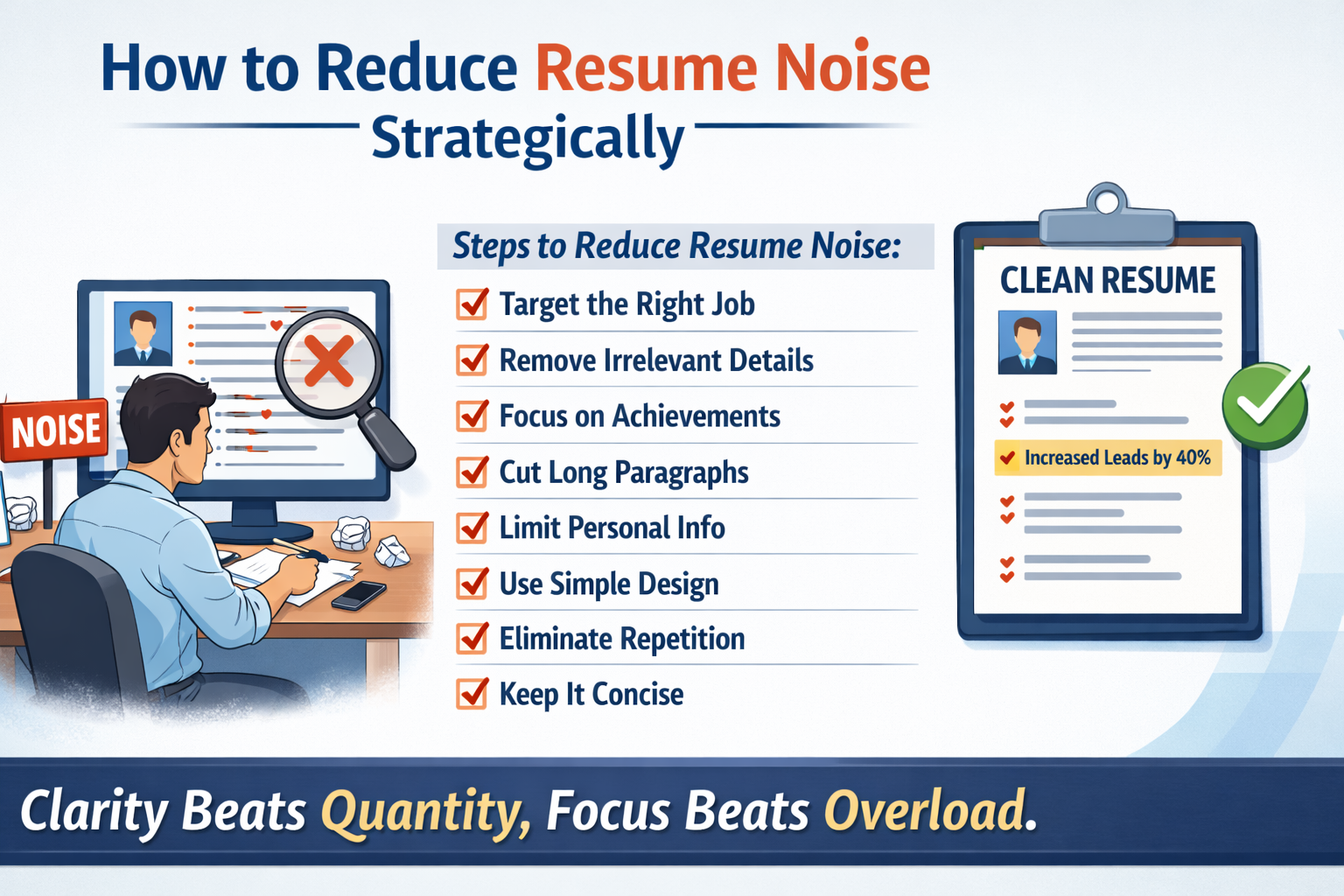
Achievement framing is not about writing more. It is about writing better.
It is about changing your focus from “What I did” to “What I achieved.”
In today’s competitive job market, simple listing of duties is not enough. Recruiters want evidence of impact. They want people who can create change and bring measurable results.
If you start framing your work as achievements, you automatically improve your professional image.
And when selectors clearly see your value, your selection odds naturally increase.
So next time you update your resume or portfolio, ask yourself one important question:
What did I achieve, and how did it make a difference?
Your answer to this question can change your career direction.
To explore more such blogs, you can visit the Best Job Tool.

Leave a Reply