Introduction
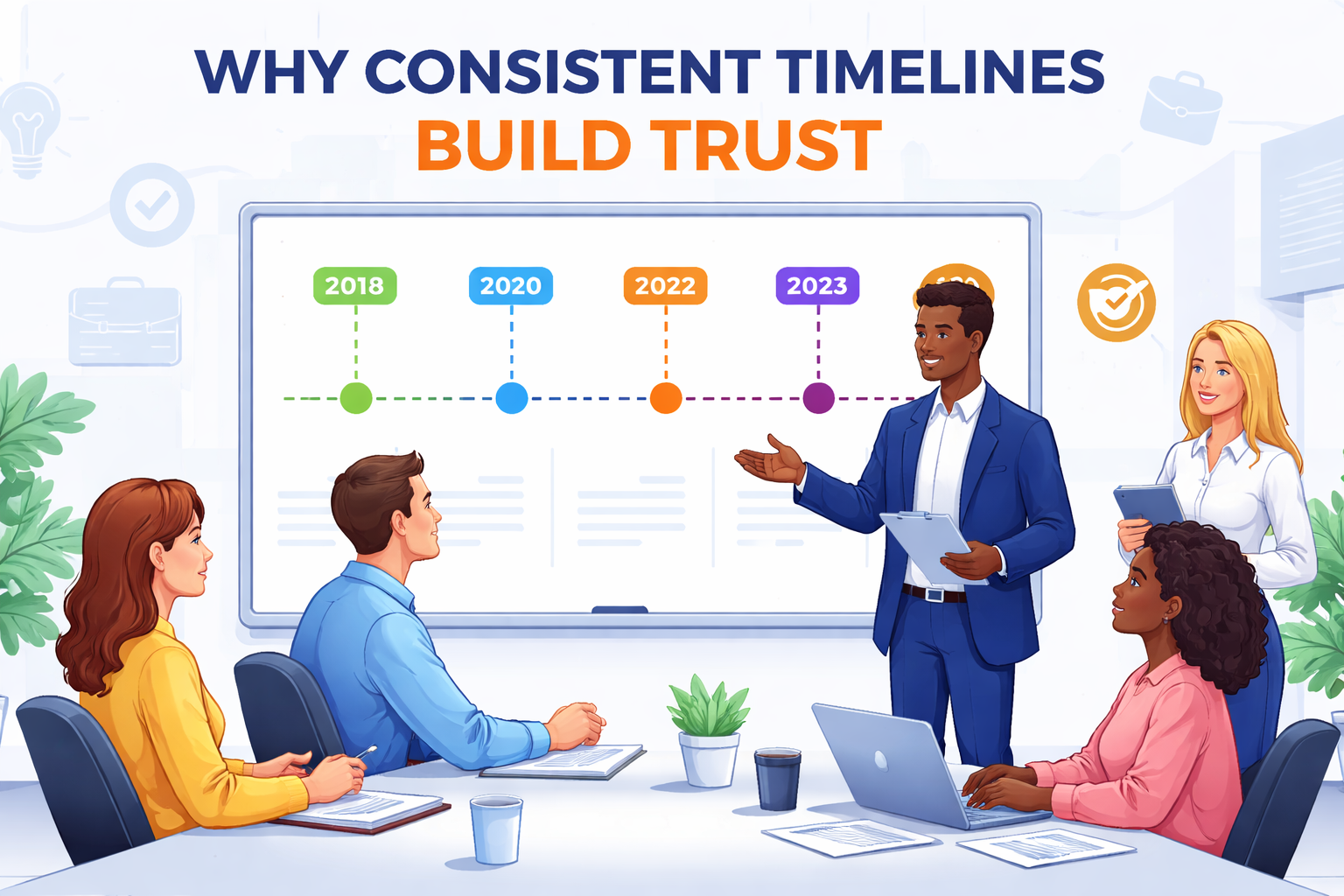
In professional life, trust is everything. Whether you are applying for a job, building a freelance career, running a business, or creating a personal brand, trust decides your growth. One simple but powerful way to build trust is by showing consistent timelines.
Many people focus only on skills, achievements, and big company names. But they ignore one important thing — timeline consistency. When your work history, projects, and career journey show clear and steady timelines, people feel confident about you. When timelines look confusing or broken, people start asking questions.
In this article, we will understand why consistent timelines build trust and how they improve your professional image.
What Do We Mean by Consistent Timelines?
A consistent timeline means:
- Clear start and end dates
- Logical career growth
- No unexplained long gaps
- Smooth transition between roles
- Honest representation of work duration
If someone reads your resume or profile, they should understand your journey without confusion.
Why Consistent Timelines Build Trust?
1. Consistency Shows Stability
When employers or clients see consistent timelines, they feel you are stable.
For example:
- Working 2–3 years in one role
- Gradual promotions
- Clear progression from junior to senior position
This shows that you can stay committed. Stability creates confidence.
On the other hand, if someone changes jobs every 3–4 months without explanation, it may create doubt. People may think:
- Is this person reliable?
- Will they leave quickly?
- Are they difficult to work with?
Consistency reduces these doubts.
2. Consistent Timelines Reflects Commitment
Commitment is a strong quality. When you stay in a role long enough to learn, grow, and contribute, it shows dedication.
For example:
- 1 year internship → 2 years executive role → 3 years manager role
This looks natural and committed.
Commitment builds trust because it shows:
- You do not quit easily
- You take responsibility
- You complete what you start
Trust grows when people see long-term effort.
3. Consistent Timelines Makes Your Story Easy to Understand
Your career is a story. If the story is confusing, people lose interest.
Imagine reading this timeline:
- 2020–2021: Marketing Intern
- 2021–2024: Marketing Executive
- 2024–Present: Marketing Manager
This is simple and clear.
Now imagine this:
- 2020–2020: Intern
- 2020–2020: Freelancer
- 2021–2021: Consultant
- 2021–2022: Temporary role
- 2022–2022: Short contract
This looks confusing even if the person worked hard.
Clear timelines make your story smooth. When your story is easy to understand, trust increases automatically.
4. It Shows Professional Maturity
Mature professionals understand the value of planning.
When your timeline shows steady growth, it indicates:
- You make thoughtful decisions
- You plan your moves
- You think long term
Professional maturity is attractive to employers and clients.
It shows that you are not acting based on emotions or fear. You are building your career step by step.
5. Consistent Timelines Reduces Suspicion
When there are unexplained gaps, people start guessing.
They may think:
- Was there performance issue?
- Was there conflict?
- Was there termination?
Even if the reason is genuine, unclear timelines create doubt.
If you took a break for studies, health, family, or personal growth, you can mention it clearly. Honesty builds trust.
It is not the gap that hurts. It is the confusion that hurts.
6. It Improves Resume Credibility
Recruiters often spend very little time on each resume. Studies show that they may spend only a few seconds scanning it.
If they see:
- Clear dates
- Logical progression
- No overlap confusion
They feel comfortable moving forward.
But if they see:
- Overlapping dates
- Mismatched months
- Different timelines in resume and LinkedIn
It damages credibility.
Consistency across platforms builds strong trust.
7. Consistent Timelines Shows Growth, Not Random Movement
Consistent timelines show growth.
For example:
- Junior Developer → Developer → Senior Developer → Team Lead
This looks like progress.
But if someone goes:
- Developer → Sales → HR → Developer → Marketing
Without explanation, it may look random.
Career changes are okay. But they should have logic. When growth is visible, trust becomes stronger.
8. It Helps During Background Verification
Many companies conduct background checks.
If your timeline is clear and matches official records, it builds trust.
If there are mismatches:
- Different joining dates
- Wrong exit dates
- Fake overlapping roles
It can create serious problems.
Honest and consistent timelines protect your reputation.
9. Consistent Timelines Builds Confidence in Freelancers
For freelancers, timeline consistency is also important.
If a freelancer shows:
- Long-term clients
- Ongoing contracts
- Regular project history
It shows reliability.
Clients feel safer hiring someone who has consistent work history.
Especially on platforms like Upwork and Fiverr, consistent activity and long-term projects increase trust.
When clients see repeated positive work over time, they believe in your stability.
10. It Shows You Can Handle Responsibility
Responsibility takes time.
If you stay in a role long enough, it means:
- You handled pressure
- You completed projects
- You solved problems
People trust those who have stayed long enough to prove themselves.
Short stays sometimes look like unfinished work.
Consistency shows that you do not run away from challenges.
11. It Supports Personal Branding
Today many professionals build personal brands on platforms like LinkedIn.
When your profile shows:
- Clear job dates
- Continuous learning
- Structured growth
Your personal brand becomes stronger.
Inconsistent timelines can damage your authority.
People trust professionals whose journey looks structured and intentional.
12. Consistent Timelines Shows Emotional Stability
Frequent job hopping sometimes signals emotional instability.
It may show:
- Impulsive decisions
- Reaction to small problems
- Lack of patience
Consistent timelines show:
- Patience
- Adjustment ability
- Emotional control
Emotional stability increases trust in leadership roles.
13. It Reflects Long-Term Vision
Trust grows when people see vision.
If your timeline shows:
- Skill development
- Gradual promotions
- Bigger responsibilities
It indicates you think about the future.
Long-term vision creates confidence in employers and clients.
They feel you are not just working for salary. You are building something meaningful.
14. Consistent Timelines Reduces Interview Pressure
When your timeline is clear, interviews become easier.
You can explain your journey confidently.
But when timelines are confusing, interviews become stressful.
You may face questions like:
- Why did you leave so soon?
- What were you doing in this gap?
- Why is this overlapping?
Clear timeline means fewer defensive answers.
And when you answer calmly, trust increases.
15. It Builds Self-Trust
Trust is not only external. It is internal too.
When your career path looks organized, you feel confident.
You feel:
- I am moving forward
- I am growing
- I am consistent
Self-trust improves your communication and confidence.
And confident people naturally earn more trust.
Conclusion
Consistent timelines build trust because they show stability, commitment, growth, and honesty. They reduce confusion and increase credibility. They make your career story clear and easy to understand.
In today’s competitive world, many people focus only on skills and achievements. But structure matters too.
When your timeline is clear, people feel safe trusting you.
And in professional life, trust opens more doors than talent alone.
Build your skills. Build your achievements. But also build a consistent timeline.
Because consistency is not just about time — it is about trust.





Leave a Reply