Introduction
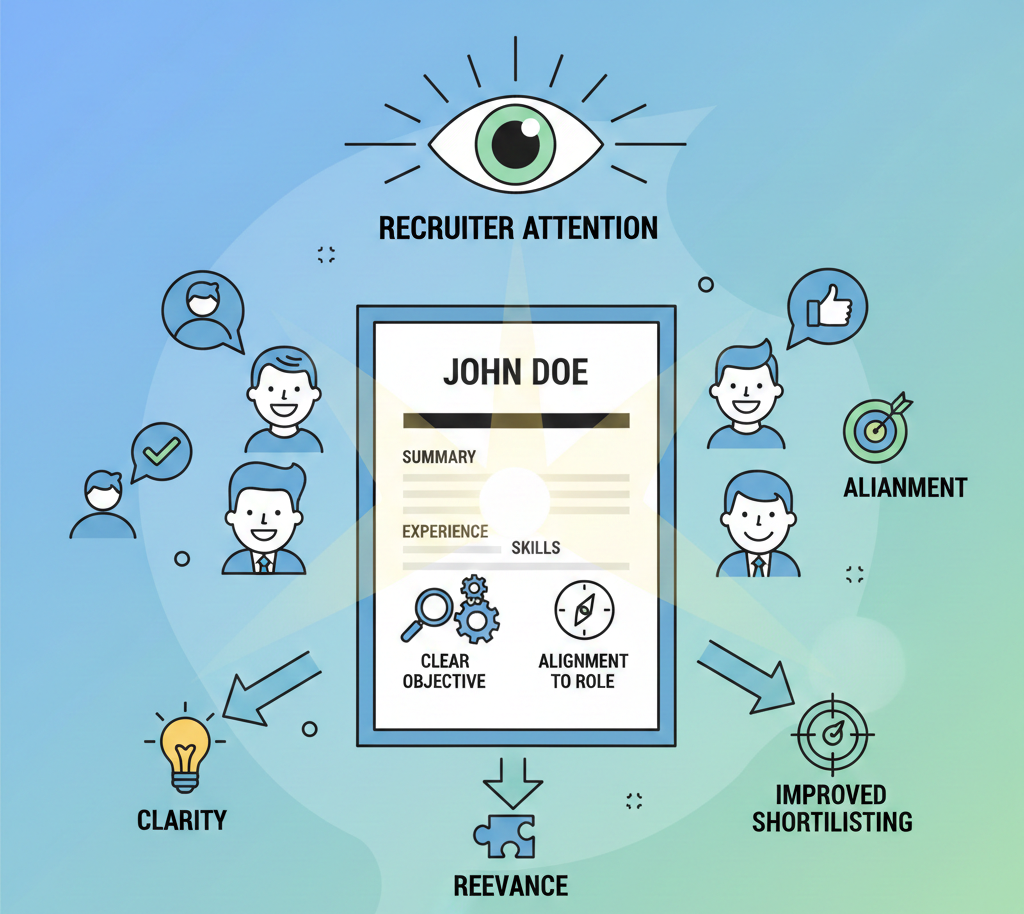
Many job seekers believe that adding more information makes a resume stronger. They include every skill, every task, and every experience to appear more qualified. However, in real hiring scenarios, focused resumes consistently outperform overloaded ones. Recruiters prefer clarity over volume and relevance over excess detail. That is exactly why resumes with focus perform better in competitive hiring environments.
A focused resume does not mean a weak profile. It means a strategically aligned document that highlights what truly matters for the target role. This alignment makes evaluation faster and more effective for recruiters.
Recruiters scan for relevance, not completeness
Recruiters review hundreds of resumes under time pressure. They are not searching for everything a candidate has ever done. Instead, they look for role relevance within seconds.
A focused resume immediately communicates alignment with the job. An unfocused resume forces recruiters to search for relevant information, which increases cognitive effort. In high-volume hiring, clarity wins over completeness.
This scanning behavior is a core reason why resumes with focus perform better during shortlisting.
Clarity reduces decision fatigue for recruiters
When resumes contain excessive information, recruiters must mentally filter what is important. This slows down the evaluation process.
Focused resumes present key skills, achievements, and experiences in a structured and concise way. This reduces decision fatigue and makes the candidate easier to assess quickly.
Efficiency becomes a major advantage during resume screening.
Strong alignment with job roles improves shortlisting
Focused resumes are typically tailored to specific roles. They highlight experiences and skills that directly match job requirements.
This direct alignment signals readiness and reduces perceived training risk. Recruiters naturally shortlist candidates who appear job-ready instead of broadly experienced but unfocused.
Role alignment significantly improves shortlist probability.
Focused storytelling builds a clear career narrative
A resume with focus presents a coherent professional story. It shows progression, specialization, and intentional growth.
In contrast, scattered resumes create confusion about career direction. Even strong candidates may be overlooked if their narrative appears inconsistent or overly broad.
Clear storytelling strengthens recruiter confidence and evaluation clarity.
Highlighting impact becomes easier with focus
Focused resumes allow candidates to emphasize measurable achievements instead of listing generic responsibilities.
Recruiters value outcomes such as efficiency improvements, revenue impact, or project success more than long task lists. When the resume is focused, these achievements stand out clearly.
Impact visibility increases perceived value significantly.
Keyword relevance improves without overstuffing
Strategic focus naturally improves keyword alignment without excessive repetition. Relevant keywords appear within meaningful context rather than forced placement.
This balanced approach helps resumes pass Applicant Tracking Systems while remaining readable for human reviewers.
Overloaded keyword stuffing often reduces credibility, whereas focused usage enhances professionalism.
Better formatting and readability enhance perception
Focused resumes are usually cleaner in design and structure. They use concise bullet points, clear headings, and logical organization.
This improves readability and allows recruiters to extract information quickly. Poorly focused resumes often appear dense and difficult to scan, which reduces engagement.
Visual clarity reinforces professional impression.
Reduced noise increases key message retention
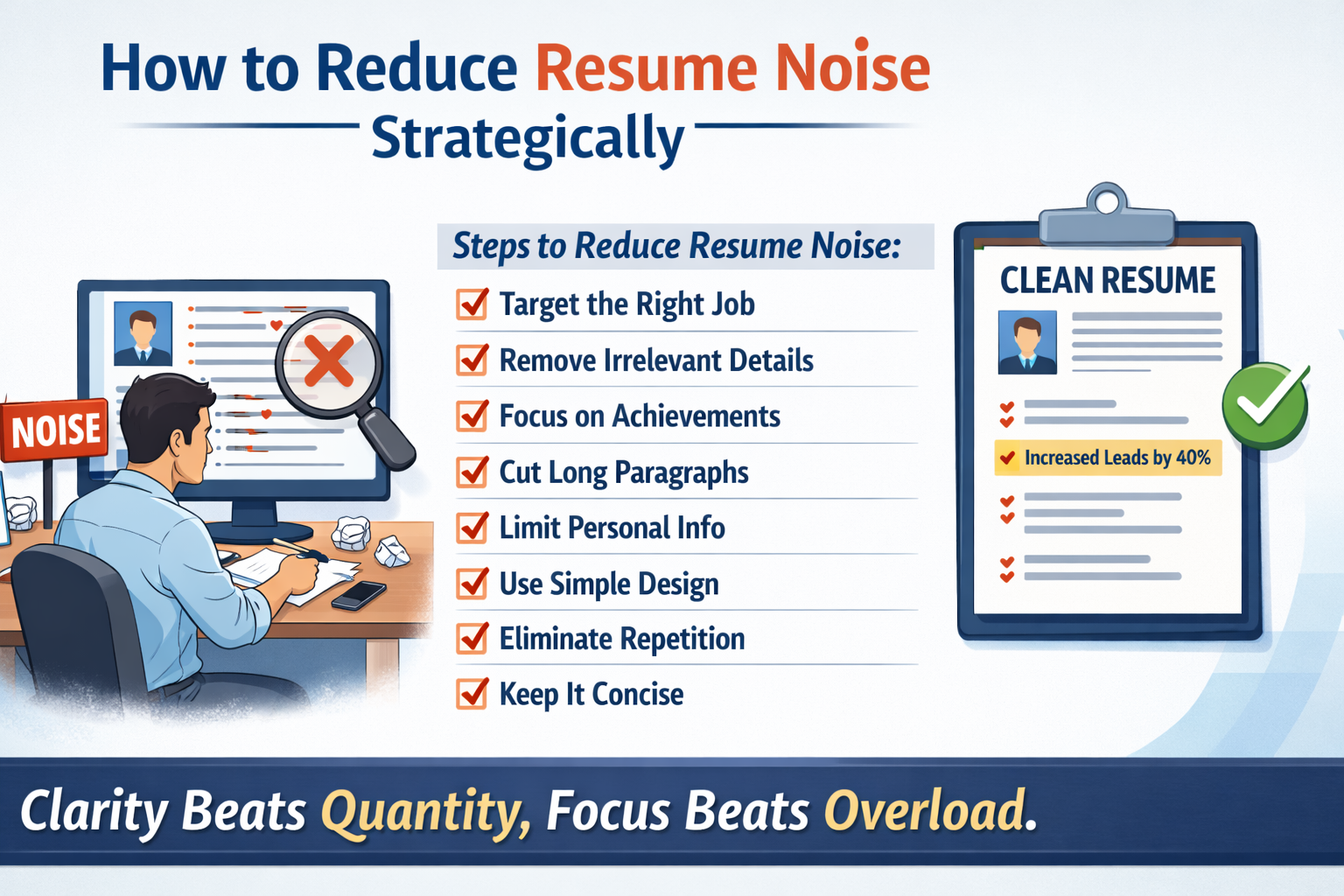
When resumes contain unnecessary details, important achievements get buried. Recruiters may miss strong qualifications simply due to information overload.
Focused resumes eliminate noise and prioritize high-value content. This improves message retention and ensures key strengths are noticed.
Less content often leads to stronger impact.
Focus signals strategic thinking
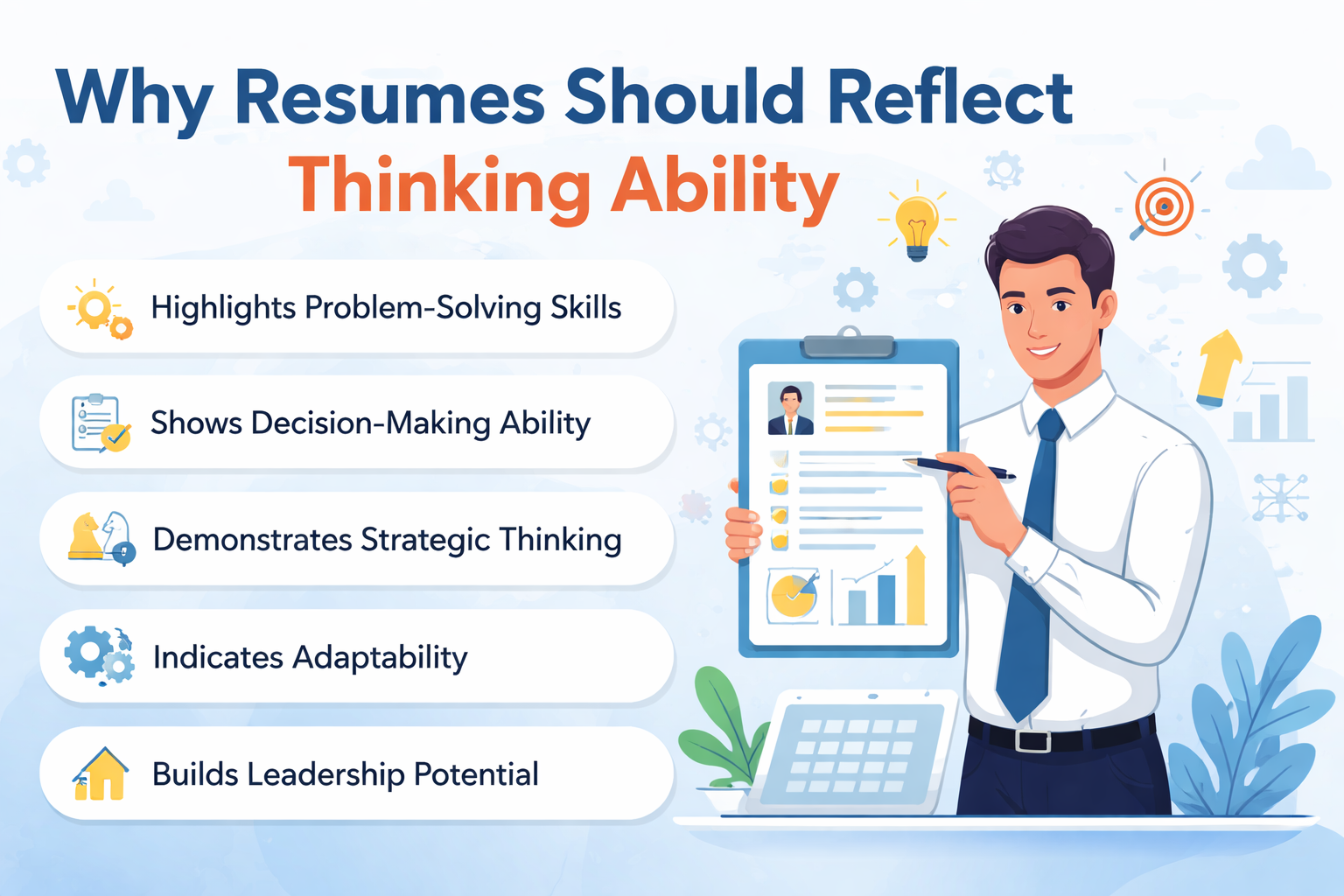
A well-focused resume shows that the candidate understands the role and hiring expectations. It demonstrates intentional communication rather than generic application behavior.
Recruiters interpret this as professionalism and preparation. Strategic presentation increases perceived seriousness and commitment.
This perception advantage explains why resumes with focus perform better even among equally qualified candidates.
Customization becomes easier with focused resumes
Focused resumes are easier to customize for different roles. Candidates can adjust key sections without rewriting the entire document.
This flexibility allows better job alignment and higher response rates. Generic resumes lack this adaptability and often underperform in targeted applications.
Customization strengthens relevance in competitive applicant pools.
Confidence and credibility improve with precision
Precise and focused language makes candidates sound more confident and credible. Clear statements about achievements and responsibilities build trust.
In contrast, vague or overly broad descriptions reduce clarity and weaken impact. Precision enhances both readability and professional perception.
Confidence in communication influences recruiter evaluation positively.
Conclusion
In modern hiring, clarity and relevance matter more than volume. That is precisely why resumes with focus perform better across automated screening and human evaluation stages.
Focused resumes improve readability, highlight impact, strengthen alignment, and reduce recruiter decision fatigue. They communicate value quickly and effectively in high-volume hiring environments. To create targeted resumes, track role alignment, and apply strategically, use the best job tool to discover opportunities that match your strengths and career direction.
Find Your Dream Job Today – Explore Endless Career Opportunities and Secure Your Next Role with Best Job Tool.


Leave a Reply