Introduction
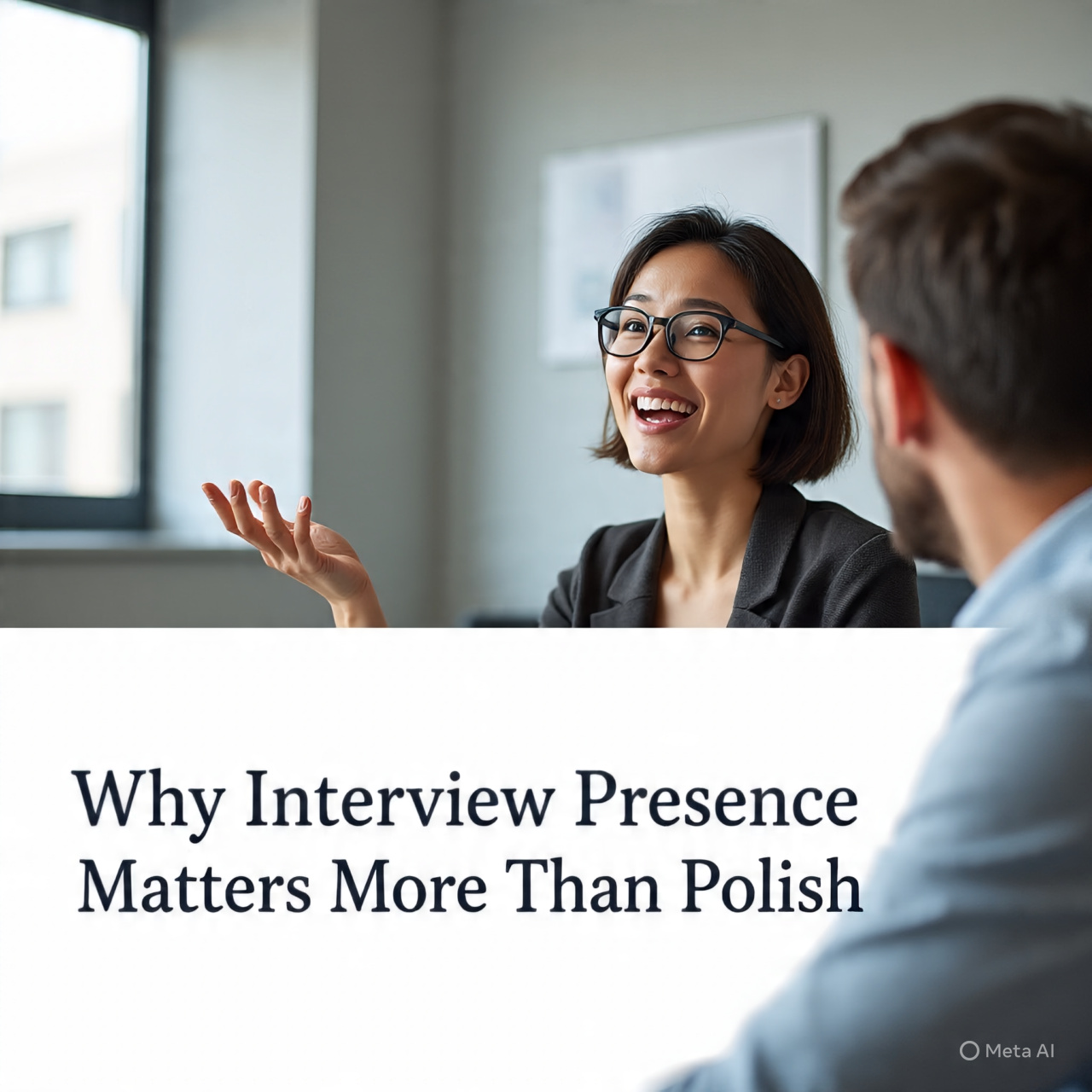
When people prepare for interviews, they often focus on making themselves look perfect. They want a polished resume, a well-rehearsed speech, and perfect answers. They think if they show polish, they will impress the interviewer. But in reality, interview presence matters more than polish. Being present in an interview, rather than just polished, can make a bigger difference in how you are perceived.
In this article, we will explore why presence matters more, how it affects the interview outcome, and what you can do to improve your interview presence.
Understanding Interview Presence
Interview presence is the ability to be fully attentive, engaged, and authentic during an interview. It is about showing confidence, listening carefully, and responding thoughtfully. Presence is more than looking neat, having a great resume, or knowing the “perfect” answer.
When a candidate has presence, they make a connection with the interviewer. The interviewer feels that the candidate is not only capable but also trustworthy and confident. This connection can influence the final decision more than polish ever can.
Key Elements of Presence
- Confidence – Confidence is different from arrogance. It is a calm belief in your abilities. A candidate who answers questions confidently and clearly demonstrates presence.
- Attentiveness – Listening carefully to the interviewer’s questions and responding to what is asked shows presence. Candidates who are distracted or over-rehearsed often lose points.
- Authenticity – Being yourself is crucial. Interviewers can sense when a candidate is pretending. Authenticity builds trust.
- Body Language – Eye contact, posture, and gestures all show presence. Good body language communicates confidence and engagement.
- Energy – Being enthusiastic without overdoing it creates a positive impression. Energy shows you are interested in the role and the conversation.
How Interview Presence Influences Interview Outcomes?
Presence can influence interview outcomes in many ways:
1. Interview Presence Builds Rapport
Candidates with strong presence can build rapport with the interviewer. Rapport is the connection that makes the interviewer comfortable and more likely to see the candidate as a good fit for the team. Simple things like smiling, nodding, and showing interest in the conversation can create rapport.
2. Interview Presence Demonstrates Confidence
Presence shows confidence naturally. When a candidate is fully present, they don’t need to overstate their achievements or try too hard to impress. Confidence comes across in how they listen, answer questions, and engage in the discussion.
3. Interview Presence Communicates Authenticity
Authenticity is a key factor in interview success. Interviewers can tell when a candidate is being genuine. Candidates with presence do not over-polish or pretend to be someone they are not. Authenticity creates trust, and trust is essential for hiring decisions.
4. Interview Presence Highlights Problem-Solving Skills
Interviewers often test candidates’ thinking through situational or behavioral questions. Presence allows a candidate to think clearly, organize thoughts, and answer logically. This demonstrates problem-solving skills more effectively than rehearsed answers.
5. Interview Presence Reduces Miscommunication
Being present helps reduce miscommunication. When candidates focus on listening, they understand questions better and answer appropriately. Rehearsed candidates may answer partially or go off-topic, which can hurt their chances.
Tips to Improve Interview Presence
Improving interview presence is possible with practice. Here are some strategies:
1. Practice Mindfulness
Mindfulness helps you stay in the moment. Before an interview, take a few deep breaths, focus on the present, and let go of distractions. Mindfulness helps you respond naturally rather than overthinking answers.
2. Prepare, But Don’t Memorize
Preparation is important, but memorizing answers can reduce presence. Instead, understand the topics and key points you want to communicate. This allows flexibility and keeps your answers natural.
3. Improve Active Listening
Active listening means paying full attention to the interviewer. Avoid thinking about your next answer while they speak. Nod, make eye contact, and respond to the actual question. Active listening shows engagement and presence.
4. Use Positive Body Language
Stand or sit straight, maintain eye contact, smile appropriately, and avoid fidgeting. Positive body language communicates confidence and interest, enhancing your presence.
5. Manage Nervousness
Everyone feels nervous during interviews. Instead of trying to hide it with polish, manage it with presence. Take a deep breath, pause before answering, and focus on the conversation. This helps reduce anxiety and keeps you present.
6. Show Enthusiasm Naturally
Enthusiasm should be genuine. Express interest in the role and company without exaggeration. Enthusiasm shows that you are engaged and motivated.
7. Reflect on Your Experiences
When discussing your achievements or challenges, focus on your experiences rather than the “perfect” way to present them. Being reflective and honest shows authenticity and thoughtfulness.
Conclusion
Interview presence matters more than polish because it demonstrates confidence, authenticity, problem-solving, and engagement. Polish can make a candidate look good on paper or in a performance, but it cannot replace the human connection created by presence.
Candidates who focus on presence listen carefully, respond thoughtfully, and show genuine interest. They manage nervousness, adapt to unexpected questions, and communicate naturally.
By developing presence, candidates improve their chances of leaving a lasting impression, building rapport, and succeeding in interviews. Remember, interviews are not just about looking perfect—they are about being present, connected, and authentic.
Focusing on presence over polish is the key to long-term interview success.
Want to explore more such blogs? Visit the Best Job tool.





Leave a Reply