Introduction
Interviews are one of the most important steps in building a career. They are not only about answering questions correctly but also about how you communicate. One of the most overlooked aspects of communication in interviews is tone control. Tone control refers to the way you use your voice to convey your message. It includes your pitch, volume, pace, and emotion. The way you speak can leave a lasting impression on the interviewer. Many candidates focus only on what they say but forget how they say it. Tone can create confidence, show professionalism, and make your answers memorable.
In this article, we will explore why tone control matters in interviews. We will discuss different aspects of tone, how it affects your communication, common mistakes, and tips to improve your tone for interviews.
1. First Impressions Are Key
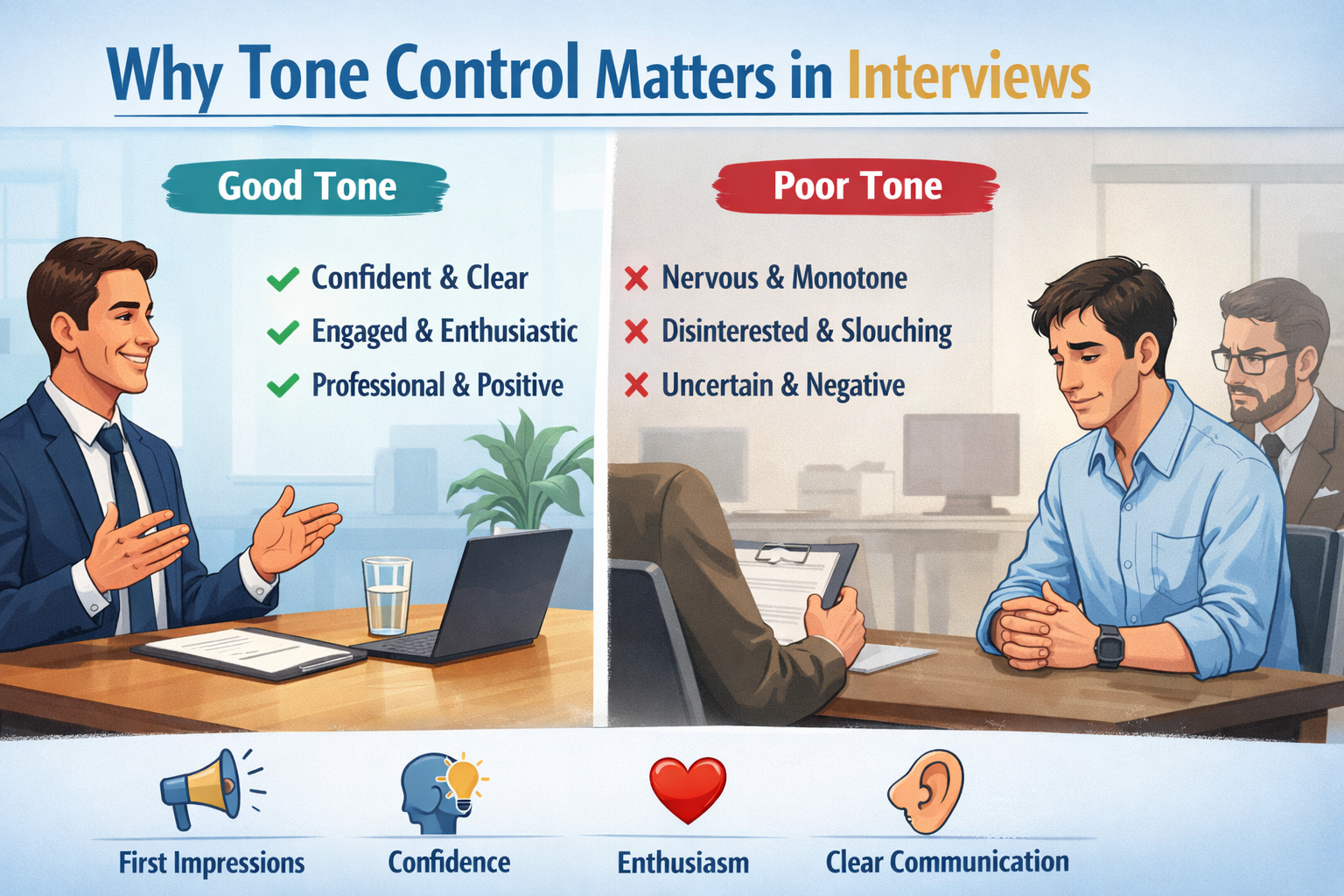
When you enter an interview room, the first impression starts with your body language and your tone. Even before you answer the first question, the interviewer notices how you speak. A calm and confident tone can make you appear professional and prepared. On the other hand, a shaky or monotone voice can give the impression of nervousness or lack of confidence.
For example, two candidates may give the same answer to a question, but the one who speaks clearly, with controlled tone and confidence, will often be remembered more positively. Your tone sets the stage for how your entire interview will be perceived.
2. Tone Control Reflects Confidence
Confidence is one of the most important qualities interviewers look for. Your tone is a direct reflection of your confidence level. A strong, clear tone shows that you believe in yourself and your abilities.
- Speaking too softly may make you seem unsure of your answers.
- Speaking too loudly or aggressively can appear overbearing or nervous.
- A balanced tone shows calmness and confidence.
Confidence through tone makes your answers more persuasive. It can influence the interviewer’s perception, even if your answers are not perfect.
3. Tone Communicates Emotion and Enthusiasm
Interviews are not only about facts; they are also about personality. Your tone conveys emotions and enthusiasm. For example, if you are asked why you want to join a company, your tone can show genuine interest. A dull tone may make your answer sound robotic or rehearsed.
Enthusiasm in tone shows that you are motivated and genuinely interested in the role. Employers often prefer candidates who are passionate because they are likely to be engaged and productive. Tone can convey excitement, interest, and sincerity without using extra words.
4. Tone Control Helps in Emphasizing Key Points
Interviews often involve explaining your skills, experience, and achievements. Tone control can help emphasize important points. By changing your pitch or volume slightly, you can highlight achievements and make them memorable.
For example:
- “I led a team of ten people on a project that increased sales by 20%.”
- Saying this in a clear, confident tone will make the achievement stand out more than just stating it in a monotone voice.
A well-controlled tone ensures that the interviewer remembers your most important contributions.
5. Tone Control Influences Perception of Professionalism
Professionalism is not only about what you wear or how you behave. The way you speak also affects how professional you appear. A controlled, polite, and steady tone shows that you can handle professional communication.
- Avoid high-pitched nervous tones.
- Avoid rushing your words.
- Avoid speaking too slowly with no variation in tone.
Professional tone demonstrates that you are capable of working in a team and interacting with clients or colleagues effectively.
6. Tone Control Can Reduce Misunderstanding
Sometimes, even if your answer is correct, a poor tone can cause misunderstanding. Tone communicates meaning beyond words. For example:
- A sarcastic or aggressive tone can make your answer sound rude, even if your words are polite.
- A hesitant tone can make the interviewer doubt your knowledge or skills.
By controlling your tone, you make sure your message is clear and interpreted as intended. This reduces the chances of negative impressions.
7. Tone Control Helps in Handling Difficult Questions
Interviews often include challenging or unexpected questions. How you respond matters as much as what you respond. Tone control helps you stay composed and respond effectively.
- Take a deep breath before answering difficult questions.
- Use a calm, steady tone to show that you can handle pressure.
- Avoid defensive or harsh tones.
A controlled tone during difficult moments shows emotional intelligence and maturity, which are qualities interviewers value highly.
8. Tone Enhances Storytelling
Many interview questions ask you to share experiences, like “Tell me about a time you faced a challenge.” Tone can make your story engaging. Varying your tone adds interest and emphasizes key parts of the story.
- A monotone story may fail to capture attention.
- Using slight changes in pitch, pauses, and emphasis can make your story memorable.
Storytelling with tone makes your answers lively and leaves a lasting impression on the interviewer.
9. Tone Reflects Self-Awareness
Controlling tone requires self-awareness. It shows that you understand how you come across to others. This is especially important in roles that require communication or teamwork. Interviewers notice candidates who are self-aware because they are more likely to adapt and fit into the company culture.
- Pay attention to your natural speaking habits.
- Notice if you speak too fast, too soft, or too monotone.
- Practice adjusting your tone to sound confident and engaging.
Self-awareness through tone can make you a stronger candidate.
10. Tone Affects Overall Impression
Your tone, along with body language and content, forms the overall impression you leave. Interviews are often decided in the first few minutes. If your tone conveys confidence, enthusiasm, and professionalism, you are more likely to make a positive impact.
Even small tone mistakes can leave a negative impression. For example, using an inconsistent or hesitant tone when discussing your experience can make the interviewer question your competence. On the other hand, consistent tone control makes your communication smooth and effective.
Conclusion
Tone control is a critical part of interview success. It is as important as the content of your answers. A controlled, confident, and engaging tone can improve first impressions, communicate enthusiasm, highlight achievements, reduce misunderstandings, and leave a lasting impact.
Many candidates focus only on preparing answers, but neglect how they speak. Practicing tone, pacing, pitch, and volume can make a big difference in how you are perceived. Remember, interviews are not just about what you know—they are about how you present what you know. Mastering tone control is a skill that can help you stand out from other candidates and improve your chances of success.
By paying attention to tone, practicing regularly, and avoiding common mistakes, you can become a more effective communicator in interviews. A good tone shows confidence, professionalism, and self-awareness, making you a candidate that interviewers remember positively.





Leave a Reply