Introduction
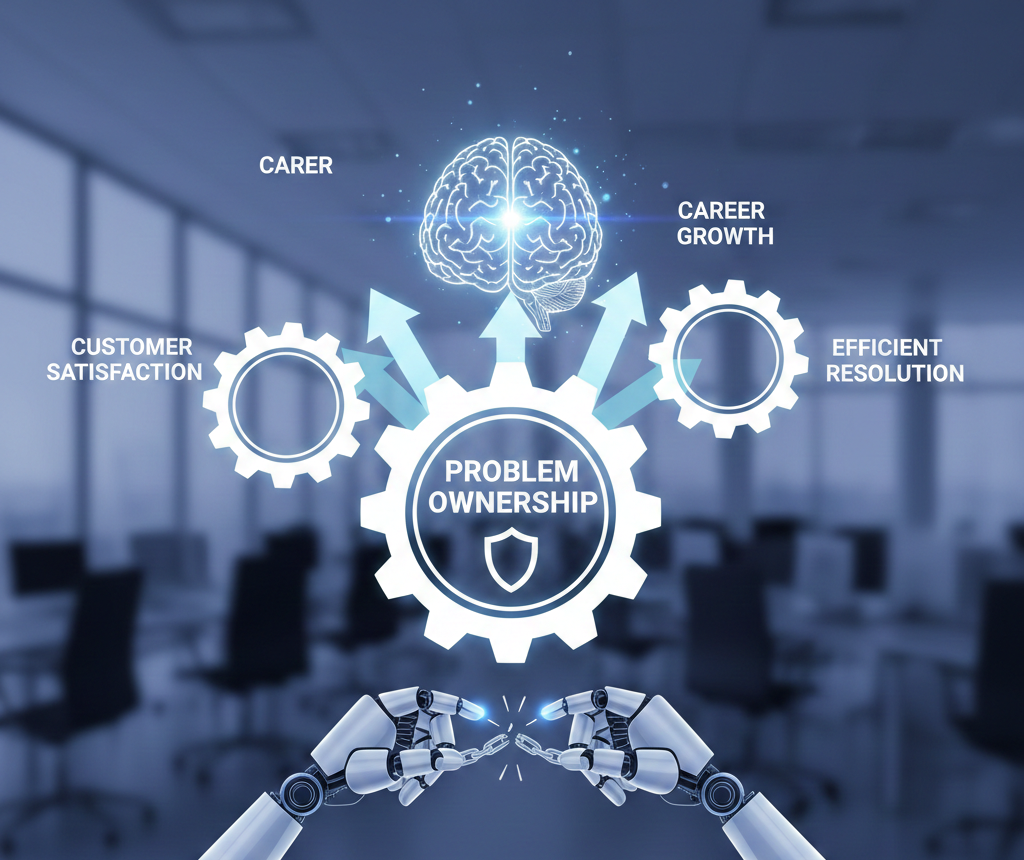
Customer experience roles are undergoing a major transformation due to rapid advancements in artificial intelligence. Earlier, support roles focused mainly on responding to queries and resolving issues manually. Today, AI tools handle repetitive tasks, basic queries, and data analysis. This shift is redefining responsibilities and expectations. That is exactly how customer experience roles are evolving with AI in modern service-driven organizations.
Instead of replacing human roles, AI is reshaping them into more strategic, analytical, and relationship-focused positions.
Automation is handling repetitive customer interactions
AI chatbots and automated systems now manage basic inquiries such as order status, FAQs, and simple troubleshooting. This reduces the workload of support teams significantly.
As a result, customer experience professionals are no longer spending most of their time on repetitive responses. Their focus is shifting toward complex problem-solving and personalized service.
This operational shift is a key sign of how customer experience roles are evolving with AI.
Human roles are becoming more strategic
With automation handling routine queries, human agents are now expected to handle escalations, emotional conversations, and complex customer journeys.
Companies increasingly value professionals who can think critically, manage sensitive interactions, and deliver high-quality resolutions. Emotional intelligence and decision-making skills are becoming more important than scripted responses.
Strategic engagement is replacing transactional communication.
AI-driven insights are improving decision-making
AI tools analyze customer behavior, feedback, and service patterns in real time. This allows customer experience teams to make data-backed decisions.
Instead of reacting to complaints, professionals can now predict issues and improve processes proactively. This predictive capability enhances service quality and efficiency.
Data interpretation is becoming a core skill in modern CX roles.
Personalization is becoming a core expectation
AI enables personalized customer interactions by analyzing past behavior, preferences, and interaction history. Customers now expect tailored support rather than generic responses.
Customer experience professionals must understand customer data and adapt their communication accordingly. Personalized service improves satisfaction and brand loyalty.
This demand for personalization is reshaping daily responsibilities.
Collaboration with AI tools is now essential
Customer experience professionals are increasingly working alongside AI platforms, CRM systems, and automation dashboards.
They monitor chatbot performance, refine responses, and step in when human intervention is required. This hybrid model enhances productivity without eliminating human value.
Learning to collaborate with AI tools is becoming a mandatory skill.
Skills required in modern CX roles are shifting
Traditional support skills like basic communication are no longer sufficient. Employers now look for analytical thinking, adaptability, and tech familiarity.
Understanding automation tools, analytics dashboards, and AI-assisted workflows adds significant career value. Professionals who upskill in these areas remain more competitive in evolving service environments.
Skill evolution reflects industry transformation.
AI is elevating the importance of human empathy
Despite technological advancement, empathy remains irreplaceable. AI can provide fast responses, but it cannot fully replicate emotional understanding.
Customer experience roles now emphasize empathy, patience, and relationship-building more than ever. Human touch becomes more valuable in complex or sensitive cases.
This balance between automation and empathy defines the future of CX careers.
Performance metrics are becoming data-driven
AI-powered service platforms track response time, resolution quality, sentiment analysis, and customer satisfaction automatically.
Customer experience professionals are now evaluated using detailed performance analytics rather than subjective feedback alone. This increases accountability and transparency in service roles.
Data-backed evaluation is reshaping career growth paths.
Career growth opportunities are expanding
As AI integrates into service environments, new roles are emerging such as CX analysts, automation specialists, and customer journey managers.
Professionals who adapt to AI-driven workflows can transition into higher strategic roles. The evolution is creating more specialized and high-impact career paths within customer experience.
Growth is shifting from reactive support to strategic service management.
Conclusion
The service industry is not eliminating customer experience roles; it is transforming them. That is precisely how customer experience roles are evolving with AI through automation, analytics, personalization, and strategic engagement.
Professionals who embrace AI tools, develop analytical skills, and strengthen empathy will thrive in modern service environments. To explore future-ready customer experience roles and tech-driven service opportunities, use the best job tool to discover positions aligned with evolving industry demands.
Find Your Dream Job Today – Explore Endless Career Opportunities and Secure Your Next Role with Best Job Tool.





Leave a Reply