Introduction
We live in a time where speed is glorified.
Fast promotions, job switches, salary hikes, and results.
Scroll through LinkedIn and you’ll see announcement after announcement: “Excited to share that I’m starting a new role…” every few months. It creates an illusion that success is directly proportional to how quickly you move.
But here’s the truth most people learn later:
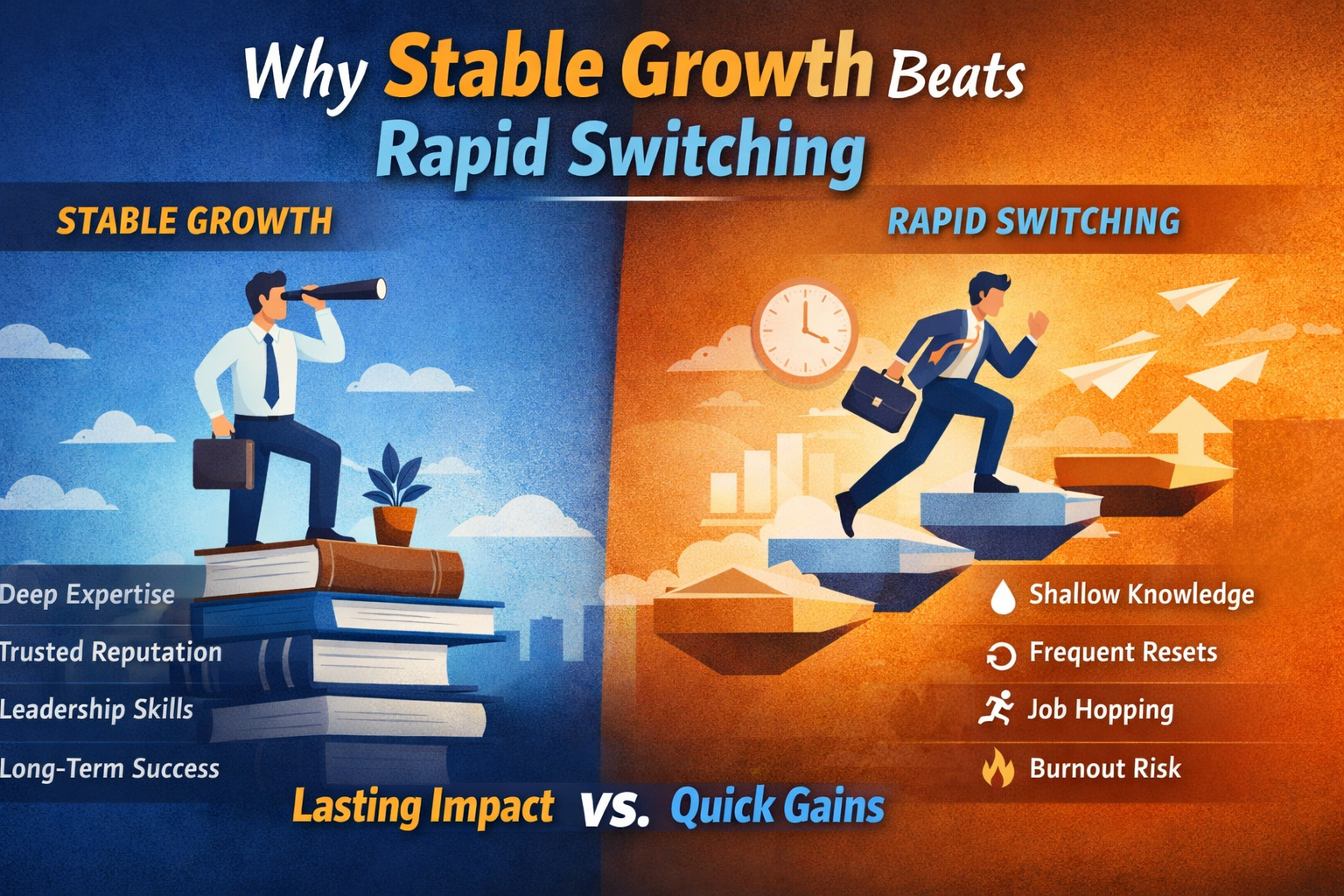
Stable growth quietly builds what rapid switching often cannot — depth, credibility, and long-term leverage.
This article is not against change. Change is powerful. Strategic moves are smart. But there’s a big difference between intentional growth and constant jumping.
Let’s explore why stable growth often wins in the long run.
Why Stable Growth Beats Rapid Switching?
1. Depth Over Surface-Level Exposure
Rapid switching gives you exposure.
Stable growth gives you depth.
When you stay long enough in a role:
- You see projects from start to finish.
- You understand long-term consequences of decisions.
- You face real challenges beyond the honeymoon phase.
- You experience failures and learn to fix them.
Rapid switchers often leave just when things get hard. But difficulty is where expertise is built.
Anyone can perform well in the first 6 months.
Few people master complexity over 3–5 years.
Stable growth allows you to:
- Build domain authority.
- Become the “go-to” person.
- Understand systems, not just tasks.
Surface knowledge may help you switch.
Deep knowledge helps you lead.
2. Compounding Works in Careers Too
We understand compounding in money.
If you invest consistently, returns grow exponentially over time. The same principle applies to careers.
Stable growth compounds in three ways:
1. Skill Compounding
Every year builds on the previous year. You don’t restart from scratch each time.
2. Trust Compounding
Managers give bigger responsibilities when they’ve seen you perform consistently.
3. Reputation Compounding
Your name becomes associated with reliability.
Rapid switching resets trust again and again.
Stable growth multiplies it.
Over 5 years, one person builds layered expertise.
Another builds 5 beginner-level experiences.
Guess who gets long-term strategic roles?
3. Real Leadership Requires Stability
Leadership isn’t learned in quick stints.
It requires:
- Navigating conflict.
- Handling long-term projects.
- Managing crises.
- Training juniors.
- Taking accountability for failures.
These situations take time to unfold.
If someone changes roles every year, they rarely:
- Experience full business cycles.
- Own outcomes deeply.
- See the long-term impact of their decisions.
Stable growth allows you to:
- Build emotional maturity.
- Develop strategic thinking.
- Strengthen resilience.
Leaders are not built in speed.
They are built in seasons.
4. Strong Internal Brand > Frequent External Rebranding
Every time you switch jobs, you rebrand yourself.
New team, expectations., and culture.
You start again proving yourself.
But stable growth builds something far more powerful — an internal brand.
People know:
- Your work ethic.
- Your reliability.
- Your thinking style.
- Your strengths.
You move from “new employee” to “core contributor.”
In many organizations, senior leadership positions are given to those who:
- Understand company history.
- Have cross-team relationships.
- Have proven long-term loyalty.
Loyalty alone isn’t enough.
But loyalty combined with performance? That’s rare — and valuable.
5. Rapid Switching Can Create Hidden Gaps
On paper, rapid switching looks impressive.
Higher titles.
Better packages.
Different companies.
But underneath, there can be hidden gaps:
- Lack of deep problem-solving experience.
- Weak crisis management exposure.
- Shallow team leadership experience.
- Incomplete project ownership.
Short tenures often mean:
You were there during growth.
But not during downturn.
You were there for strategy.
But not for execution correction.
You joined when systems worked.
But didn’t fix them when they broke.
Stable growth forces you to face reality — not just opportunity.
6. Stability Builds Emotional Strength
Constant switching can create psychological restlessness.
You always chase:
- Better salary.
- Better role.
- Better environment.
But growth isn’t always about moving.
Sometimes growth is about:
- Staying.
- Improving.
- Transforming your current space.
Stability teaches:
- Patience.
- Long-term thinking.
- Emotional regulation.
- Adaptability within constraints.
It reduces anxiety because you’re not constantly proving yourself in a new environment.
When you build something slowly, confidence becomes internal — not dependent on titles.
7. True Mastery Requires Time
Look at athletes.
Sachin Tendulkar didn’t become great by switching sports every year.
Lionel Messi didn’t change positions every season just for variety.
Mastery requires:
- Repetition.
- Reflection.
- Refinement.
In careers, the same principle applies.
Switching too fast prevents:
- Deep pattern recognition.
- Long-term system understanding.
- Innovation within expertise.
The people who innovate most are those who deeply understand the structure they’re improving.
You can’t disrupt what you don’t fully understand.
8. Stable Growth Builds Career Optionality
This sounds surprising.
Many think switching gives options.
In reality, deep stable growth gives stronger optionality because:
- You build specialized authority.
- You become hard to replace.
- You attract inbound opportunities.
When you stay and grow:
- Headhunters approach you for leadership roles.
- You get internal promotions.
- You build a powerful referral network.
Optionality built on depth is stronger than optionality built on movement.
9. Financial Growth Is Not Only About Salary Hikes
Rapid switching often increases salary faster in early years.
But stable growth can create:
- Long-term incentives.
- Stock options.
- Profit sharing.
- Strategic roles.
- Decision-making power.
Long-term alignment with one organization sometimes creates wealth beyond basic salary jumps.
It also builds:
- Stability.
- Reduced stress.
- Stronger long-term negotiation power.
Money earned with stability often comes with respect.
Money earned through constant switching often comes with pressure to prove.
10. You Build Real Relationships
Relationships are long-term assets.
When you stay:
- You build trust across departments.
- You mentor juniors.
- Seniors advocate for you.
- Peers become long-term collaborators.
These relationships later:
- Recommend you.
- Partner with you.
- Support your ventures.
If you move too frequently, relationships remain transactional.
Stable growth builds professional friendships that last beyond one job.
Conclusion
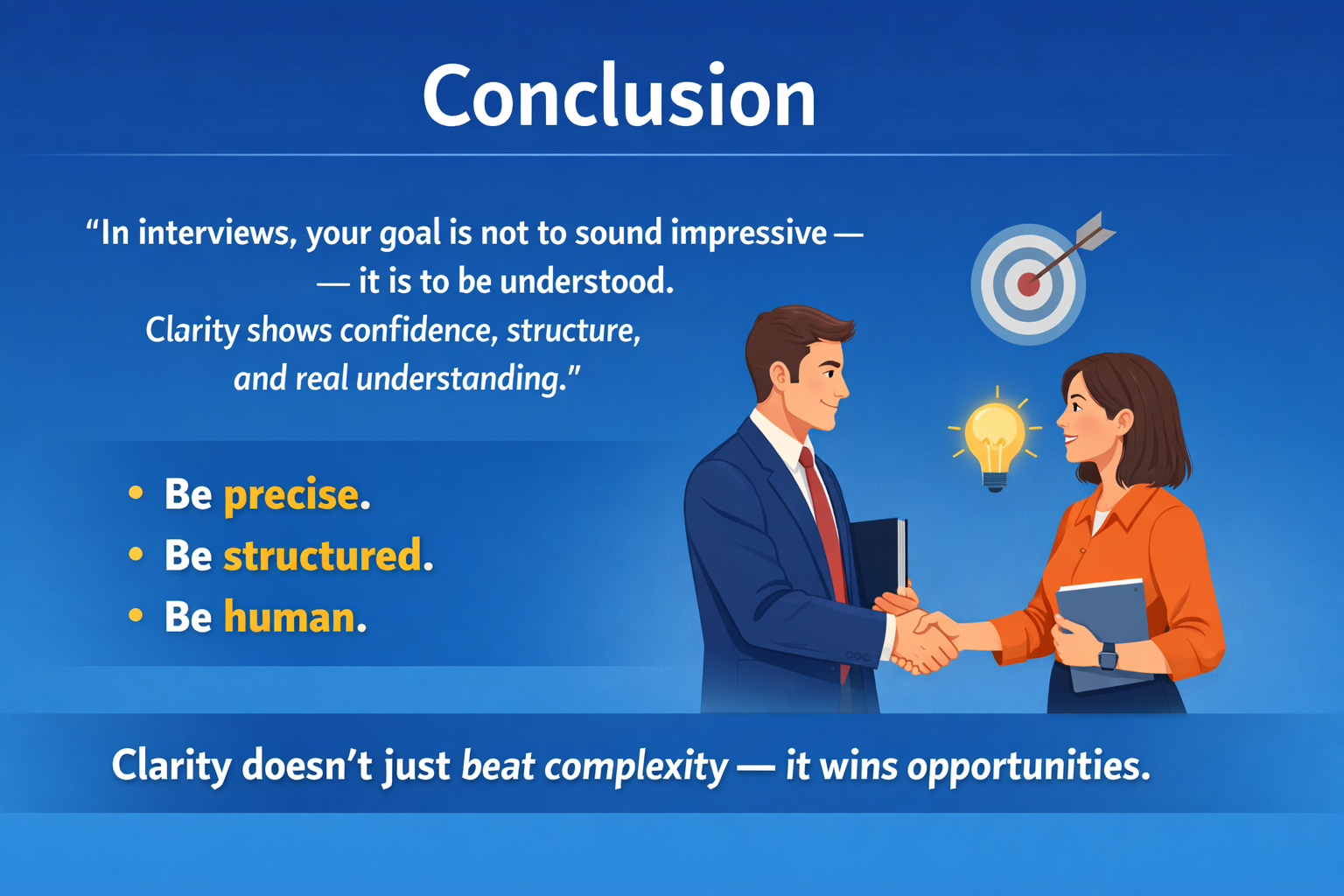
In a world obsessed with speed, stability feels underrated.
But stable growth:
- Builds mastery.
- Compounds trust.
- Strengthens leadership.
- Develops resilience.
- Creates long-term leverage.
Rapid switching may accelerate early momentum.
Stable growth builds lasting power.
The question isn’t:
“How fast can I move?”
The better question is:
“How deeply can I grow?”
Because in the end, careers are not races.
They are long-term journeys.
And the people who grow steadily often reach places that speed alone cannot.





Leave a Reply