Introduction
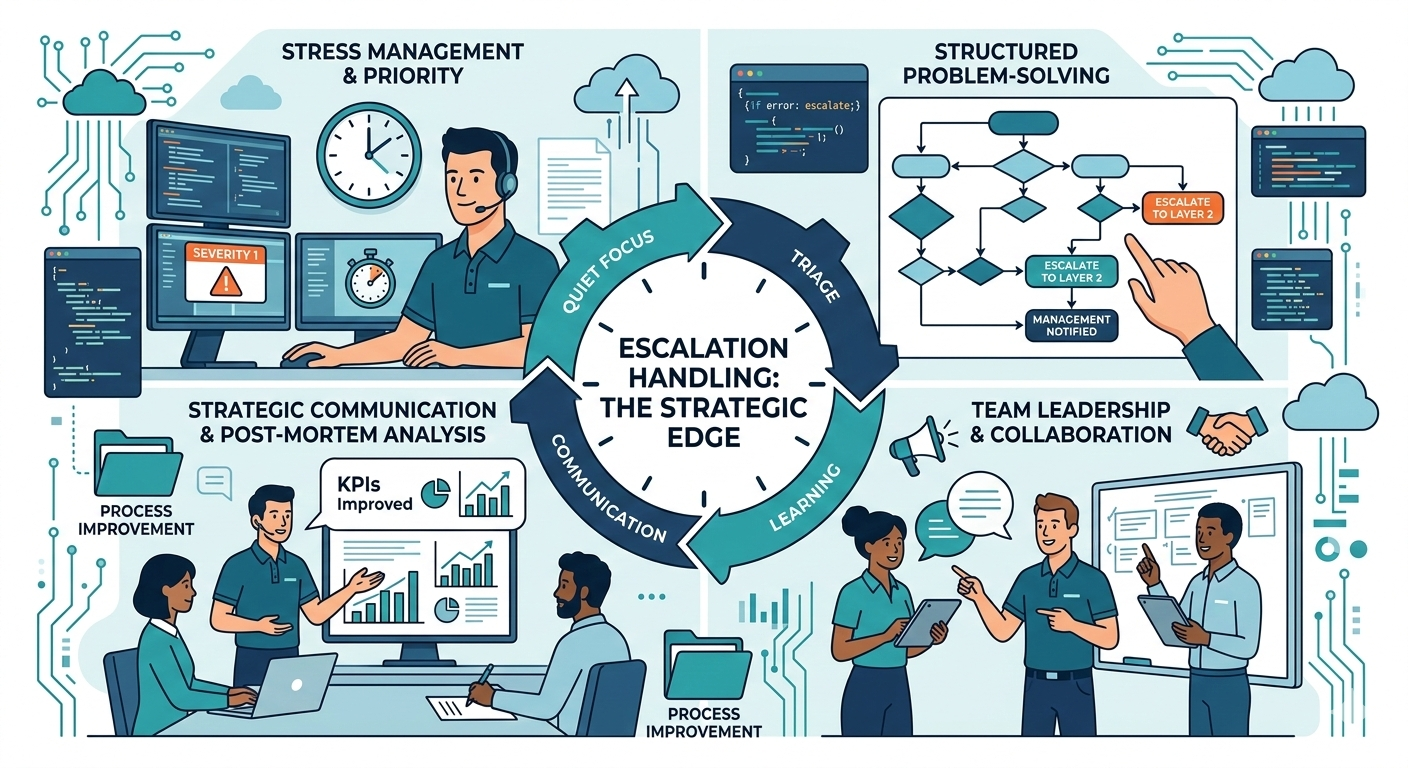
In IT roles, technical expertise is important, but real workplace value is often measured during critical situations. One of the most important of these situations is escalation handling. Escalations occur when issues move beyond routine troubleshooting and require deeper analysis, faster action, and coordinated decision-making. This is exactly why escalation handling experience matters in IT jobs across support engineering, DevOps, infrastructure, and system operations roles.
Employers look for professionals who can manage high-impact issues calmly and effectively. Escalation handling demonstrates not only technical skill but also judgment, communication, and ownership, all of which are essential for long-term growth in IT careers.
Escalations reflect real-world problem-solving ability
Routine tickets and minor bugs follow predictable patterns. However, escalations usually involve complex system failures, critical outages, or unresolved technical issues that require advanced thinking.
IT professionals who have handled escalations develop strong analytical and diagnostic skills. They learn to identify root causes instead of applying surface-level fixes. This depth of problem-solving is highly valued during hiring and performance evaluations.
Real experience with complex issues builds professional credibility.
High-pressure situations test technical judgment
Escalations often happen during production incidents, server downtime, security alerts, or urgent client-impacting issues. These situations require quick yet accurate decisions.
Employers prefer candidates who can stay composed under pressure and respond logically instead of reacting impulsively. Escalation experience shows that the professional can handling experience manage urgency without compromising system stability.
Calm technical judgment becomes a key differentiator in IT roles.
Strong ownership signals reliability to employers
In IT environments, ownership is a critical performance trait. When professionals take responsibility for escalated issues, they demonstrate accountability and commitment to resolution.
Managers and hiring teams observe whether an individual follows the issue from identification to resolution rather than passing it repeatedly between teams. This ownership mindset builds trust and improves internal reputation.
Reliable employees are often given more complex responsibilities and leadership opportunities.
Cross-team coordination during escalations
Escalated IT issues rarely stay within one team. They often require coordination with developers, infrastructure teams, cybersecurity units, and product stakeholders.
Professionals with escalation handling experience understand how to communicate technical issues clearly across departments. This cross-functional collaboration improves resolution speed and operational efficiency.
Such coordination skills are highly valued in modern IT workplaces.
Improved incident management capability
Incident management is a core component of many IT roles, especially in cloud operations, DevOps, and technical support. Escalation handling directly contributes to stronger incident response skills.
Experienced professionals know how to acknowledge incidents, prioritize severity, communicate updates, and implement structured solutions. This systematic approach reduces downtime and operational risks.
Incident readiness increases employability in critical IT roles.
Better communication with stakeholders
Escalations often involve communication with clients, managers, and technical teams simultaneously. This requires clear, professional, and timely updates.
IT professionals with escalation experience develop the ability to translate complex technical issues into understandable explanations. Strong communication during critical situations enhances stakeholder confidence.
Clear communication is as important as technical resolution in escalation scenarios.
Faster career growth and leadership opportunities
Employees who consistently handle escalations effectively gain higher visibility within the organization. Managers trust them with sensitive tasks, urgent projects, and handling experience complex systems.
Over time, this leads to roles such as senior engineer, incident manager, technical lead, or operations manager. Escalation handling becomes a stepping stone toward leadership and strategic roles in IT.
Career progression often follows demonstrated crisis-handling ability.
Reduced operational risk for organizations
From an organizational perspective, escalations carry financial, operational, and reputational risks. Hiring professionals with escalation experience reduces these risks significantly.
Such employees are already familiar with handling experience troubleshooting frameworks, escalation protocols, and resolution workflows. This reduces training time and improves operational stability.
Experienced professionals contribute to system resilience.
Enhanced adaptability in dynamic IT environments
Technology environments are constantly evolving with new tools, platforms, and architectures. Escalations expose professionals to diverse technical challenges and unpredictable scenarios.
This exposure builds adaptability and continuous learning habits. IT professionals with escalation experience are better prepared to handle new systems, tools, and crisis situations.
Adaptability strengthens long-term career sustainability.
Hiring preference for escalation-experienced candidates
During IT hiring, recruiters often prioritize candidates who have handled production issues, outages, or high-priority incidents. These experiences indicate practical readiness for real-world job demands.
Interviewers frequently ask handling experience situational questions about past escalations to assess decision-making, communication, and technical depth. Candidates with hands-on escalation experience tend to perform better in such evaluations.
Practical exposure outweighs theoretical knowledge in many IT hiring decisions.
Conclusion
Technical knowledge forms the foundation of IT careers, but real professional growth is shaped by how individuals handle complex and high-impact situations. That is precisely why escalation handling experience matters in IT jobs across modern technology roles.
It strengthens problem-solving handling experience ability, improves incident management skills, enhances cross-team coordination, and builds long-term trust with employers. Professionals who demonstrate strong escalation ownership, clear communication, and calm decision-making position themselves for faster career growth and leadership opportunities in the IT industry. To explore IT roles that value real-world problem-solving, operational responsibility, and career advancement, use the best job tool to find opportunities aligned with your technical expertise and growth goals.
Find Your Dream Job Today – Explore Endless Career Opportunities and Secure Your Next Role with Best Job Tool.




Leave a Reply