Introduction
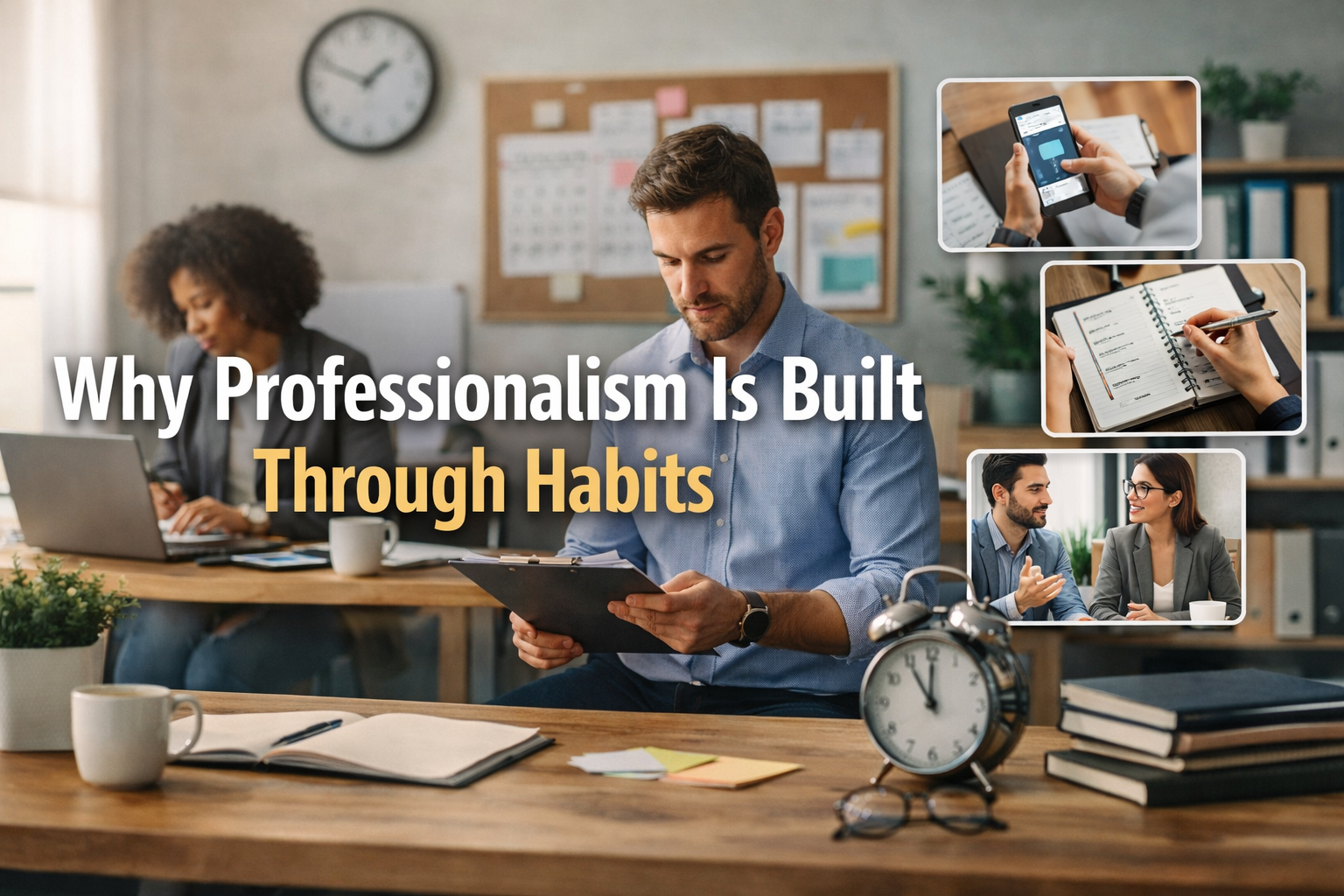
At the workplace, one of the most important things is professionalism. Every person should show professionalism at work because everyone there is working in a professional environment. People should communicate with each other professionally, do their work professionally, and behave in a professional manner.
However, professionalism is not something that comes to a person instantly. It develops over time. A person has to build certain habits, understand situations, and make changes in their behavior. Only then can someone truly become professional—communicating clearly, handling responsibilities properly, and treating others with respect in a professional way.
In this article, we are going to understand why professionalism is built through habits.
Why Professionalism is Built through Habits?
1. Habits Create Consistency
As we discussed, professionalism takes time to develop. No one learns it instantly. That is why professionalism is built through habits. A habit means consistency. When we do something regularly and repeatedly, it slowly becomes our habit and part of our behavior. After some time, we naturally start behaving in that way.
For example, if we start preparing ourselves before every meeting, deliver our work before the deadline, and reply to messages on time, these actions slowly become our habits. When we consistently work in this way, other people also start trusting us.
2. Habits Shape Work Discipline
A disciplined person is usually seen as trustworthy and professional by others. When we do any task every day, it slowly becomes our habit. Over time, our behavior also changes according to those habits.
We start behaving with others in a certain way, communicating properly, and doing our work more responsibly. When we build the habit of doing every task properly, completing work on time, and avoiding distractions, it helps us become disciplined. This discipline makes us appear more professional in front of others.
3. Habits Improve Communication
Communication is something we do both at the workplace and outside the workplace. Through communication, people understand whether a person is professional or not. If we speak to someone clearly and politely, they see us as a professional person. But if we speak in a rude or disrespectful way, people do not trust us and they do not value us.
That is why communication is one of the most important parts of showing professionalism.
When you build the habit of communicating well with everyone—for example, listening carefully, speaking with respect, and expressing your thoughts clearly—these qualities slowly develop naturally in you. Whether you are at the workplace or at home, you start speaking politely and respectfully with everyone. This helps build your professionalism.

4. Habits Build Reliability
Trust is something that does not build easily. It is very important to build trust at the workplace, whether it is with your colleagues, manager, or the owner of the company. However, people do not start trusting you instantly.
To build trust, you need to do your work efficiently and complete it on time. You need to follow rules, communicate properly, and keep the promises you make. When you consistently do these things, people slowly start trusting you.
When you perform these actions every day, they gradually become your habits. As a result, you naturally start working in a responsible way, which helps build both professionalism and trust.
5. Habits Shape Professional Reputation
Every person wants to build a good professional reputation. However, it is important to understand that building a professional reputation is not only about doing big tasks. Paying attention to small things is equally important. Small actions support your bigger actions. Because of these small actions, people start trusting you, respecting you, and seeing you as a professional person.
To take care of these small things, building good habits is very important. If you do not develop the habit of doing your work properly, you may end up doing many negative things, such as coming late, not responding politely, or not taking discussions seriously.
But when you build the habit of doing every task properly—whether it is small or big—you start working more effectively and efficiently. This helps in building your professional reputation.
Conclusion
Professionalism is not a single skill or personality trait. It is the outcome of many small habits practiced consistently over time.
Simple habits like respecting deadlines, communicating clearly, staying disciplined, and behaving responsibly gradually shape how others see a person.
In the long run, professionalism is less about talent and more about the habits someone chooses to practice every day.



Leave a Reply