Introduction
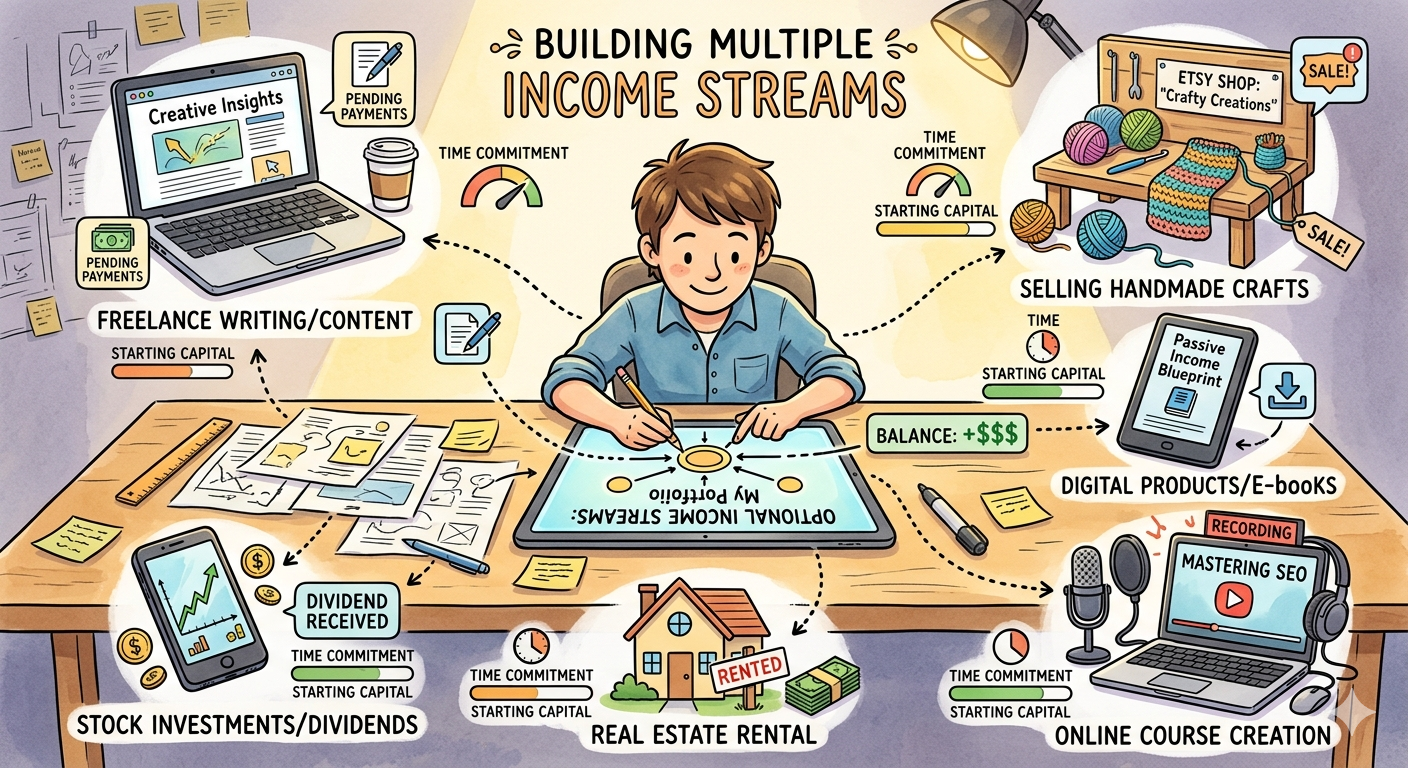
Relying on a single source of income can limit financial growth and create uncertainty during unexpected situations. As careers evolve and economic conditions change, professionals increasingly look for ways to diversify their income. Building additional income streams does not always mean starting a business or making large investments. It often begins with small, consistent efforts that grow over time. This is exactly how you can build optional income streams and create long-term financial flexibility.
Optional income streams provide security, independence, and the ability to explore new opportunities without financial pressure. With the right approach, anyone can start building them alongside a full-time job.
Start with skills you already have
The easiest way to begin is by using your existing skills. Many professionals overlook the value of what they already know.
For example, writing, designing, coding, or marketing skills can be monetized through freelance work or small projects. Instead of learning something entirely new, focus on applying current skills in different ways.
Leveraging existing skills reduces effort and increases early success.
Choose flexible and low-risk opportunities
Optional income streams should not disrupt your primary work or create unnecessary stress. Therefore, it is important to start with flexible options.
Freelancing, consulting, or part-time projects allow you to earn without long-term commitments. These opportunities help you test ideas without significant risk.
Low-risk approaches make it easier to stay consistent.
Build digital assets over time
Digital assets such as blogs, online courses, templates, or content channels can generate income over the long term.
Unlike active work, these assets continue to provide value even after initial effort. Although they require time to build, they offer scalability.
Digital assets create sustainable income streams.
Focus on consistency rather than speed
Many people expect quick results when building additional income. However, optional income streams grow gradually.
Consistent effort, even if small, leads to meaningful results over time. For example, working a few hours each week can eventually create a stable income source.
Patience and consistency drive long-term success.
Identify market demand before scaling
Not every idea generates income. Before investing significant time or money, validate whether there is demand.
Research what people need, what problems they want to solve, and how your skills can help. Starting with small experiments helps you understand what works.
Market validation improves success rates.
Manage time effectively
Balancing a full-time job with additional income streams requires proper time management.
Set clear schedules and avoid overloading yourself. Focus on productive tasks rather than trying to do everything at once.
Effective time management prevents burnout and maintains quality.
Diversify gradually, not all at once
Building multiple income streams takes time. Trying to start several streams at once can lead to confusion and inconsistency.
Begin with one stream, stabilize it, and then expand to others. This approach ensures better focus and sustainable growth.
Gradual diversification reduces risk.
Track income and performance
Monitoring progress helps you understand which income streams are working and which need improvement.
Track earnings, time invested, and growth patterns regularly. This data helps you make better decisions and optimize your efforts.
Tracking improves efficiency and clarity.
Learn and adapt continuously
Markets, tools, and opportunities change over time. Staying updated helps you refine your approach.
Learn from feedback, adjust your strategies, and explore new opportunities when necessary. Adaptability ensures long-term success.
Continuous learning strengthens income growth.
Maintain balance with your primary career
Optional income streams should support your career, not replace it prematurely. Maintain focus on your main job while building additional sources gradually.
Over time, these streams may grow into significant income sources. However, stability remains important during the early stages.
Balance ensures sustainable progress.
Conclusion
Creating additional income sources is not about quick success but about building stability and flexibility over time. That is precisely how you can build optional income streams through consistent effort, smart choices, and strategic planning.
By focusing on relevant skills, validating ideas, and maintaining balance, professionals can create reliable income sources beyond their primary job. These streams provide financial security and open doors to new opportunities. To explore career paths that support growth, flexibility, and multiple income opportunities, use the best job tool to discover roles aligned with your goals.
Find Your Dream Job Today – Explore Endless Career Opportunities and Secure Your Next Role with Introduction
Relying on a single source of income can limit financial growth and create uncertainty during unexpected situations. As careers evolve and economic conditions change, professionals increasingly look for ways to diversify their income. Building additional income streams does not always mean starting a business or making large investments. It often begins with small, consistent efforts that grow over time. This is exactly how you can build optional income streams and create long-term financial flexibility.
Optional income streams provide security, independence, and the ability to explore new opportunities without financial pressure. With the right approach, anyone can start building them alongside a full-time job.
Start with skills you already have
The easiest way to begin is by using your existing skills. Many professionals overlook the value of what they already know.
For example, writing, designing, coding, or marketing skills can be monetized through freelance work or small projects. Instead of learning something entirely new, focus on applying current skills in different ways.
Leveraging existing skills reduces effort and increases early success.
Choose flexible and low-risk opportunities
Optional income streams should not disrupt your primary work or create unnecessary stress. Therefore, it is important to start with flexible options.
Freelancing, consulting, or part-time projects allow you to earn without long-term commitments. These opportunities help you test ideas without significant risk.
Low-risk approaches make it easier to stay consistent.
Build digital assets over time
Digital assets such as blogs, online courses, templates, or content channels can generate income over the long term.
Unlike active work, these assets continue to provide value even after initial effort. Although they require time to build, they offer scalability.
Digital assets create sustainable income streams.
Focus on consistency rather than speed
Many people expect quick results when building additional income. However, optional income streams grow gradually.
Consistent effort, even if small, leads to meaningful results over time. For example, working a few hours each week can eventually create a stable income source.
Patience and consistency drive long-term success.
Identify market demand before scaling
Not every idea generates income. Before investing significant time or money, validate whether there is demand.
Research what people need, what problems they want to solve, and how your skills can help. Starting with small experiments helps you understand what works.
Market validation improves success rates.
Manage time effectively
Balancing a full-time job with additional income streams requires proper time management.
Set clear schedules and avoid overloading yourself. Focus on productive tasks rather than trying to do everything at once.
Effective time management prevents burnout and maintains quality.
Diversify gradually, not all at once
Building multiple income streams takes time. Trying to start several streams at once can lead to confusion and inconsistency.
Begin with one stream, stabilize it, and then expand to others. This approach ensures better focus and sustainable growth.
Gradual diversification reduces risk.
Track income and performance
Monitoring progress helps you understand which income streams are working and which need improvement.
Track earnings, time invested, and growth patterns regularly. This data helps you make better decisions and optimize your efforts.
Tracking improves efficiency and clarity.
Learn and adapt continuously
Markets, tools, and opportunities change over time. Staying updated helps you refine your approach.
Learn from feedback, adjust your strategies, and explore new opportunities when necessary. Adaptability ensures long-term success.
Continuous learning strengthens income growth.
Maintain balance with your primary career
Optional income streams should support your career, not replace it prematurely. Maintain focus on your main job while building additional sources gradually.
Over time, these streams may grow into significant income sources. However, stability remains important during the early stages.
Balance ensures sustainable progress.
Conclusion
Creating additional income sources is not about quick success but about building stability and flexibility over time. That is precisely how you can build optional income streams through consistent effort, smart choices, and strategic planning.
By focusing on relevant skills, validating ideas, and maintaining balance, professionals can create reliable income sources beyond their primary job. These streams provide financial security and open doors to new opportunities. To explore career paths that support growth, flexibility, and multiple income opportunities, use the best job tool to discover roles aligned with your goals.
Find Your Dream Job Today – Explore Endless Career Opportunities and Secure Your Next Role with Best Job Tool.Introduction
Relying on a single source of income can limit financial growth and create uncertainty during unexpected situations. As careers evolve and economic conditions change, professionals increasingly look for ways to diversify their income. Building additional income streams does not always mean starting a business or making large investments. It often begins with small, consistent efforts that grow over time. This is exactly how you can build optional income streams and create long-term financial flexibility.
Optional income streams provide security, independence, and the ability to explore new opportunities without financial pressure. With the right approach, anyone can start building them alongside a full-time job.
Start with skills you already have
The easiest way to begin is by using your existing skills. Many professionals overlook the value of what they already know.
For example, writing, designing, coding, or marketing skills can be monetized through freelance work or small projects. Instead of learning something entirely new, focus on applying current skills in different ways.
Leveraging existing skills reduces effort and increases early success.
Choose flexible and low-risk opportunities
Optional income streams should not disrupt your primary work or create unnecessary stress. Therefore, it is important to start with flexible options.
Freelancing, consulting, or part-time projects allow you to earn without long-term commitments. These opportunities help you test ideas without significant risk.
Low-risk approaches make it easier to stay consistent.
Build digital assets over time
Digital assets such as blogs, online courses, templates, or content channels can generate income over the long term.
Unlike active work, these assets continue to provide value even after initial effort. Although they require time to build, they offer scalability.
Digital assets create sustainable income streams.
Focus on consistency rather than speed
Many people expect quick results when building additional income. However, optional income streams grow gradually.
Consistent effort, even if small, leads to meaningful results over time. For example, working a few hours each week can eventually create a stable income source.
Patience and consistency drive long-term success.
Identify market demand before scaling
Not every idea generates income. Before investing significant time or money, validate whether there is demand.
Research what people need, what problems they want to solve, and how your skills can help. Starting with small experiments helps you understand what works.
Market validation improves success rates.
Manage time effectively
Balancing a full-time job with additional income streams requires proper time management.
Set clear schedules and avoid overloading yourself. Focus on productive tasks rather than trying to do everything at once.
Effective time management prevents burnout and maintains quality.
Diversify gradually, not all at once
Building multiple income streams takes time. Trying to start several streams at once can lead to confusion and inconsistency.
Begin with one stream, stabilize it, and then expand to others. This approach ensures better focus and sustainable growth.
Gradual diversification reduces risk.
Track income and performance
Monitoring progress helps you understand which income streams are working and which need improvement.
Track earnings, time invested, and growth patterns regularly. This data helps you make better decisions and optimize your efforts.
Tracking improves efficiency and clarity.
Learn and adapt continuously
Markets, tools, and opportunities change over time. Staying updated helps you refine your approach.
Learn from feedback, adjust your strategies, and explore new opportunities when necessary. Adaptability ensures long-term success.
Continuous learning strengthens income growth.
Maintain balance with your primary career
Optional income streams should support your career, not replace it prematurely. Maintain focus on your main job while building additional sources gradually.
Over time, these streams may grow into significant income sources. However, stability remains important during the early stages.
Balance ensures sustainable progress.
Conclusion
Creating additional income sources is not about quick success but about building stability and flexibility over time. That is precisely how you can build optional income streams through consistent effort, smart choices, and strategic planning.
By focusing on relevant skills, validating ideas, and maintaining balance, professionals can create reliable income sources beyond their primary job. These streams provide financial security and open doors to new opportunities. To explore career paths that support growth, flexibility, and multiple income opportunities, use the best job tool to discover roles aligned with your goals.
Find Your Dream Job Today – Explore Endless Career Opportunities and Secure Your Next Role with Best Job Tool.


Leave a Reply