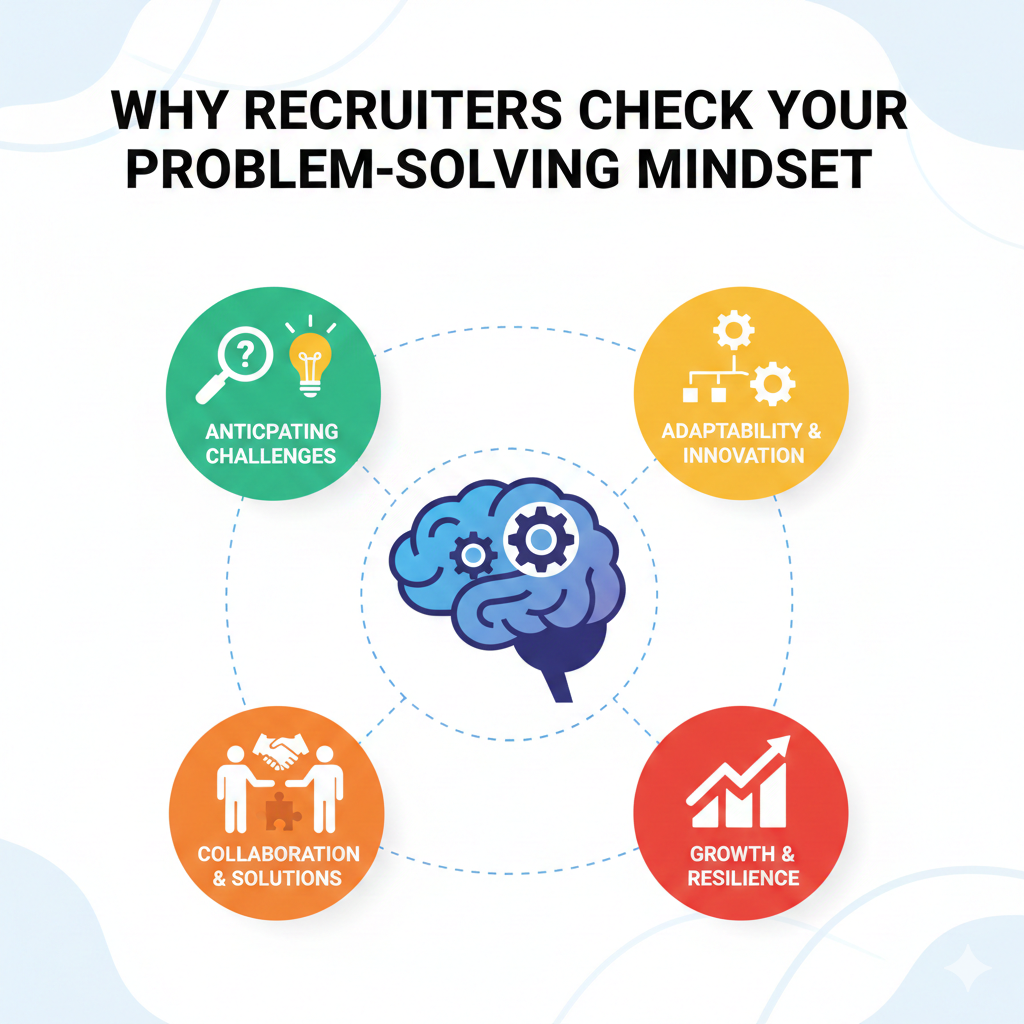
Recruiters no longer hire only based on degrees or past titles. Instead, they recruiters check focus on how candidates think under pressure. That is why your problem-solving mindset matters so much today.
Every role faces challenges, changes, and unexpected situations. Recruiters want people who stay calm and find solutions. Therefore, they carefully evaluate how you approach problems from the first interaction.
This mindset shows more than intelligence. It reveals attitude, adaptability, and growth potential. As a result, it has become a core hiring signal across industries.
Hiring has shifted toward thinking skills
Work environments change faster than ever before. New tools, new teams, and new goals appear constantly. Because of this, recruiters value thinking skills over fixed knowledge.
A strong problem-solving mindset shows you can learn and adjust quickly. It also signals that you will not freeze when plans fail. Instead, you look for better options.
Moreover, thinking skills remain useful even when job roles evolve. That makes such candidates safer long-term hires.
Recruiters want solutions not just skills
Technical skills help you start a job. However, problem-solving helps you succeed in it. Recruiters understand this difference clearly.
They want employees who identify issues early. They also want people who propose solutions without waiting for instructions. Therefore, your responses during interviews matter deeply.
Recruiters listen for clarity, logic, and ownership. They look for how you explain your thinking, not just the final answer.
How problem-solving mindset predicts job performance
Hiring mistakes cost time and money. So recruiters use mindset signals to reduce risk. A strong problem-solving mindset predicts better on-the-job performance.
Employees with this mindset handle stress better. They also collaborate more effectively during challenges. As a result, teams perform more smoothly.
This mindset also reduces micromanagement needs. Managers trust problem-solvers to handle issues independently.
Interview questions designed to test problem-solving
Recruiters rarely ask directly if you can solve problems. Instead, they design questions that reveal your thinking naturally.
Common formats include scenario-based or situational questions. These questions push you to explain your approach step by step.
Examples include moments of failure or conflict. Recruiters observe how you analyze, respond, and learn from experience.
In these answers, structure matters more than perfection. Clear thinking always stands out.
Behaviors recruiters associate with strong problem-solving
Recruiters notice patterns in strong candidates. Certain behaviors consistently signal a healthy problem-solving approach.
- They ask clarifying questions before answering
- They break problems into smaller parts
- They consider multiple solutions calmly
- They explain trade-offs clearly
These behaviors show maturity and awareness. They recruiters check also indicate readiness for complex responsibilities.
Red flags that signal weak problem-solving mindset
Just as recruiters look for positive signals, they also notice warning signs. Some responses raise immediate concerns.
- Blaming others without accountability
- Avoiding responsibility for outcomes
- Panicking when scenarios change
- Giving vague or rushed answers
Such signals suggest poor adaptability. Therefore, they often lead to rejection despite strong resumes.
How to demonstrate problem-solving in resumes and tasks
Your problem-solving mindset should appear beyond interviews. Recruiters evaluate it across resumes, assignments, and discussions.
Use clear examples instead of generic claims. Describe the challenge, your action, and the result briefly. This structure improves clarity.
During hiring tasks, explain your reasoning openly. Even if your solution is imperfect, transparency builds trust.
This approach shows confidence and growth orientation.
Why problem-solving mindset matters for long-term growth
Careers rarely move in straight lines. Challenges appear at every stage. A strong problem-solving mindset helps you navigate them consistently.
This mindset supports leadership growth. Leaders solve problems for teams, not just themselves. Recruiters often hire with this future potential in mind.
It also improves job satisfaction. People who solve problems feel more control and purpose at work.
Ultimately, this mindset keeps you relevant in changing recruiters check markets.
Conclusion
Recruiters do not just hire resumes. They hire thinkers who can handle uncertainty. That is why they deeply evaluate your problem-solving mindset.
This mindset signals adaptability, responsibility, and performance potential. It also reduces hiring risk and boosts team success.
If you want to stand out, focus on how you think, not just what you know. Use the best job tool to find roles that value your mindset and growth.
Find Your Dream Job Today – Explore Endless Career Opportunities and Secure Your Next Role with Best Job Tool.




Leave a Reply