Introduction
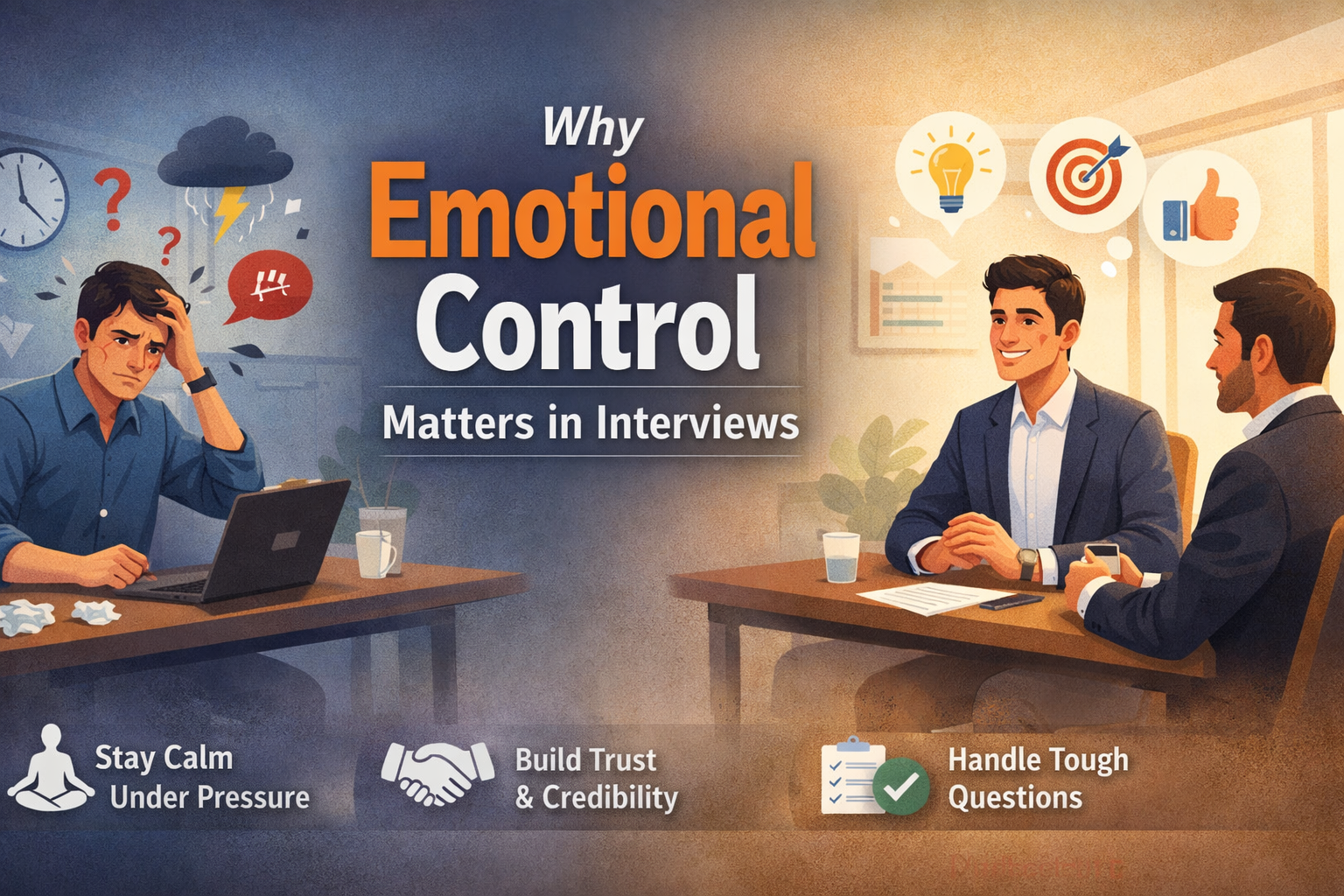
Interviews are not just to test knowledge and skills, it also tests how you react emotionally at the time of pressure. Your response at the time of nervousness, anxiety, or tough questions tells a lot of things about your personality to recruiters. In today’s competitive job market, emotional control has become a powerful skill.
The candidates who are able to understand and control their emotions, they look more confident, composed, and professional in interviews. That’s why emotional control and emotional intelligence play an important role in the outcome of interviews.
What Is Emotional Control?
Emotional control means understanding and regulating your emotions, which means controlling your reactions. It doesn’t mean avoiding your feelings. It means responding thoughtfully and not reacting impulsively. In interviews, the meaning of emotional control is staying calm at the time of nervousness, staying composed at the time of tough questions or unexpected situations, and maintaining your body language and tone in a positive and professional way.
In simple words, emotional control means reacting masterly and professionally on your emotions.
Why Emotional Control Matters in Interview?
1. First Impressions Are Emotion-Driven
Interviews are not just to test your skills or knowledge. Recruiters also show see your emotional responses. First impression is very important and it is a combination of your body language, tone, facial expressions, and overall confidence. If you look nervous, overexcited, or frustrated, then it can leave negative impact on recruiter. That’s why understanding your emotions and controlling it is your first step to create a strong interview impression.
2. Emotional Control Helps in Handling Nervousness and Anxiety
Nervousness or anxiety is natural at the time of nervousness. But if you do not control it, then your answers may become unclear and you won’t be able to express your thoughts properly. Emotional control helps you stay calm, maintaining focus, and answering confidently. Simple techniques like deep breathing, positive self-talk, and small preparation can help you control anxiety.
3. Responding Calmly to Tough Questions
Interview was mostly your reactions. Questions related to salary expectations, career gap, or past mistakes can look tough. If you respond quickly by getting emotional, look defensive, or feel angry, then this hurt your image. Through calm responses, you show maturity, problem-solving skill, and professional behavior, which is a positive signal for recruiter.
4. Emotional Control Shows Professional Maturity
Candidates who can manage their emotions, they automatically look professional and mature. By staying calm and composed, it means that you can also do effective work in stressed situations. Recruiters think emotionally controlled candidates as reliable, trustworthy, and leadership potential. This skill is also very important for long-term career growth.
5. Avoiding Defensive or Emotional Reactions
In interview, there are mostly tough or critical situations or questions. If you react defensively, sarcastic, or impatient, then it shows insecurity and lack of professionalism. Through emotional control, you react calmly, respond politely, and convert negative situations into an opportunity. This skill shows you a confident and composed candidate, which boosts your credibility and of the recruiter.
6. Communication Becomes Clear and Structure
When you control your emotions, then it leaves a positive effect on your communication style. At the time of nervousness or stress, people speak without thinking. Words are unclear or points are irrelevant, but through emotional control, you can organize your thoughts and present your thoughts in a confident and logically structured way.
It means you share your achievements and experiences in an impactful story. Interviewers clearly understand what you want to say and it is a signal of your professionalism and preparation.
7. Emotional Control Builds Trust and Credibility
Emotional control directly boosts your trustworthiness and credibility. Recruiters observe how candidates behave in a stressful or unexpected situation. If you stay calm, polite, and composed, then it shows that you are liable and consistent.
Making trust also means that interviewer should think that you can collaborate with team, can handle clients, and can also complete efficiently in pressure situations. Emotional reactions like irritability, defensiveness, or over-excitement hurt credibility and weaken professional image of candidate front of recruiter.
8. Impact on Decision-Making and Problem-Solving
Emotional control also impacts your decision-making and problem-solving skills. When you react under emotions, then you take impulsive decisions and are not able to analyze situations logically. But by staying calm and composed, you see the situation through a better perspective, evaluate pros and cons, and take strategic solutions.
If you present emotionally stable and rational solutions, then it shows that you can be effective and dependable in high-pressure situations as well, which is very important for long-term career growth and leadership.
Common Emotional Mistakes Candidates Make
In interviews, most of the candidates are not able to control their emotions and it affects their chances negatively. Here are some common mistakes which you must avoid.
1. Overreacting to unexpected questions
Some questions are the rise for you, such as career gap, past failure, or tricky technical scenario. If you overreact, show shock, panic, or defensive behavior, then it creates a negative impression in front of the recruiter. Giving calm and composed response is the best approach.
2. Showing frustration or impatience
At the time of interview, questions can repeat multiple times or discussion can feel slow. If you look frustrated, irritated, or impatient, then it shows that you cannot handle stressful situations. Through emotional control, you can maintain patience, answer politely, and can build professional image.
3. Speaking impulsively without thinking
At the time of nervousness or emotional candidate give first thought without thinking, which can make their answers unclear, contradictory, or inappropriate. It look like overconfidence or lack of preparation. Through emotional control, you first take pause, think, and then give clear and logic answer, which impresses interviewer and build your credibility.
Know why emotional intelligence is important for hiring through our blog on “How Emotional Intelligence Influences Hiring”.
Conclusion
Emotional control is a silent but powerful skill that can significantly influence the outcome of an interview. While technical skills and knowledge may get you shortlisted, it is your ability to stay calm, respond thoughtfully, and manage your emotions under pressure that leaves a lasting impression. Candidates who demonstrate emotional control not only appear more professional and credible but also signal maturity, reliability, and leadership potential.
In today’s competitive job market, mastering emotional control is more than just a soft skill—it is a key factor that separates good candidates from truly exceptional ones. By understanding and regulating your emotions, you can communicate clearly, build trust, and handle challenges confidently, giving you a clear advantage in any interview.
Read more such blogs with Best Job Tool.


Leave a Reply