Introduction
In today’s competitive job market, only saying “I worked efficiently” or “I have handled projects successfully” is not enough. Recruiters love things when it is measurable and can understand easily. That’s why using numbers in resumes is very important. Numbers show your achievements clearly, increase your credibility, and prove that you have really created impact. Let’s see how a small numbers can make your resume convincing and eye-catching.
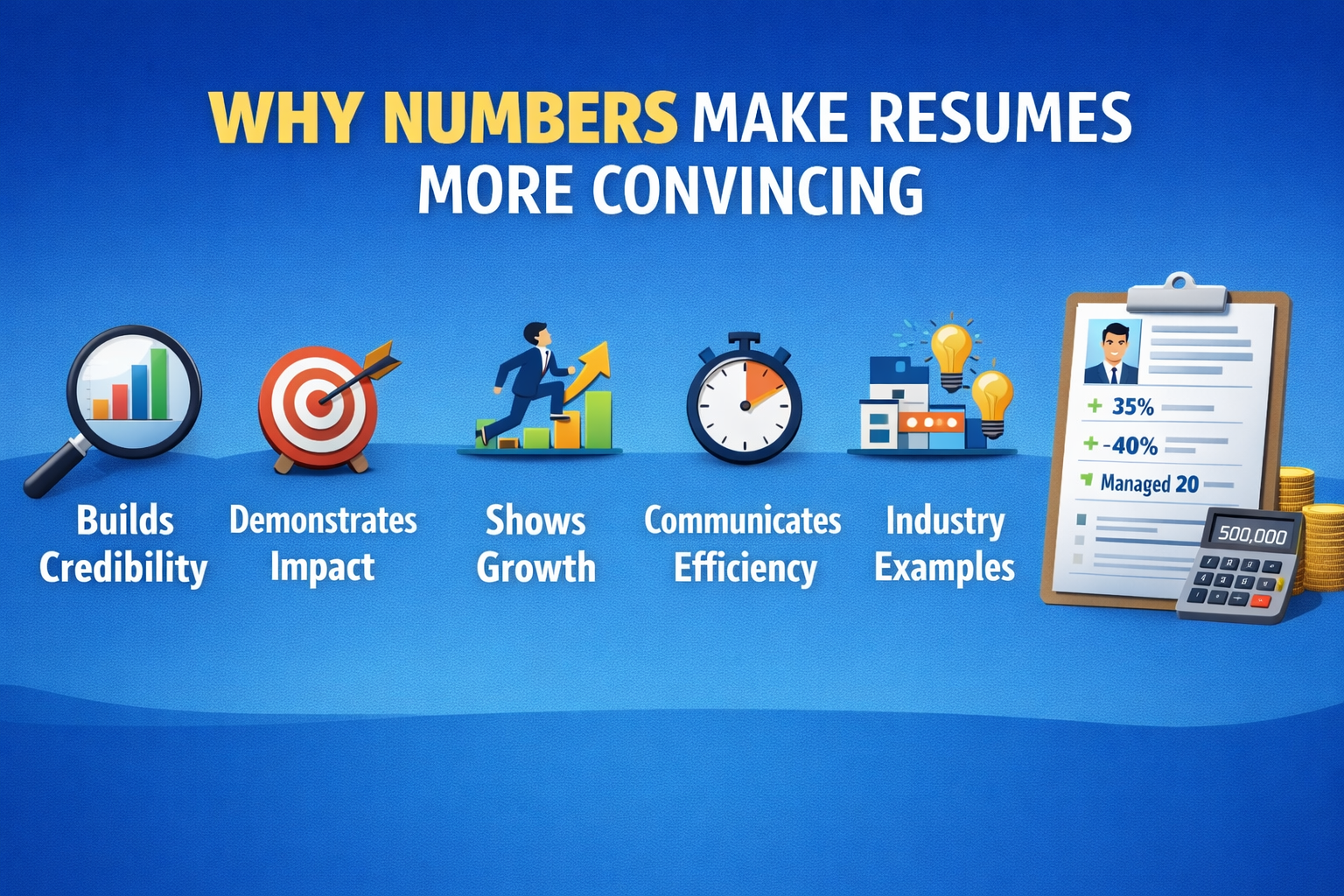
Why Numbers Make Resumes More Convincing?
1. Numbers Build Credibility
The biggest reason of using numbers in the resume is it makes your work measurable and believable. When you say, I improved sales or handled projects, then it looks vague, but if you write, “I have increased 25% sales in six months”, then through the recruiter know immediately that you can create real impact. Numbers present your work with proof and make your resume more professional and impressive.
2. Demonstrating Impact
The biggest benefit of showing numbers is it boosts your credibility. When you quantify your achievements, then recruiters think that you measure your worth and are accountable for your results. For example, if you use sentences like “handled multiple client accounts”, then it sounds vague, but instead of this, if you use “handled 15 client accounts simultaneously with 100% on-time delivery”, then it looks credible. It also shows that you are data-driven and maintain accurate record of your work. Recruiters naturally trust on those candidates who show measurable results.
3. Making Achievements Stand Out
Only doing work or completing tasks is not enough. Recruiters want to see how your work creates real impact for company or team. Showing achievements through numbers clearly tells that you can add value. For example, if you will use sentence like “reduced customer complaints by 40% within 3 months”, then it shows impact. It shows your contribution in a measurable form and convince recruiter that your work was beneficial for company.
4. Showing Growth and Progress
Numbers highlight your achievements and makes it more memorable and attention-grabbing. Recruiters can identify your key achievements in just a glance of your resume. Use metric achievements such as “managed a team of 20 employees completing projects two weeks ahead of schedule” instead of just writing “managed team” because it makes you stand out in crowd. Through this, your accomplishments, statements look more impressive and powerful. It differentiates you from other candidates.
5. Communicating Efficiency and Productivity
Numbers do not only show current achievement, it also highlights your personal and professional growth. Recruiters wants to see that you are continuously improving and are progressing in career. Using sentences like “promoted within two years from intern to manager” shows only growth, but if you use sentences like “increased team productivity by 30% over one year”, then it shows both progress as well as impact. It indicates that you are goal-oriented and deliver better result consistently.

6. Using Numbers Across Different Resume Sections
The use of numbers in the resume is not only limited to achievements. You can also use it in different sections. It makes your overall profile more strong and memorable.
Examples:
- Work Experience: “Increased sales by 20% in 6 months” or “Managed a team of 15 employees.”
- Skills: “Typing speed: 80 WPM” or “Handled 50+ client accounts.”
- Education: “Graduated with 8.9 CGPA” or “Ranked 2nd in class of 120 students.”
- Projects: “Developed website used by 10,000+ users” or “Reduced page load time by 40%.”
Through numbers, it gets clear that you measure your work and your achievements and capabilities are visible in every section. It easily convinces recruiter that you are a result-driven candidate.
7. Industry-Specific Examples
The use of numbers is different in every industry. Recruiters want those metrics which are relevant to their field.
Examples by industry:
“Increased social media engagement by 60% in 6 months.” Industry-specific numbers clearly define your expertise and it shows that you have created real impact in your field. It makes it more convincing for recruiters.
Sales & Marketing: Revenue growth, leads generated, campaigns executed.
“Generated 200+ qualified leads in 3 months.”
Operations & Logistics: Efficiency, cost savings, delivery times.
“Reduced shipping costs by 15% annually.”
IT & Software: Projects delivered, bugs fixed, users served.
“Delivered 5 projects on time with zero critical bugs.”
Creative Fields: Audience engagement, reach, content performance.
Know “How to write strong achievement statements in resumes”.
Conclusion
Using numbers in your resume is more than just a formatting choice—it’s a way to showcase your achievements, credibility, and impact in a clear and measurable way. Quantifiable results make your contributions stand out, demonstrate growth, and help recruiters quickly understand the value you bring to an organization.
Whenever possible, replace vague statements with specific, measurable outcomes. By doing so, your resume becomes more persuasive, memorable, and effective in grabbing the attention of hiring managers. Remember, numbers don’t just tell your story—they prove it.
You can explore more such blogs here.





Leave a Reply