Introduction
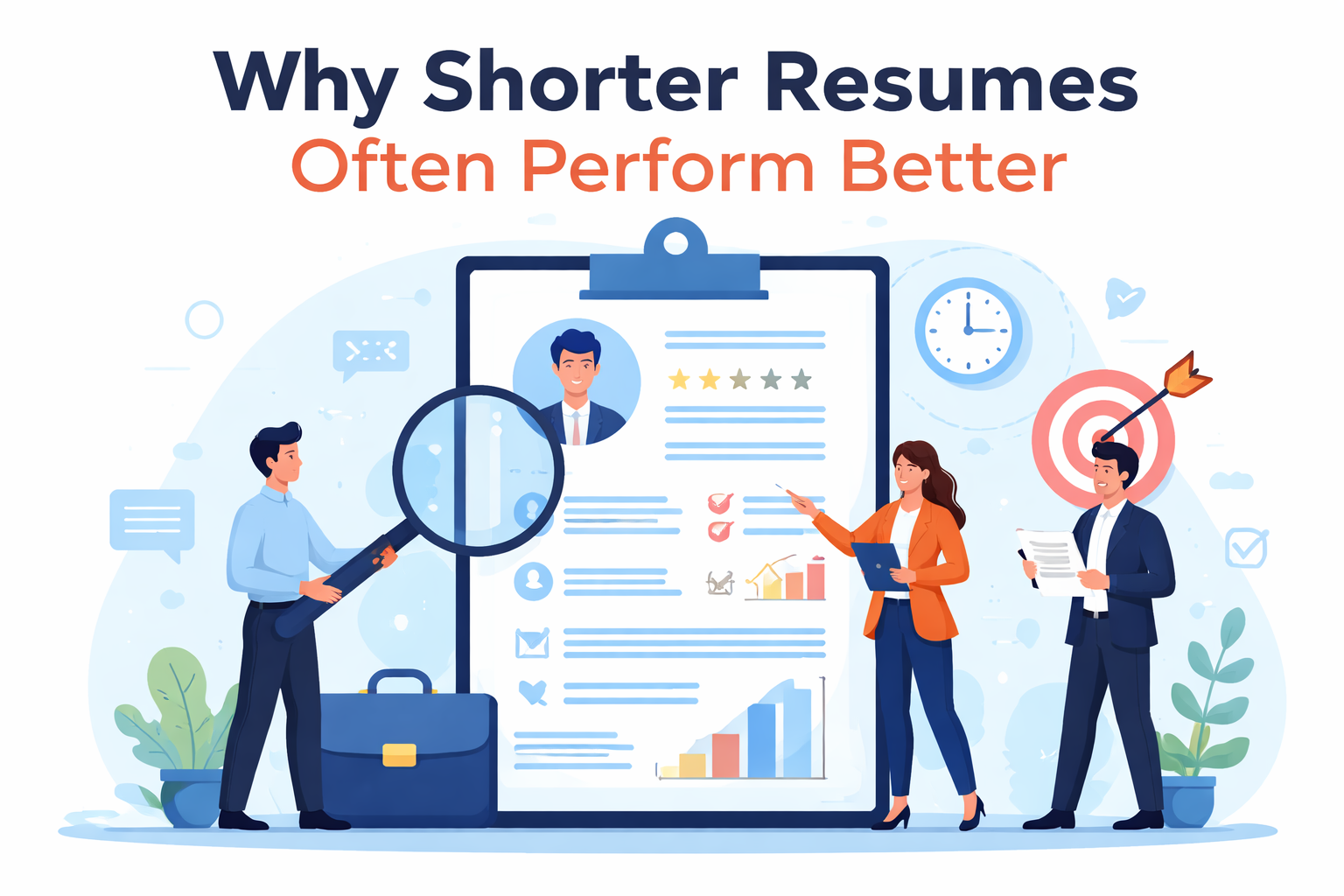
In today’s competitive job market, resume is no more only a document. It is your first impression. Recruiters do not have time to read your resume in detail. That’s why they scan most of the resumes. Long and over-detailed resumes look confusing and do not highlight important information. That’s why shorter resumes perform more effectively.
When resume is concise, then recruiters can clearly see your skills, achievements and experience. Short resume saves the recruiter’s time as well as show all the information in a smartly way. In this article, we will understand why short resumes are shortlisted more and how you can create your resume impactful.
Why Shorter Resumes Often Perform Better?
1. Recruiters Scan, They Don’t Read
In today’s time, recruiters do not have time to read every resume in detail. One resume recruiter sees thousands of resumes in a day. That’s why they scan it instead of reading line by line. While scanning, they see only headings, bullet points, skills, and keywords. If resume is long and information are scattered, then important points can easily miss out. In short, resume content is focused through which recruiter can understand quickly whether the candidate is a good fit for the role or not.
2. Attention Span of Recruiters
The attention span of recruiters is limited. They usually decide within 6 or 10 seconds whether a candidate should be hired or rejected. Because of the long text in the resume, the recruiter can lose interest. The information is upfront in short resumes, which grabs the recruiter’s attention. It increases the chance of getting shortlisted and interview call.
3. Clarity Improves Impact
Then, with the font size, then clarity improves automatically. Short resume does not include unnecessary details. It only highlights important skills, achievements, and experiences. Clear structure and listed content do not confuse the reader, which creates a strong impact. Clarity means recruiter should easily understand what you can do and how you can add value for the company.
4. Shorter Resumes Shows Relevance Over Quantity
The purpose of resume is not writing much. It means writing only relevant things. Long resume also consider those information which does not match with job role. Short resume force candidate to only mention the elements and skills which are directly related to job description. Focusing on relevance instead of quantity gives a clear signal to recruiter that candidate has understood the job role and tailored resume according to it.
5. ATS (Applicant Tracking System) Compatibility
In today’s time, many companies use applicant tracking system which automatically screen all resumes. Short resumes are ATS friendly because it includes clean formatting, limited sections, and focused keywords. When unnecessary content are not included in resume, then ATS easily identify relevant keywords. It makes the resume ranking better and improves the chances for resume to reach to human recruiter.

6. Stronger Highlights and Key Achievements
The biggest benefit of short resume is it highlights important achievement clearly. When resume is concise, then candidate only mention their strongest achievements such as numbers, results, and impact. In long resume, achievements mostly get lost in between responsibilities, but it stands out clearly in short resume. Recruiter immediately understand what you achieved in your previous roles.
7. Shorter Resumes Reduced Risk of Mistakes
The longer your resume is, the more chances of mistake arises, whether for grammar, spelling, or date inconsistency. Content is less in short resume, that’s why it’s easy to proofread and maintain. Fewer details mean less confusion and less errors. Recruiters can take even small mistake as a negative sign, that’s why short resume protect your professional credibility.
8. Shorter Resumes Shows Professional and Modern Image
In today’s modern job market, short resumes project a professional and confident image, which shows that candidate can prioritize their information smartly and can avoid unnecessary details. One-page or concise resume look clean, well-structured, and visually appealing, which leaves a positive impression on recruiters. According to modern hiring standards, short resumes are more preferred because they reflect both efficiency and clarity.
You can also read our another blog on “How to Prioritize Resume Content Strategically” to gain knowledge about creating an impressive resume.
Conclusion
In today’s fast-paced hiring environment, shorter resumes often perform better because they focus on clarity, relevance, and impact. Recruiters have limited time and prefer resumes that quickly highlight key skills, achievements, and job-related experience. A concise resume reduces distractions, minimizes errors, and makes it easier for both ATS systems and human recruiters to evaluate a candidate’s potential.
Rather than listing everything you have ever done, a strong resume prioritizes what truly matters for the role. By keeping your resume short, focused, and well-structured, you increase your chances of making a positive first impression and getting shortlisted. In the end, it’s not about how long your resume is—it’s about how effectively it communicates your value.
You can read more such blogs here.



Leave a Reply