Introduction
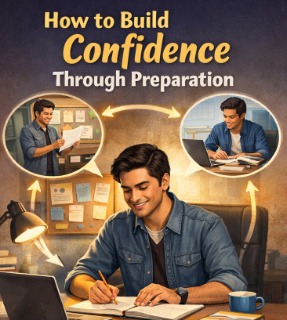
Confidence is not a magic trait which comes in overnight. It develops slowly and the most a strong foundation to build confidence is preparation. When we are prepared well for any interview, presentation, exam, or important conversation, then we feel surety naturally, fear reduces, hesitation reduces, and we are able to express our thoughts clearly. Preparation does not only help us in providing answers, it also give us belief that we are ready and this belief builds real confidence.
How to Build Confidence through Preparation?
1. Control Interview Anxiety & Nervousness
Having interview anxiety is normal, especially when the interview is high-level. Feeling slightly nervous shows that you take opportunities seriously. The important thing is to control your anxiety.
Before the interview, deep breathing, positive self-talk, and short mental preparation are helpful. Remind yourself that you are qualified for the interview and have sufficient experience. Learn to convert nervous energy into excitement; this will help you feel more alert and confident.
2. To Build Confidence, Practice Daily Self-Affirmations
Daily self-affirmations are short, positive statements you tell yourself to boost confidence and reduce self-doubt during your job search. For example: “I am capable of learning new skills,” “I am confident in interviews,” or “I am attracting the right opportunities.”
Practicing these affirmations every day helps rewire your mindset, replace negative thoughts with positive ones, and increase your belief in your abilities. Even just 5–10 minutes a day of speaking or writing affirmations can make a noticeable difference in how confident you feel when applying for jobs, networking, or attending interviews.
3. Visualize Success to Build Confidence
Athletes use visualization, the image of their winning game. Like this, you can also visualize that you are cracking your interview. This technique helps you build your confidence.
Say positive affirmations in front of a mirror for 5 minutes daily. You can say “I am confident, I am skilled, and I will get my dream job.” This small habit trains the subconscious mind.
4. Self Motivation
If you are self-motivated, they can overcome all challenges, handle their work easily, and build their career successfully. In fact, self-motivation is not only important for job seekers but for everyone, whether it’s a child, a worker, or a student. Because without self-motivation, work cannot be done properly.
We should always stay self-motivated and keep appreciating themselves, whether it’s for a small achievement or completing a big task. And even if they don’t achieve something at times, they should still appreciate themselves for the effort and for giving their best.
When we stay self-motivated, we give our 100% to our work, which improves the quality of our work, earns us appreciation, and builds trust with others.
5. Build Confidence Through Deep Preparation
The strongest foundation of confidence is preparation. Basic company research is not enough for interviews. You need to understand the business model, goals, challenges, and industry trends of the company. When you clearly understand the expectations of the role and the needs of the organization, your answers naturally become more confident.
Deep preparation means first analyzing your past experiences, including achievements and failures. Think about which problems you have solved, what decisions you took, and their impact. When you have a clear understanding of your journey, hesitation reduces during the interview, and clarity increases.
6. Practice Questions of High-Level Interviews
Confidence also comes with practice. In high-level interviews, recruiters mostly ask situational and behavioral questions, such as leadership challenges, conflict handling, or tough decisions.
Practice through mock interviews, whether with a mentor, a friend, or even in front of a mirror. Another helpful approach is to record your answers and listen to them, because this helps you improve your tone, clarity, and body language.
7. Celebrate Small Wins
You should appreciate your effort whether it is small or big.
- Become a reward system for yourself.
- You can prepare a coffee treat for yourself after completing a big task.
- You can also enjoy your favorite snack or watch an episode of your favorite show to appreciate yourself.
- Not only for big efforts, you should also appreciate yourself for small achievements. You can pat your back after a small achievement to feel good.
These self-rewards encourage you psychologically and motivation gets long-term sustainability from self-appreciation, and you don’t feel your work is boring or forced.
8. Master Your Career Story
In interviews, recruiters ask about your career journey multiple times. That is why you should create your story as a logical, growth-focused narrative. In your story, include what you learned, how you grew, and how you are ready for leadership and responsibility.
You can explain your achievements confidently using the STAR method (Situation, Task, Action, Result). When you present your story with control, recruiters see you as a mature and self-aware professional.
If you want to read a detailed guide on how to create a career story then read our another blog on “How to prepare career stories that impress hiring managers”.
9. Confidence Comes from Consistency, Not Perfection
Do not pressure yourself to give perfect answers. Focus on continuous growth. When you learn regularly, give mock interviews, and improve your communication, you will gradually develop confidence. In high-level interviews, perfection is not the secret of success—consistency is the secret of success.
10. Improve Communication & Body Language
Clear and structured communication is a strong signal of confidence. While giving answers, keep your pace slow and calm so that the conversation becomes impactful. Take pauses in between, as this shows that you are answering after thinking.
Body language also leaves a strong impression on recruiters. Right posture, relaxed shoulders, and natural hand movements make you look confident. Maintaining eye contact shows interest and sincerity. When you have control over your body language, your confidence automatically reflects in your action
Conclusion
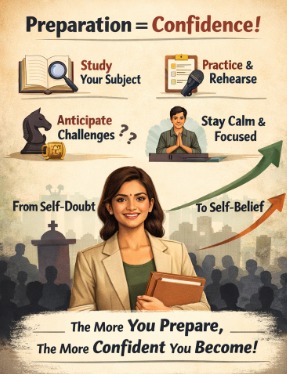
Confidence is not something you are born with; it is something you build through consistent and intentional preparation. When you invest time in understanding your subject, practicing your skills, and anticipating challenges, self-doubt naturally fades.
Preparation gives you clarity, control, and the ability to respond instead of react. Over time, this habit strengthens your self-belief and helps you perform with calmness and assurance in any situation. Simply put, the more prepared you are, the more confident you become.
Read more such blogs here.


Leave a Reply