Introduction
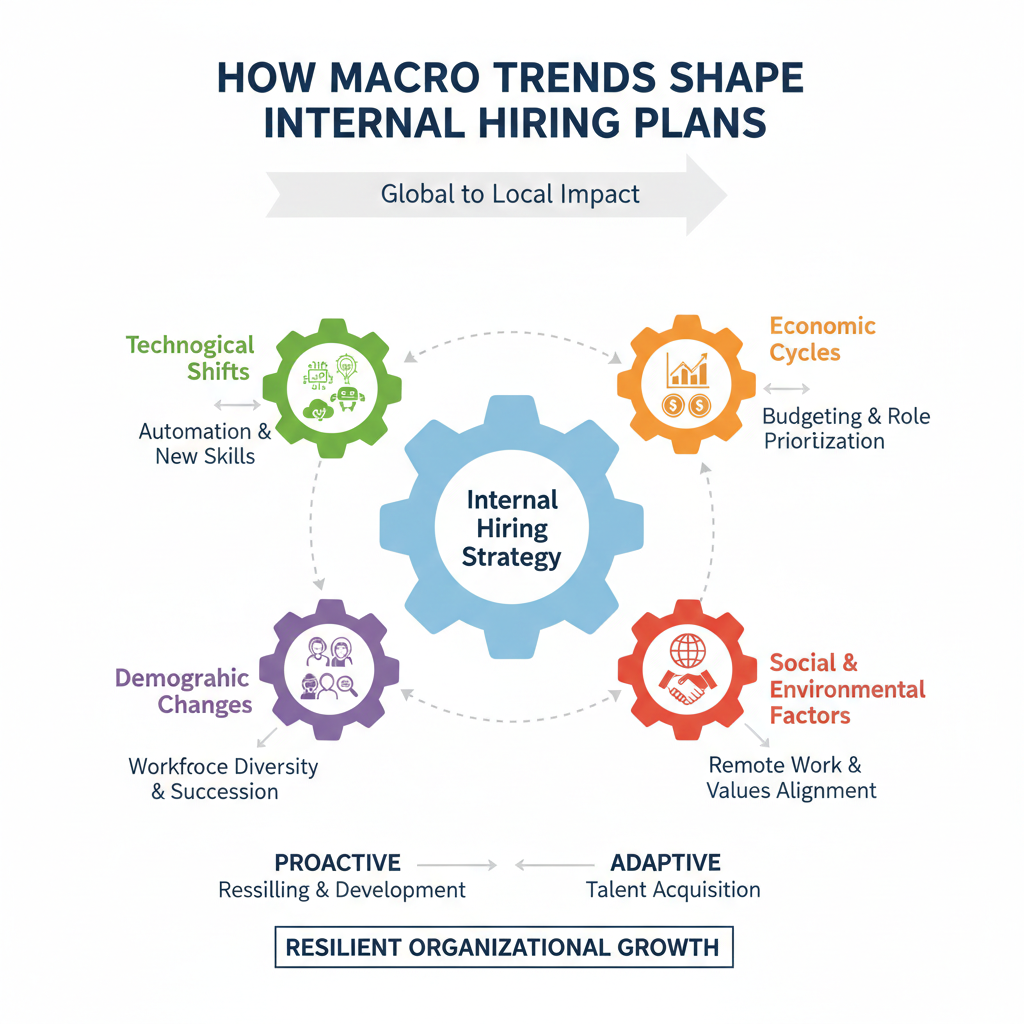
Hiring decisions don’t happen in isolation. Even strong companies adjust hiring when the outside world changes. Market demand, economic cycles, new technologies, and shifting customer behavior all shape what happens inside organizations. That is how macro trends influence internal hiring plans, even when leadership wants stability.
Companies don’t only hire based on what they need today. They also hire based on what they might need next quarter. Therefore, internal hiring plans often change before job seekers even notice. When macro trends shift, organizations either protect budgets, invest in new skills, or restructure teams to stay competitive.
Economic conditions change hiring speed and headcount decisions
When the economy slows down, companies become cautious. They reduce risk by slowing recruitment, delaying expansion, and focusing on essential roles. Even if job postings remain active, approvals become stricter. That affects hiring timelines and interview speed.
However, when economic confidence rises, companies hire faster. They increase headcount because they expect more revenue and demand. In addition, they compete harder for skilled talent, which can push salaries higher. This is how macro trends influence internal hiring plans through simple financial logic and business confidence.
Industry demand decides which roles stay active
Not all industries move the same way. Some industries grow even when others struggle. For example, healthcare, cybersecurity, and logistics often stay strong because demand remains steady. Meanwhile, some consumer-focused sectors slow down quickly when spending drops.
Because of this, companies adjust internal hiring plans based on customer demand signals. If demand increases, hiring expands in operations, support, and delivery teams. If demand drops, companies focus on efficiency and cost control. Therefore, hiring priorities shift based on what the market is buying and what customers expect.
Technology shifts force new skill requirements
Technology is one of the biggest macro drivers today. Automation, AI tools, cloud systems, and data platforms are changing how work gets done. Companies that adopt new technology need new skills. They may hire data analysts, AI specialists, product managers, or cybersecurity professionals.
At the same time, some roles reduce in demand because tools handle routine tasks. Therefore, internal hiring plans shift toward high-impact skills like problem-solving, strategy, and system thinking. This is how macro trends influence internal hiring plans by reshaping which skills stay valuable.
Also, many companies prefer upskilling existing employees. That saves time and protects culture. However, if the skill gap is large, external hiring becomes necessary.
Labor market trends impact salary planning and hiring strategy
When talent is scarce, companies adjust their hiring approach. They may increase salary ranges, offer better benefits, or expand hiring locations. In addition, they may become more flexible with remote work to attract stronger candidates.
Meanwhile, when talent is widely available, companies become selective. They can hire slower and demand more experience. They may also reduce compensation pressure. This is how macro trends influence internal hiring plans through supply and demand in the job market.
Also, labor market trends affect retention. If competitors are hiring aggressively, employees may leave more often. That forces companies to plan more backfills and retention hiring.
Remote work and global hiring reshape workforce planning
Remote work has changed internal hiring plans permanently. Many companies now hire across cities and countries. That gives them access to a wider talent pool. It also changes how teams collaborate and how managers lead.
However, remote work also creates new hiring needs. Companies invest more in communication roles, team coordination, and digital operations. In addition, they hire for documentation skills and async working styles. That is how macro trends influence internal hiring plans in the modern remote-first world.
Some companies also move toward hybrid models. That affects office planning, team scheduling, and hiring location preferences.
Regulations and compliance trends drive specialized hiring
Policy changes and regulations can push hiring in unexpected directions. For example, stricter data privacy laws can increase demand for compliance teams. Financial reporting rules can create more roles in audit and controls. Security requirements can drive hiring in risk management.
Therefore, companies watch regulatory trends closely. They hire specialists to avoid penalties and protect operations. This is how macro trends influence internal hiring plans by forcing companies to prepare before problems happen.
Also, compliance hiring is often considered “non-negotiable.” Even during slowdowns, these roles may stay open.
Consumer behavior shifts influence internal team priorities
Customer expectations change quickly. People want faster delivery, better support, and smoother digital experiences. So, companies adjust hiring to meet these expectations. They may hire more customer success professionals, product designers, and operations managers.
In addition, companies track user behavior and feedback. If customers prefer online services, digital teams grow. If customers demand personalization, data and CRM roles expand. That is how macro trends influence internal hiring plans through changes in buying behavior and customer standards.
How job seekers can benefit from macro-driven hiring patterns
Macro trends can feel unpredictable, but they create opportunities. Job seekers who follow these trends can apply smarter and stay ahead. Instead of applying everywhere, focus on roles that match growing business needs.
Here are a few smart actions that help:
- Track which industries are expanding and hiring consistently
- Build skills that match tech adoption and automation changes
- Highlight adaptability and learning ability in your resume
- Apply early to roles tied to demand and business continuity
- Stay open to remote roles and global teams
In addition, tailor your profile to show business impact. Companies hire faster when they see clear value.
Final thoughts on how macro trends influence internal hiring plans
Macro trends shape business decisions before they shape job postings. Economic cycles, technology shifts, labor market changes, and customer expectations all influence how companies plan hiring internally. That is how macro trends influence internal hiring plans and why recruitment priorities can change quickly.
If you want to stay competitive, don’t just watch job listings. Watch the market signals behind them. Then apply with a smarter strategy and the right timing. For fresh opportunities across industries and remote roles, explore openings daily with the best job tool.
Find Your Dream Job Today – Explore Endless Career Opportunities and Secure Your Next Role with Best Job Tool.

Leave a Reply