Introduction
An interview is a stage where anyone, whether fresher or experienced, can get nervous, which can lead to interview mistakes. It’s not true that if there are two candidates—one fresher and one experienced—the fresher will make mistakes while the experienced professional will easily clear the interview without any errors.
Even experienced professionals can make mistakes in interviews, which can reduce their chances of getting hired and create a negative impression. If you are an experienced professional and going for an interview, it is very important to read this article so you can avoid making mistakes.
In this article, we will explore the mistakes professionals often make and how to prevent them to increase your chances of success.
Interview Mistakes Even Experienced Professionals Make
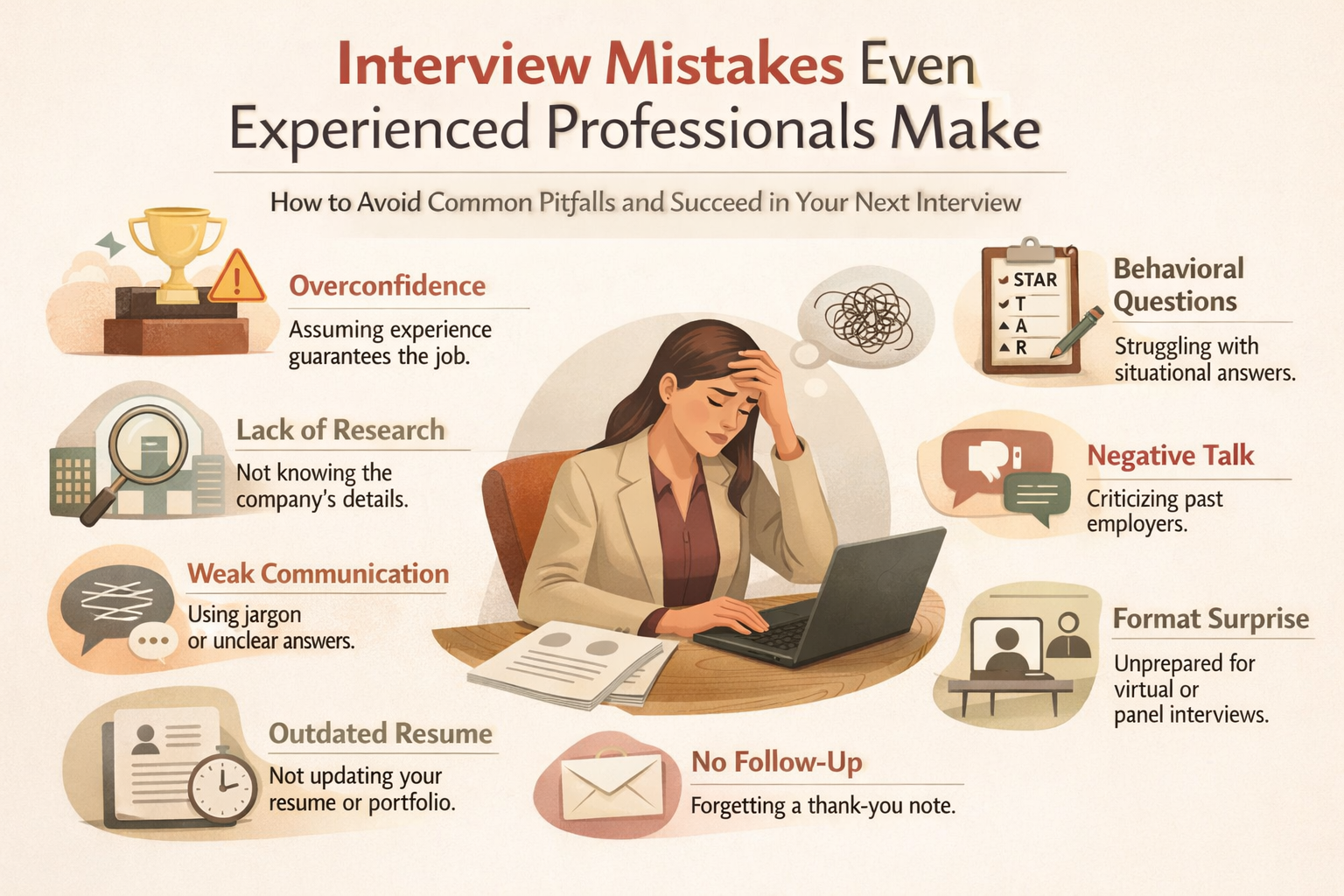
1. Overconfidence
First Mistake is many professionals make the mistake of showing overconfidence. Having experience is good, but because of their experience, professionals often become overconfident and think their experience alone is enough to impress the interviewer. Because of this, they sometimes skip proper preparation.
Overconfidence should be avoided. Every candidate should treat an interview as a fresh opportunity and prepare well for it. Otherwise, if you show only confidence without preparation, it can lead to rejection.
2. Lack of Research
Another Common Mistake: Many professionals often make the mistake of not researching the company or the role before the interview. They think their experience is the most important thing to pass the interview. But this is completely wrong because recruiters value more than just experience—they want to see that the candidate is interested in the role and the company and shows curiosity.
By not researching the company, experienced candidates can put themselves in trouble. If the recruiter asks questions about the company or the role, their answers may be generic or they may not know the answer at all, which creates a negative impression.
That’s why before an interview, study the company’s website, its mission statement, recent news, and achievements, and understand the role in detail.
3. Weak Communication Skills
Experience Alone Is Not Enough: Having experience in an interview is not everything. If experienced professionals cannot communicate well, their experience doesn’t help much. Good communication doesn’t just mean speaking well—it also includes clarity, structure, and confidence.
Experienced professionals often use too much jargon to highlight their experience, but this can create a negative impression, as recruiters may not understand all the technical details.
Weak communication also includes not using body language effectively, such as poor eye contact or lack of engagement, which increases the chances of rejection.
To improve communication skills, professionals should practice explaining their points in a simple and structured way and use the STAR method (Situation, Task, Action, Result) to answer questions effectively.
4. Failure to Update Resume or Portfolio
Another Mistake: Many professionals make the mistake of not updating their resume and portfolio. Most experienced professionals think their past achievements will automatically impress recruiters, so they sometimes use an old resume. But this is completely wrong, because outdated information can create confusion and raise doubts about your credibility.
Not updating your resume means not highlighting your new skills, certifications, and projects, which prevents you from making a strong impression on the recruiter and decreases your chances of getting hired.
To avoid this, review and revise your resume before every interview to include recent achievements and highlight the skills and projects that align with the job you are applying for.

5. Not Handling Behavioral Questions Effectively
Not Handling Behavioral Questions Effectively: This is another mistake that many experienced professionals make during interviews. Behavioral questions are asked to understand how you handled past situations and how you might perform in the future.
Sometimes professionals fail to answer these questions properly because they give vague responses or unstructured answers.
Common mistakes include sharing stories that don’t clearly relate to the question or failing to highlight their specific role in a team scenario. To answer behavioral questions effectively, you should use the STAR method (Situation, Task, Action, Result) and be honest about challenges or failures.
Example of Behavioral Questions
Use the STAR method (Situation, Task, Action, Result) to answer these.
Tell me about a time you faced a challenge at work.
“In my internship, I had to complete a report with limited data. (Situation) I gathered additional information from team members and online sources. (Task) I stayed late to ensure accuracy. (Action) The final report was well-received and used in the final presentation.
Describe a time when you worked under pressure.
“During college exams, I also had a project deadline. I made a clear schedule, divided my time efficiently, and stayed focused. I submitted the project on time and performed well in exams too.”
Give an example of when you worked in a team.
“During a group project, I handled the research part. We divided tasks based on strengths, regularly communicated, and helped each other. The project received top grades.”
6. Talking Negatively About Past Employers
Talking Negatively About Past Employers: If you speak negatively about your past employers or companies in front of a recruiter, it is a big mistake. It may feel natural to share past frustrations, but doing so in an interview can create a negative impression.
Recruiters may make negative assumptions about your professionalism, attitude, and ability, even if your past experience was bad. Instead, you should frame your experiences positively and show maturity and professionalism.
Do not blame anyone for your failures. Keep your tone professional and constructive, and focus on solutions, lessons learned, and personal growth.
Know more about interview tips, through our blog on interview questions.
Conclusion
Experience Alone Is Not Enough: Having experience does not mean you will easily pass an interview or automatically impress the recruiter. Experience can be an additional advantage, but along with it, you also need to focus on your body language, communication, confidence, and preparation.
If you are an experienced professional going for an interview, avoid all the mistakes mentioned in this article. Doing so will help you create a positive impression on the recruiter and increase your chances of getting hired.
You can also read more such blogs here.


Leave a Reply