Introduction
In today’s competitive job market, having a good resume is not enough. Many candidates have similar skills and experiences, but only a few get interviews. The key to standing out is resume optimization. One of the best ways to do this is by analyzing the job description carefully. A job description tells you exactly what an employer is looking for. If your resume reflects the skills and experience mentioned in the job description, your chances of getting shortlisted increase.
In this article, we will discuss how to optimize your resume using job description analysis, step by step. We will also cover tips, examples, and common mistakes to avoid.
What is Resume Optimization?
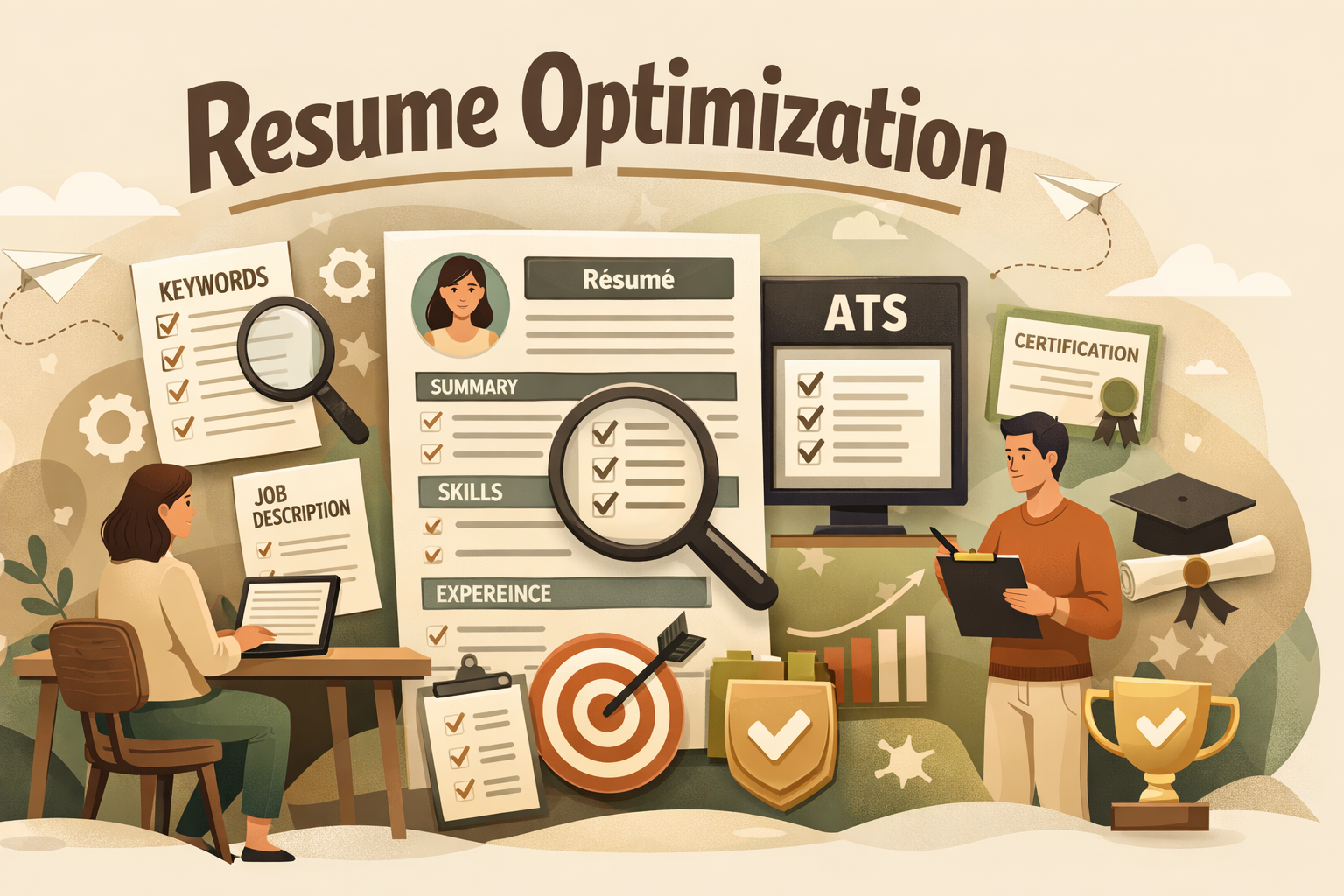
Resume optimization is the process of making your resume match the job requirements so that it gets noticed by recruiters or applicant tracking systems (ATS). ATS is a software that many companies use to scan resumes for relevant keywords. If your resume does not include the right keywords from the job description, it may never reach the recruiter.
Optimization involves tailoring your resume for each job application. This does not mean lying or exaggerating. It means highlighting your skills, experiences, and achievements that are relevant to the specific job.
Understanding the Job Description
Before optimizing your resume, you must understand the job description carefully. A job description typically contains several parts:
- Job Title: This tells you the position you are applying for. Make sure your resume uses the correct title if it matches your experience.
- Responsibilities: This section explains what the employee is expected to do. Include relevant responsibilities in your experience section.
- Required Skills: This lists the hard skills (technical skills) and soft skills (communication, teamwork) needed. Your resume should mention these skills.
- Qualifications: This includes education, certifications, and years of experience. Ensure your resume clearly shows you meet these requirements.
- Keywords: These are specific words or phrases repeated in the job description. These keywords are crucial for ATS and recruiters.
Step 1: Highlight Important Keywords
The first step in resume optimization is identifying the keywords. Keywords are usually skills, qualifications, and action verbs that appear in the job description.
For example, if a job description says:
“We are looking for a content writer with experience in SEO, blog writing, and social media content creation.”
The keywords are:
- Content writer
- SEO
- Blog writing
- Social media content
You should include these keywords in your resume naturally, especially in the skills section, experience section, and summary section.
Tip: Avoid keyword stuffing. Use them naturally in sentences.
Step 2: Tailor Your Resume Summary for Resume Optimization
Your resume summary is the first thing recruiters read. Use it to show that you match the job description. Include keywords and achievements relevant to the role.
Example:
Before optimization:
“Experienced writer looking for a new opportunity.”
After optimization for content writing role:
“Content writer with 3 years of experience in SEO, blog writing, and social media content creation. Skilled in creating engaging content that increases website traffic and audience engagement.”
Notice how the second summary uses keywords from the job description and shows measurable value.
Step 3: Match Your Work Experience for Resume Optimization
Your work experience section should focus on achievements that match the job description. Use action verbs and quantifiable results.
Example Job Description Requirement:
“Manage social media accounts and increase engagement.”
Optimized Resume Experience:
“Managed social media accounts for XYZ Company, increasing follower engagement by 40% in 6 months through creative content and SEO strategies.”
Always highlight achievements rather than just responsibilities. This makes your resume stand out.
Step 4: Include Relevant Skills for Resume Optimization
Create a skills section that matches the skills mentioned in the job description. Separate technical skills and soft skills if possible.
Example:
Technical Skills: SEO, Google Analytics, WordPress, Blog Writing
Soft Skills: Communication, Time Management, Teamwork
If the job description mentions a specific tool or software, include it in your skills section if you have experience with it.
Step 5: Customize Education and Certifications
If the job requires certain degrees or certifications, highlight them clearly. For example:
Job Requirement: “Bachelor’s degree in Computer Science and certification in AWS.”
Optimized Resume:
“Bachelor of Science in Computer Science, Certified AWS Solutions Architect – Associate”
This shows the recruiter that you meet the required qualifications at a glance.
Step 6: Use Action Words for Resume Optimization
Use action verbs in your resume to make it dynamic and professional. Examples include:
- Achieved
- Managed
- Created
- Implemented
- Designed
- Led
For example:
“Implemented an SEO strategy that increased organic traffic by 50%.”
Action words make your achievements stand out and match the active language often found in job descriptions.
Step 7: Focus on Measurable Achievements
Whenever possible, include numbers, percentages, or measurable outcomes in your resume. This gives credibility to your claims.
Example:
“Increased email marketing open rates by 30% through targeted content campaigns.”
Numbers make your resume more persuasive and show clear results of your work.
Step 8: Check Formatting and Readability
Even if your resume is optimized with keywords and achievements, poor formatting can hurt your chances. Keep these tips in mind:
- Use a clean, professional layout.
- Use bullet points for responsibilities and achievements.
- Keep the font simple (Arial, Calibri, or Times New Roman).
- Avoid long paragraphs.
- Keep your resume 1–2 pages depending on experience.
Tip: ATS-friendly formatting is crucial. Avoid tables, graphics, or unusual fonts that ATS might not read properly.
Step 9: Use Job Description Analysis Tools
Several tools can help you analyze a job description and match it to your resume:
- Jobscan: Compares your resume with the job description and gives a match percentage.
- ResyMatch: Highlights missing keywords and skills.
- SkillSyncer: Suggests skills and keywords to add to your resume.
Using these tools can save time and improve your chances of passing ATS.
Step 10: Proofread and Review for Resume Optimization
Before submitting your optimized resume, proofread carefully. Check for:
- Spelling and grammar errors
- Consistency in dates, job titles, and formatting
- Correct use of keywords
You can also ask a friend or mentor to review your resume for clarity and accuracy.
Common Mistakes to Avoid
- Using a generic resume: Sending the same resume for all jobs reduces your chances. Always tailor your resume.
- Keyword stuffing: Overloading your resume with keywords looks unnatural.
- Ignoring achievements: Only listing responsibilities is not enough.
- Not matching job title: Use job title variations only if they truly reflect your experience.
- Overcomplicating formatting: Fancy designs may confuse ATS software.
Benefits of Resume Optimization
- Higher chances of passing ATS scans: Keywords help your resume get noticed by software.
- Better recruiter impression: Tailored resumes show that you read the job description carefully.
- Increased interview calls: Relevant skills and achievements increase your chances.
- Professional presentation: A well-optimized resume looks polished and credible.
Also read “Why Generic Resumes Fail in Competitive Markets”.
Conclusion
Resume optimization using job description analysis is a powerful strategy in today’s competitive job market. By carefully reading the job description, highlighting keywords, tailoring your summary and experience, and focusing on measurable achievements, you can make your resume stand out. Remember, it is not just about adding words from the job description but showing that your experience aligns perfectly with what the employer needs.
Always take time to customize your resume for each job. This small effort can make a big difference in your job search success.
You can read more such blogs here.







Leave a Reply