Introduction
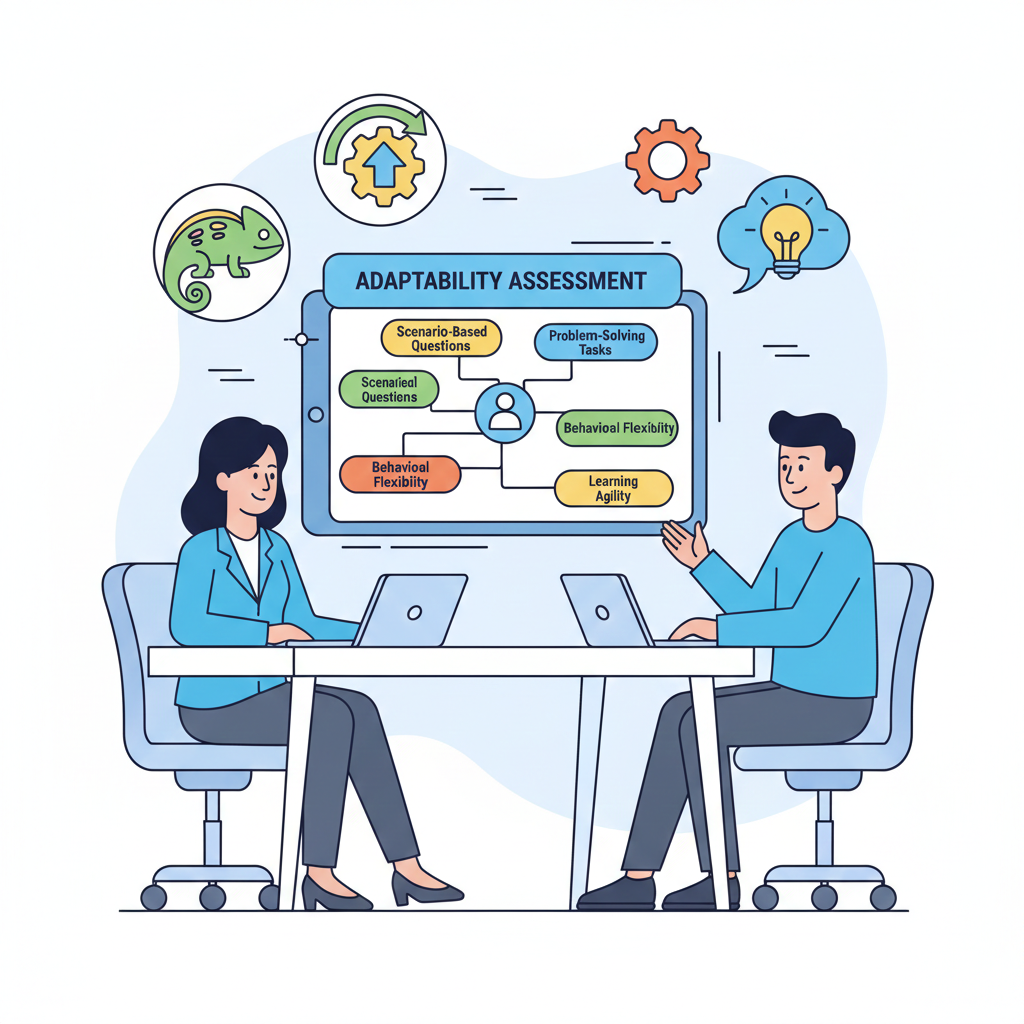
Adaptability is one of the most in-demand skills in today’s job market. Roles change fast. Tools evolve quickly. Business priorities shift often. That is why companies want candidates who can adjust without losing performance. So, how adaptability is assessed in interviews has become a major part of modern hiring.
Hiring managers don’t only ask about your skills. They also test your mindset. They want to know if you can learn, handle uncertainty, and stay productive during change.
In this blog, you will learn how interviewers evaluate adaptability and how you can prove it confidently.
Adaptability means staying effective during change
Adaptability is not only about accepting change. It is about performing well during change. It means you can adjust your approach without panic or resistance.
A truly adaptable candidate can handle new tools, new tasks, and new expectations. They can also work with different people and styles. Therefore, adaptability is seen as a long-term success skill.
That is exactly why how adaptability is assessed in interviews matters for both freshers and experienced professionals.
Interviewers use behavioral questions to test flexibility
Most companies assess adaptability using behavioral questions. These questions focus on past experiences. Because past behavior often predicts future performance.
You may hear questions like:
- “Tell me about a time you had to learn something quickly.”
- “Describe a situation where priorities changed suddenly.”
- “How did you handle an unexpected problem at work?”
- “Have you ever worked with a difficult change in process?”
The interviewer listens for calm, structured answers. They also look for a growth mindset.
Adaptable candidates explain what changed, what they did, and what they learned. That is the winning pattern.
They check how you respond to uncertainty and ambiguity
Many jobs don’t come with perfect instructions. Sometimes you need to figure things out as you go. Therefore, interviewers test how you handle unclear situations.
They may ask:
“What would you do if your manager is unavailable and a task is urgent?”
A strong answer includes initiative and responsibility. For example:
“I would review the requirements, start with safe steps, and confirm details as soon as possible.”
This shows you don’t freeze. It also shows you don’t take risky actions blindly.
This is one of the clearest ways how adaptability is assessed in interviews.
Hiring managers observe your attitude during feedback
Adaptability is closely connected to coachability. If you can accept feedback, you can adjust faster.
During interviews, hiring managers may challenge your answer. They may also offer a different approach to see your reaction.
Adaptable candidates don’t get defensive. Instead, they respond politely and thoughtfully. They may say:
“That’s a good point. I can see how that approach would work better.”
This signals maturity. It also signals learning ability.
Meanwhile, rigid candidates argue or shut down. That creates doubt.
They evaluate learning speed through your examples
Adaptability is proven through learning. Therefore, interviewers often ask about new tools, new responsibilities, or quick skill-building.
They want to hear:
- What you learned
- How you learned it
- How fast you applied it
- What results improved
For example, you can say:
“I learned a new CRM in two weeks by using tutorials and daily practice.”
That answer shows action and speed. It also shows commitment.
So yes, learning stories are powerful proof of adaptability.
Scenario-based questions reveal your decision-making style
Some interviewers use hypothetical scenarios to test adaptability. These questions show how you think in real time.
Examples include:
- “What would you do if your workload doubled suddenly?”
- “How would you handle a new process you disagree with?”
- “What if your project plan fails mid-way?”
Adaptable candidates respond with balance. They don’t panic. They also don’t pretend everything is easy.
A strong answer includes prioritization, communication, and flexibility. It shows you can adjust while staying responsible.
That is exactly how adaptability is assessed in interviews for many roles.
They look for cross-functional and people adaptability
Adaptability is not only technical. It is also social. Many companies want candidates who can work with different teams and personalities.
Interviewers may ask about teamwork challenges. They may also ask about handling different work styles.
Adaptable candidates show respect and emotional control. They adjust communication based on the person. They focus on solving issues, not winning arguments.
This matters because collaboration drives performance. Therefore, people adaptability is a strong hiring signal.
Your resume and communication style also show adaptability
Adaptability is not only tested through questions. It is also observed through your behavior.
Interviewers notice:
- How you explain your experiences
- How you handle interruptions
- How you respond when you don’t know something
- How you manage nervousness and stay clear
If you don’t know an answer, an adaptable candidate says:
“I haven’t worked on that directly, but I can learn it quickly. Here’s how I would approach it.”
That response is honest and confident. It also builds trust.
This is a subtle but powerful part of how adaptability is assessed in interviews.
Conclusion: adaptability is a skill you can prove clearly
Adaptability is no longer optional. It is a core skill that companies need in every role. Interviewers assess it through behavioral questions, learning stories, uncertainty handling, and your attitude toward feedback.
Now you understand how adaptability is assessed in interviews and how you can prepare for it. The key is to share real examples, show learning, and stay calm under pressure.
If you want to land better opportunities, highlight your flexibility and growth mindset. Also, explore the best job tool to find roles that match your skills and career goals.
Find Your Dream Job Today – Explore Endless Career Opportunities and Secure Your Next Role with Best Job Tool.


Leave a Reply