Introduction
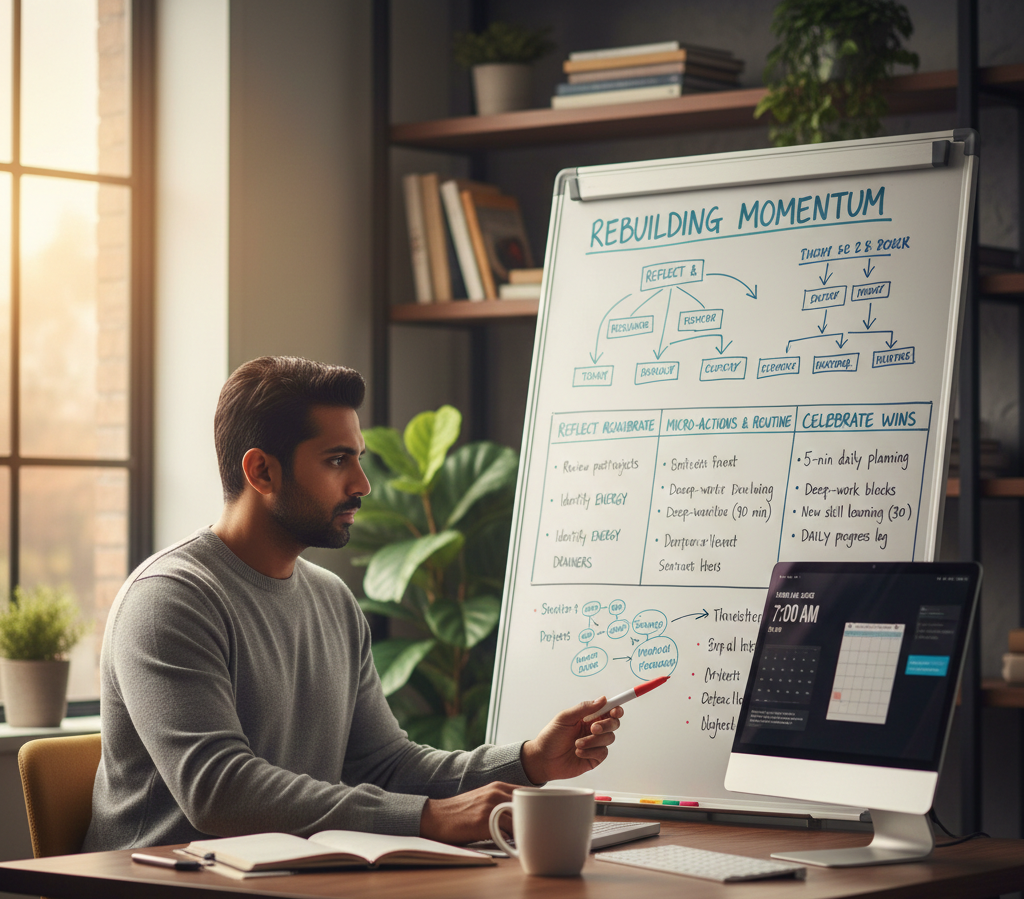
Slow phases happen in every career. Sometimes work repetitive. Sometimes growth feels delayed. Sometimes rebuild momentum results do not match effort. These periods can affect confidence and motivation, even for high-performing momentum after professionals. However, slow phases rebuild are not permanent. What matters is how you respond.
Understanding how professionals rebuild momentum after slow phases can help you regain direction and performance. It also helps you stay consistent without burning out. Momentum is rarely a sudden comeback. It is usually a structured return to focus, clarity, and execution.
Slow phases are often signals, not setbacks
A slow phase does not always mean failure. In many cases, it reflects shifting priorities, limited opportunities, or a temporary drop in energy. It can also happen when you have outgrown your current workflow.
Professionals who rebuild momentum effectively treat slow phases as feedback. They identify what changed. They review what is missing. Then they adjust their strategy.
This mindset prevents panic. It also prevents impulsive decisions that can create bigger problems later.
Momentum returns when goals become specific again
Slow phases often feel heavy because goals become unclear. You may be working daily but still feel stuck. That usually happens when tasks replace direction.
Professionals rebuild momentum by making goals measurable rebuild momentum and role-relevant. They stop focusing on “doing more” and start focusing on “doing what matters.”
This approach reduces mental load. It also creates progress you can track. Once progress becomes visible, motivation improves naturally.
Clarity is often the first step back to momentum.
Professionals restart with small wins
Momentum does not return through big plans. It returns through consistent execution. That is why strong professionals focus on small wins first.
Small wins rebuild confidence. They also rebuild discipline. Once you start completing meaningful tasks again, your energy increases.
This is why professionals simplify their priorities during slow phases. They reduce distractions and focus on work that creates immediate impact.
Small wins create rhythm. Rhythm creates momentum.
They reset their workflow and removed friction
Slow phases are often caused by friction. It could be poor time management, unclear expectations, or constant interruptions. It could also be a lack of structure.
Professionals rebuild momentum by improving their workflow. They review how they start their day, how they plan tasks, and how they communicate updates. They also reduce unnecessary meetings and distractions.
They do not rely on motivation alone. They build systems that support action even on low-energy days.
This makes progress consistent and predictable.
They improve skills that unlock better work
Sometimes momentum slows because your current skills match your current role, but not your next level. In that case, the solution is skill expansion.
Professionals rebuild momentum by identifying one skill that increases opportunities. They choose a skill that directly supports their role or desired role. Then they practice it consistently.
This could be communication, reporting, stakeholder handling, tools, analytics, or project execution. The focus stays practical.
Skill growth creates confidence. It also increases the quality of work rebuild momentum you can handle.
They rebuild visibility through professional communication
During slow phases, many professionals become quieter. They stop sharing updates. They stop contributing ideas. This reduces visibility, even when they are working hard.
Professionals rebuild momentum by improving communication. They share progress clearly. They ask better questions. They contribute in meetings with purpose.
They also follow up professionally on tasks. They confirm expectations early and update stakeholders before delays happen.
This increases trust. It also increases leadership attention. Visibility often brings new opportunities.
They protect energy and avoid burnout recovery loops
Momentum cannot return if energy stays low. Professionals momentum after understand that performance depends on recovery and stability.
They rebuild momentum by improving sleep, routines, and focus habits. They reduce mental overload by limiting unnecessary commitments. They also avoid comparing their pace to others.
Burnout creates long recovery periods. Therefore, professionals rebuild slowly but sustainably. They focus on consistency, not intensity.
This prevents repeating the same momentum after slow phase again.
They use slow phases to realign career direction
Some slow phases are a sign that you need a change. The work may no longer challenge you. The role may not support growth. The environment may not match your goals.
Professionals rebuild momentum by reflecting professionally. They assess what they want next. They update their resume and LinkedIn. They explore better opportunities and roles aligned with their strengths.
This is a strategic move, not an emotional reaction. A slow phase can become a turning point when you treat it with clarity.
Conclusion
Slow phases are common, but they do not define your career. What defines you is how you respond with structure, discipline, and strategy. Understanding how professionals rebuild momentum after slow phases helps you regain confidence, improve performance, and move forward without burnout.
Momentum returns through clarity, small wins, improved workflow, skill growth, and consistent communication. When momentum after you apply these steps, progress becomes visible again.
If you are ready to rebuild your momentum and rebuild momentum explore stronger career opportunities, use the best job tool.
Find Your Dream Job Today – Explore Endless Career Opportunities and Secure Your Next Role with Best Job Tool.



Leave a Reply