Introduction
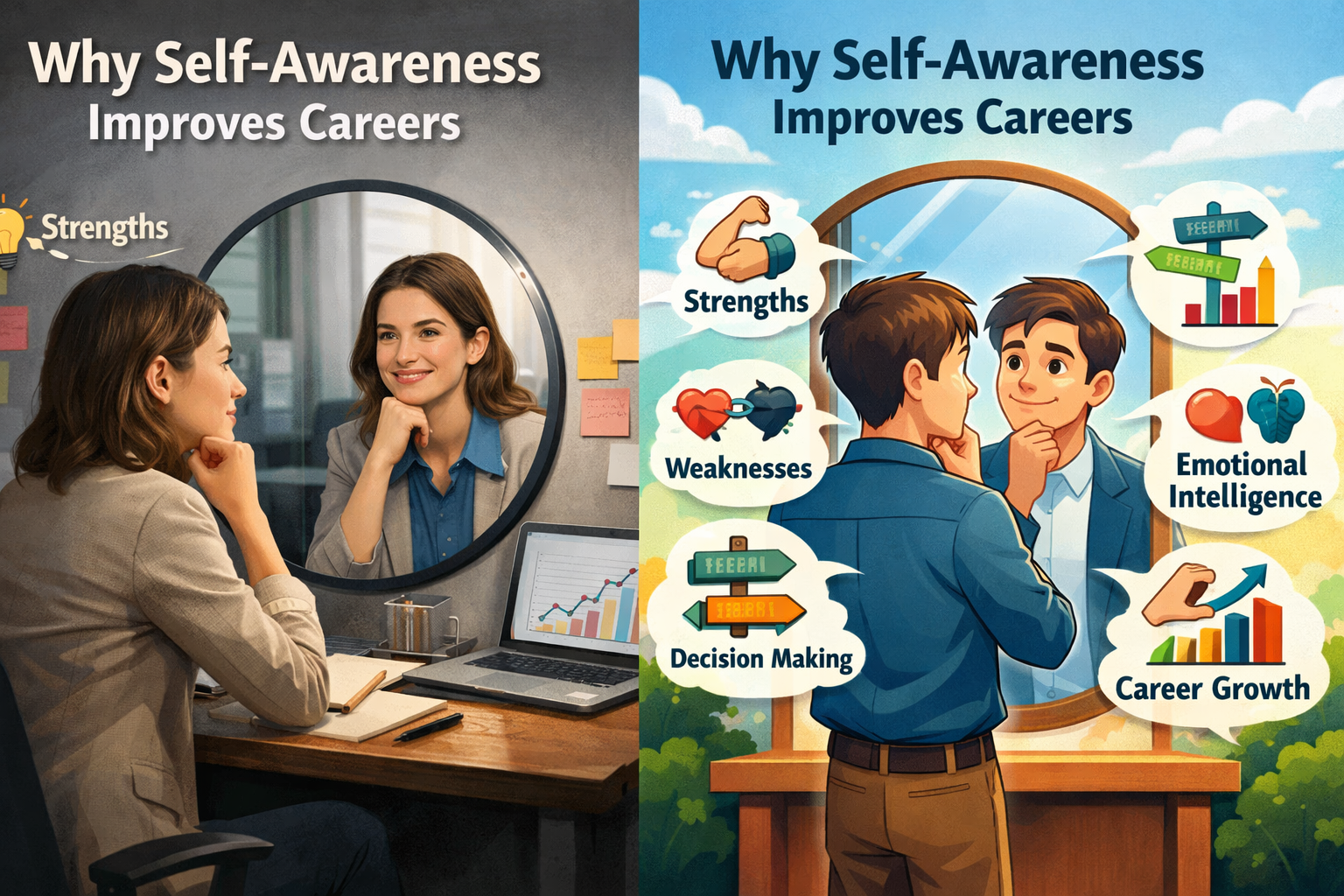
In today’s competitive world, career growth is not just about skills, education, or experience. Many people work hard, learn new things, and still find themselves stuck in the same position for years. One of the most important factors that determine career success is self-awareness. Self-awareness is the ability to understand your own emotions, strengths, weaknesses, values, and behavior. When you are self-aware, you can make better career decisions, improve relationships at work, and achieve long-term success.
In this article, we will explore why self-awareness is crucial for career growth and how it can improve your professional life.
What is Self-Awareness?
Self-awareness is knowing who you are as a person. It is the ability to observe yourself without judgment. This includes understanding:
- Your strengths – the things you are good at.
- Your weaknesses – areas where you need improvement.
- Your emotions – how you feel in different situations and why.
- Your values – what is important to you in life and work.
- Your behavior – how you act, react, and communicate with others.
A self-aware person is honest with themselves and is willing to accept feedback. They reflect on their actions and try to improve continuously. Self-awareness is not a skill you develop overnight, but with regular practice, it becomes a powerful tool for career growth.
How Self-Awareness Improves Career Growth?
1. Self-Awareness Helps Identify Strengths and Weaknesses
One of the first ways self-awareness helps in your career is by helping you identify your strengths and weaknesses. If you know what you are good at, you can focus on roles that suit your skills. Similarly, knowing your weaknesses helps you improve or find ways to manage them.
For example, if you are good at communication but weak in time management, you can take courses to improve time management. Or, you can work in a team where your communication skills are used effectively while someone else handles strict deadlines.
When you are self-aware, you make smarter career choices that match your abilities. This increases your chances of success and reduces frustration.
2. Self-Awareness Improves Decision-Making
Self-awareness also improves decision-making. Career decisions, such as changing jobs, taking promotions, or learning new skills, require careful thought. Self-aware people understand their goals, values, and priorities.
For instance, if you value work-life balance, you might choose a job that offers flexibility even if the salary is slightly lower. On the other hand, someone who prioritizes financial growth may take a high-pressure job.
By understanding yourself, you make decisions that align with your true goals, which leads to better career satisfaction and long-term success.
3. Enhances Emotional Intelligence
Emotional intelligence (EI) is the ability to manage your emotions and understand the emotions of others. Self-awareness is the foundation of EI. When you are self-aware, you can control your reactions in stressful situations.
At work, conflicts and stress are common. A self-aware person knows when they are angry or frustrated and can respond calmly instead of reacting impulsively. This creates a positive impression on colleagues and managers.
Employees with high emotional intelligence often become leaders because they can handle people effectively and maintain a productive work environment.
4. Self-Awareness Builds Better Relationships at Work
Career success is not only about personal skills but also about relationships. Being self-aware helps you understand how you interact with others.
For example, you may realize that you interrupt others during meetings. Once you recognize this, you can make an effort to listen more carefully. This improves teamwork and makes colleagues respect you more.
Strong professional relationships lead to collaboration, mentorship opportunities, and recognition, all of which contribute to career growth.
5. Encourages Continuous Learning
Self-aware individuals are honest about their knowledge gaps. This honesty motivates them to learn and grow continuously.
For example, if a self-aware employee realizes they lack technical skills, they may enroll in online courses or workshops. This continuous learning increases their value in the workplace and opens up new opportunities for advancement.
Employers value employees who take the initiative to improve themselves because it benefits both the individual and the organization.
6. Helps Manage Stress and Avoid Burnout
Work stress and burnout are major challenges in modern careers. Self-awareness allows you to recognize early signs of stress, such as fatigue, irritability, or lack of focus.
When you are aware of your limits, you can take steps to manage stress, like taking breaks, delegating tasks, or practicing mindfulness. This prevents burnout and helps you maintain high performance over time.
A career is a marathon, not a sprint. Self-awareness ensures you pace yourself and sustain long-term growth.
7. Self-Awareness Improves Leadership Skills
Self-awareness is essential for leadership. Great leaders understand themselves, their strengths, and their weaknesses. They know how to motivate and inspire others.
For example, a self-aware leader knows if they are too controlling and works on trusting their team more. They can also give constructive feedback and handle conflicts effectively.
Employees often follow leaders who are confident yet humble. Self-aware leaders earn trust, respect, and loyalty, which is crucial for career advancement in managerial roles.
8. Enhances Adaptability
In today’s fast-changing world, adaptability is a valuable career skill. Self-awareness helps you understand how you react to change and identify areas where you need to be more flexible.
For instance, if your company introduces new technology, a self-aware employee acknowledges their initial resistance and takes steps to learn and adapt. This proactive attitude makes them an asset to the organization and increases their chances of promotion.
9. Self-Awareness Aligns Career with Personal Values
Many professionals struggle with job dissatisfaction because their work does not match their personal values. Self-awareness helps you identify your values and choose a career path that aligns with them.
For example, if you value creativity, you may pursue a career in design or content creation instead of finance or administration. When your career aligns with your values, you feel more motivated, satisfied, and committed to your work.
10. Promotes Confidence and Assertiveness
Self-awareness leads to confidence because you know your strengths and abilities. Confident employees are more likely to take on challenging projects, speak up in meetings, and negotiate better salaries.
At the same time, self-awareness promotes assertiveness. You can express your opinions respectfully without being aggressive. This balance of confidence and assertiveness improves your reputation and influence in the workplace.
11. Self-Awareness Helps Set Realistic Goals
Setting unrealistic goals can lead to disappointment and frustration. Self-awareness allows you to set achievable career goals based on your skills, resources, and priorities.
For instance, if you know that you work better in small teams, you may avoid setting a goal of managing a large department immediately. Instead, you can aim for gradual growth, building experience and skills over time.
Realistic goals increase your motivation, focus, and chances of success.
12. Encourages Accountability
Self-aware individuals take responsibility for their actions. They don’t blame others for mistakes. This quality is highly valued by employers.
For example, if a project fails, a self-aware employee analyzes what went wrong and learns from it instead of pointing fingers. This accountability builds trust and demonstrates professionalism, which can lead to promotions and new opportunities.
Conclusion
Self-awareness is one of the most powerful tools for career growth. It helps you understand your strengths, weaknesses, emotions, values, and behavior. With self-awareness, you can make better decisions, build strong relationships, manage stress, and align your career with your personal values.
In short, self-awareness improves your performance, reputation, and satisfaction at work. It helps you become a better professional, a better leader, and a more fulfilled individual.
If you want to grow in your career, start by looking inward. The more you know about yourself, the better you can navigate your professional journey. Career success is not only about what you know but also about how well you know yourself. Self-awareness is the key to unlocking your full potential.


Leave a Reply