Introduction
Have you ever faced silence during an interview?
Interviews are situations where, no matter how experienced or professional you are, it’s normal to feel a little nervous. For this reason, sometimes a candidate may get confused or go blank in front of the recruiter, which results in silence, and they may not know what to do.
If this has ever happened to you and you want to avoid it in the future, this article will be helpful. While you may not be able to completely stop yourself from going silent due to nervousness, it is very important to learn how to handle it.
In this article, we will understand how to handle silence during interviews so that it doesn’t leave a bad impression.
Why Silence Can be a Powerful Interview Tool?
1. Don’t Panic – How Silence Can Be Your Friend
The most important and effective way to handle silence is not to panic. You need to understand that feeling nervous is completely natural, and it’s very common for silence to occur during an interview. Silence doesn’t mean that you said something wrong or that the recruiter is going to reject you.
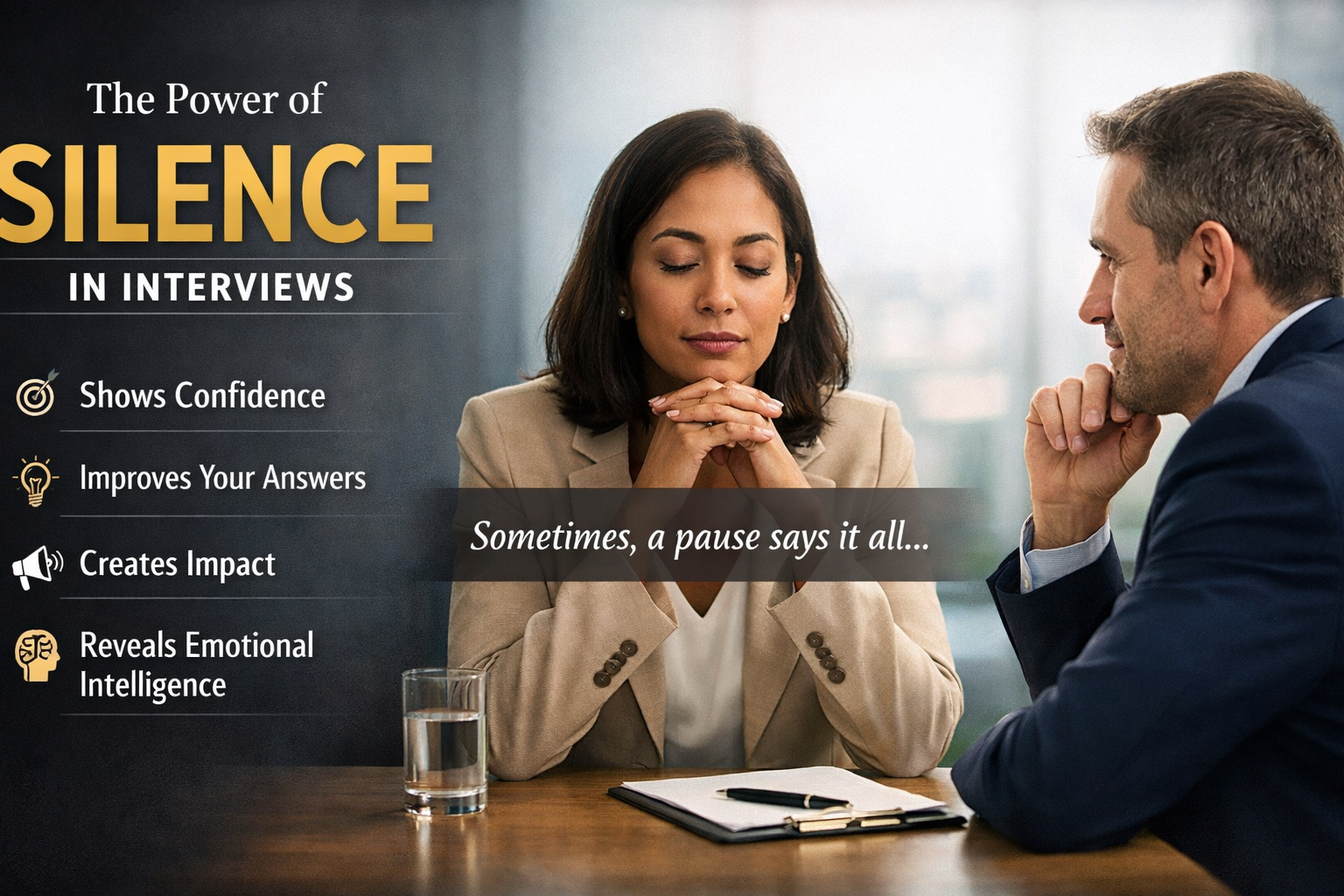
Sometimes, silence can actually work in your favor. Immediately giving an answer as soon as a question is asked is not always the right approach, because the recruiter might think you are just reciting memorized answers. But if you take a short pause, gather your thoughts, and then answer calmly, it creates a positive impression, showing the recruiter that you are a thoughtful and composed candidate.
2. Silence Shows Confidence
Whenever you are in an interview and the recruiter asks you a question, the way you answer it is noticed very carefully. Even the speed at which you respond is observed by the recruiter.
For example, if you answer immediately as soon as you hear the question, the recruiter may feel that you are very nervous or that you have memorized all your answers and are just delivering them quickly. It can also give the impression that you want to finish the interview as soon as possible.
On the other hand, if you take a short pause after hearing the question and then give your answer, the recruiter may feel that you are thinking carefully and giving a thoughtful and effective response. This creates the impression that you are confident about your answers and genuinely interested in the interview.
That’s why silence is not always a negative signal. In fact, it can be a powerful tool to create a strong and positive impression in an interview.
3. Silence Helps You Think Clearly
There are several techniques to handle silence effectively during an interview, which will help you manage your silence and leave a good impression.
Some techniques include:
- Pause and think before answering – After hearing a question, take a short pause, think, and then give a thoughtful answer.
- Clarify if you don’t understand – If you don’t understand a question, instead of giving a random answer, politely ask the recruiter to clarify so you can answer correctly.
- Practice thinking out loud – During mock interviews, verbalize your thought process when facing difficult questions. This shows the recruiter how you approach problems.
If you use these techniques, you can easily handle silence and create a positive impression during interviews.
4. Reveals Emotional Intelligence
Another effective way to handle silence is through nonverbal communication. Nonverbal communication means communicating with the recruiter through your body language without speaking. During moments of silence, if your nonverbal communication is good, you can handle the pause confidently.
Here’s how to do it:
- Maintain good eye contact – But this doesn’t mean staring continuously at the recruiter. A natural, steady gaze works best.
- Sit confidently – A strong posture can reduce your anxiety and make you appear composed.
- Smile slightly – This creates a positive impression.
- Use hand gestures carefully – If you normally use gestures while speaking, keep them calm and deliberate during silence.
By using nonverbal communication during silence, you can appear confident and composed, even if you are thinking or gathering your answer.
5. Shows You Are a Good Listener
In an interview, speaking is not the only important thing. Recruiters often prefer candidates who not only speak well but also listen carefully. Active listening is very important in an interview, and showing that you are an active listener is even more important. If the recruiter feels that you are someone who truly listens, they are more likely to prefer you.
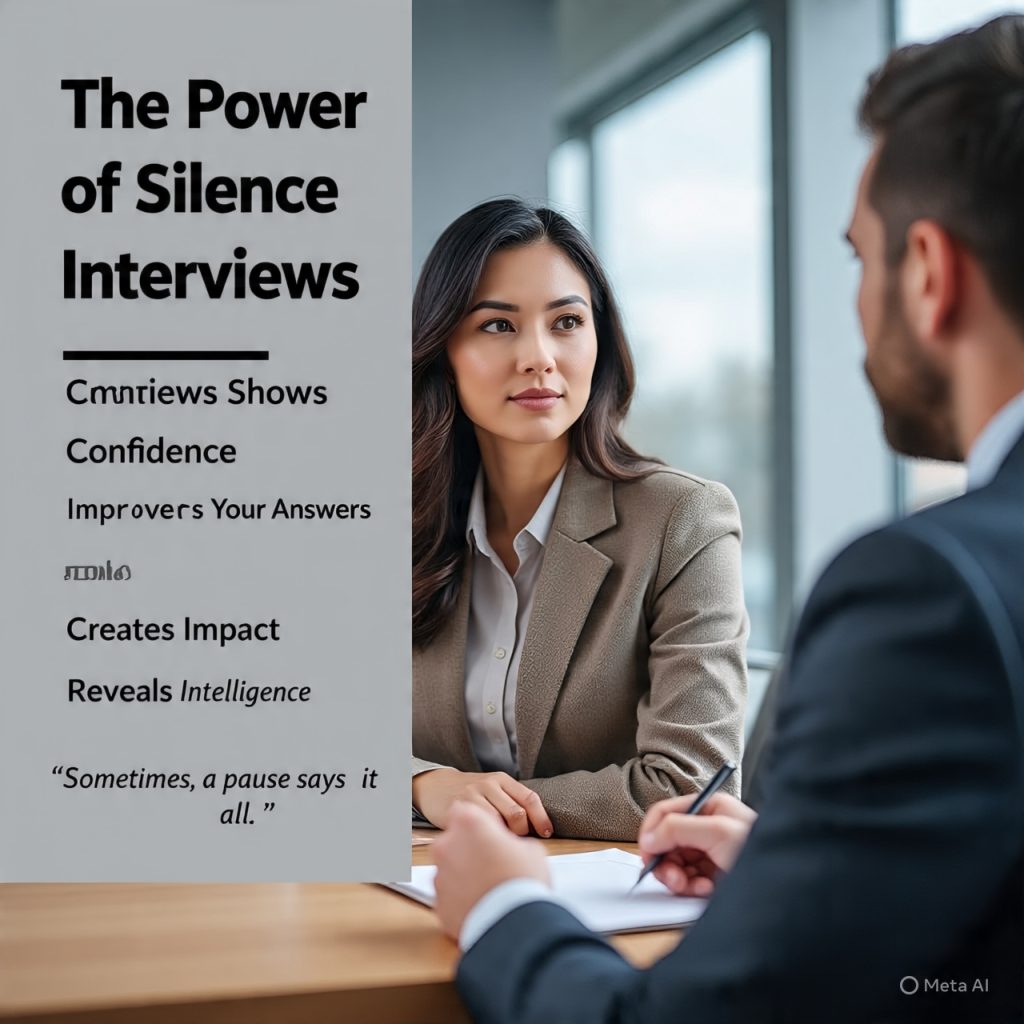
When you take a small pause after hearing a question, it shows that you are listening carefully and trying to understand the question properly. It gives the impression that you respect what the recruiter is saying.
Also, not interrupting the recruiter while they are speaking shows that you are paying attention and listening with patience. This simple behavior can create a strong positive impression and make you stand out as a thoughtful and professional candidate.
6. Silence During Difficult Questions
In an interview, it is not necessary that you already know the answer to every question that is asked. Interviews usually include a mix of easy and difficult questions. Some questions may feel simple, while others may challenge you.
If you hear a difficult question and immediately say anything without thinking, it can create a negative impression and may even lead to rejection. That is why silence can be very helpful for a candidate at that moment.
When you hear a difficult question and take a short pause to think about how to answer it, it gives you two important benefits. First, the recruiter feels that you are confident and an active listener. It shows that you are carefully understanding the question before responding. Second, you get time to organize your thoughts and decide how to give a clear and effective answer.
So, stop seeing silence as something negative. In interviews, a short pause can be a smart and powerful strategy that helps you perform better and leave a strong impression.
Conclusion
Silence is often misunderstood in interviews. Many candidates think they must speak continuously to impress the recruiter. But in reality, speaking too much can reduce the impact of your words. Silence, when used wisely, becomes a sign of confidence, clarity, and emotional control.
Silence is not weakness. It is control. It shows maturity. It shows that you are not nervous or desperate to prove yourself. Instead, you are calm, focused, and confident in what you say.
You can read more such blogs here.






Leave a Reply