Introduction
Today’s world has become very competitive, and learning new skills is extremely important. If you think that learning just one skill is enough to succeed your whole life, you are mistaken.
If you learn only one skill, you may grow well for some time, but eventually, that skill can become outdated. That is why it is important to learn multiple skills so that you can stand out from the crowd.
However, many people try to learn too many skills at once and end up getting burned out.
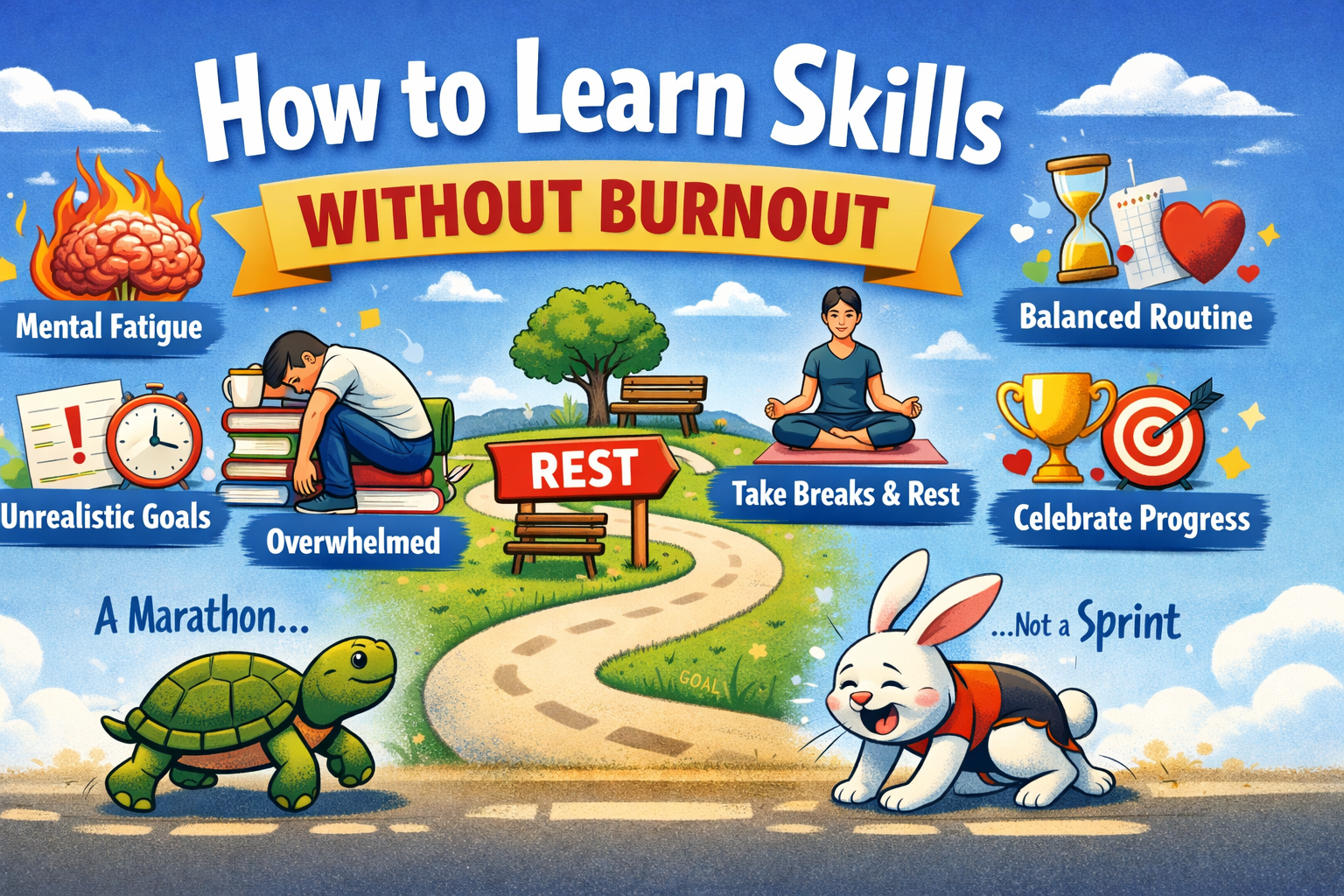
Burnout is a state where a person becomes physically, mentally, and emotionally exhausted. This usually happens when someone mixes their personal and professional life and does not set boundaries between them. Burnout can stop your growth and progress.
In this article, we will learn how to learn skills without getting burned out.
How to Learn Skills Without Burnout?
1. Setting Realistic Goals to Avoid Burnout
Learning many skills is a very good thing, but we need to learn each skill in a way that does not make us feel burned out. The most effective way to learn skills without burnout is to set realistic goals.
Goals are very important for any task. Before starting anything, if we set a goal, it becomes easier for us to achieve it. Goals help us understand what to do, why we are doing it, and how to do it.
But the goal should be realistic, not exaggerated or something we cannot achieve. By setting realistic goals, we can learn each skill step by step without getting burned out.
2. Building a Learning Routine to Avoid Burnout
The second effective way to learn skills without burnout is to create a routine.
Along with setting goals, it is very important to have a routine. A routine helps us use our time effectively and focus on each task without wasting time.
For learning skills, we should create a learning routine that shows: which skill to focus on more, at what time we are most productive, and when to practice each skill. This way, we can learn skills efficiently without feeling burned out.
3. Using the Right Learning Techniques
Learning skills is very good, but to learn skills effectively, we should always use the right technique. Only then can we learn skills properly without wasting time.
We should learn skills in a way that allows us to continue doing our regular work as well. For example, if you have a job, you can focus fully on your job during work hours and use your free time to take online courses or classes to learn new skills.
Just taking online courses is not enough to learn a skill—you also need practice. To learn skills effectively, practice should be done using the right techniques. For example, if you want to improve your communication skills, you can practice in front of a mirror by speaking out loud. This way, you can learn skills without feeling burned out.
4. Prioritizing Rest and Recovery
Many people work continuously, both during their professional and personal time, thinking that if they keep working without breaks, they will achieve success faster.
But instead of achieving success, they often get burned out, which stops their growth. Consistent effort is important, but taking breaks is equally important. Taking breaks does not waste your time—in fact, it makes you more productive.
The key is to take breaks with a proper time limit. For example, if you are learning a skill for one hour, you can take a 5–10 minute break. Rest is very important so that you can learn skills effectively without getting burned out.
5. Avoiding Comparison and Perfectionism
Every person is different. Everyone has their own likes and dislikes, different goals, and unique career journeys. However, many professionals start comparing their career journey with others, which is a big mistake. This comparison leads to demotivation and often prevents them from building a successful career.
6. Managing Distractions and Energy
Distractions are everywhere—whether you are learning skills at home or at the workplace. These distractions can include social media, phone notifications, and many other things.
We need to learn how to manage these distractions; otherwise, we will not be able to learn effectively and may end up burned out.
For example, if phone notifications distract you while learning a skill, you can put your phone on silent or choose a quiet corner to focus on learning. This way, you can concentrate better and learn without stress.
Conclusion
Learning new skills is exciting, but pushing too hard without balance can lead to burnout. The key is to learn smart, not just hard—set realistic goals, take regular breaks, and celebrate small wins. Listen to your energy levels, mix fun with challenge, and give yourself time to rest.
Remember, skill mastery is a marathon, not a sprint. By pacing yourself and prioritizing self-care, you can grow your abilities sustainably, stay motivated, and enjoy the journey without burning out.
To explore more such blogs, you can visit the Best Job Tool.

Leave a Reply