Introduction
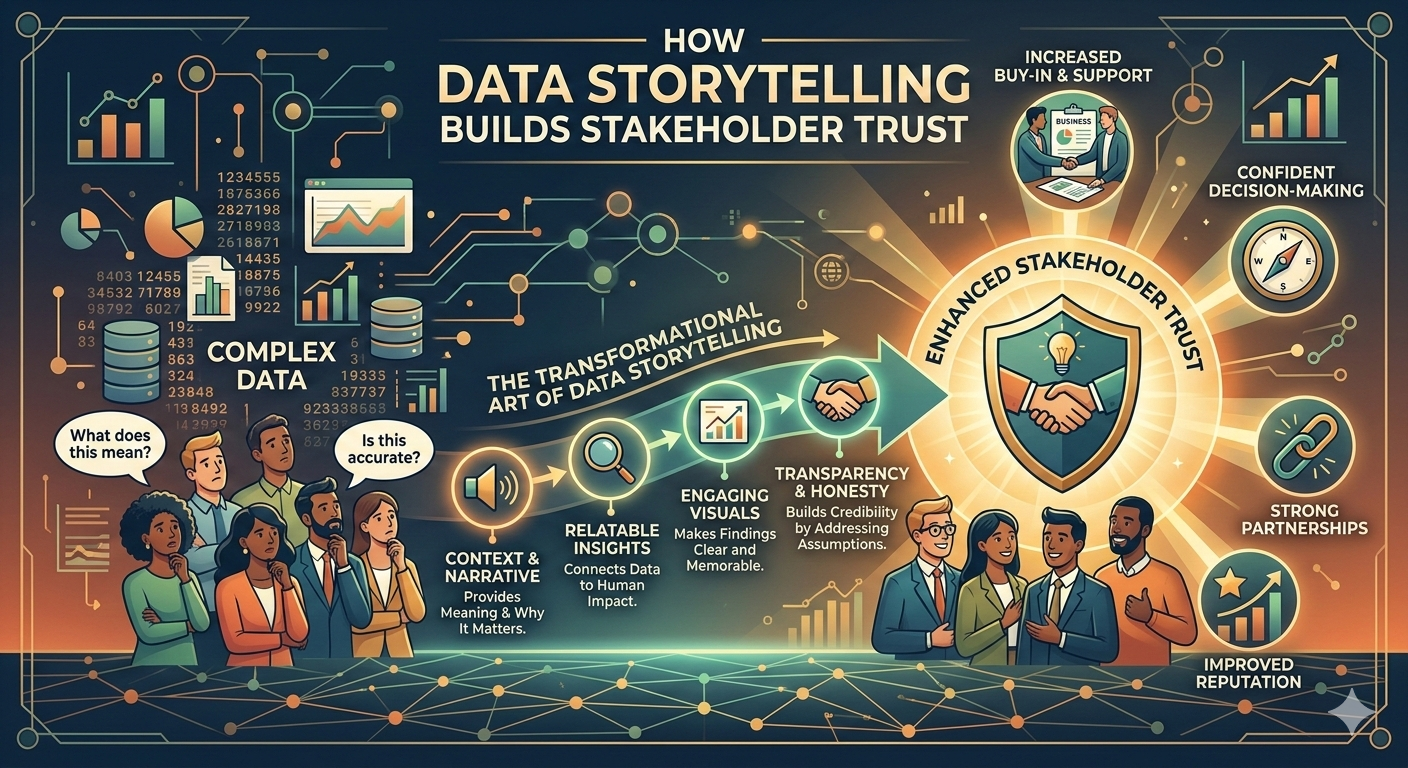
Data plays a critical role in modern organizations, yet numbers alone rarely influence decisions. Leaders and stakeholders must understand what the data means and how it affects business outcomes. This is where data storytelling becomes essential. By combining data analysis with clear explanations and visual narratives, analysts help stakeholders interpret insights effectively. This explains how data storytelling affects stakeholder trust in analytics-driven environments.
When stakeholders understand the context behind data, they feel more confident in the insights and recommendations. Clear storytelling transforms complex datasets into meaningful information that decision-makers can rely on.
Data storytelling makes insights easier to understand
Raw data often contains complex patterns and technical details. Without explanation, stakeholders may struggle to interpret charts or reports.
Data storytelling organizes information into a logical narrative. Analysts explain what the data shows, why it matters, and how it connects to business goals. This structured explanation helps stakeholders understand insights quickly.
Clear understanding increases trust in the analysis.
Context strengthens credibility
Stakeholders want to know not only what the data shows but also why it matters. Data storytelling provides context by linking numbers to real business situations.
For example, instead of presenting a drop in customer engagement, an analyst might explain how seasonal trends or product changes influenced behavior. This context demonstrates thoughtful analysis rather than surface-level reporting.
Contextual insights build credibility with stakeholders.
Visual storytelling improves engagement
Charts, dashboards, and visualizations are powerful tools when used effectively. However, visuals alone cannot guarantee understanding.
When analysts guide stakeholders through visuals step by step, they create a narrative that highlights key insights. This approach keeps stakeholders engaged and focused on the most important findings.
Engaging presentations strengthen stakeholder confidence.
Transparency builds trust
Data storytelling also encourages transparency. Analysts often explain assumptions, limitations, and data sources during their presentations.
This openness shows that the analyst understands potential uncertainties and communicates them honestly. Stakeholders appreciate this transparency because it reduces confusion and builds credibility.
Transparent communication reinforces trust in data insights.
Simplifying complex insights supports better decisions
Many stakeholders do not work directly with data tools or analytics platforms. Therefore, analysts must translate technical findings into simple explanations.
Effective data storytelling avoids unnecessary technical jargon and focuses on clear, actionable insights. When stakeholders easily understand recommendations, they are more likely to act on them.
Clarity supports confident decision-making.
Data storytelling connects insights to business goals
Stakeholders care most about outcomes that influence growth, efficiency, and customer experience. Data storytelling highlights how analytics findings connect to these objectives.
For example, an analyst might show how improving response time increases customer retention. By connecting insights to measurable results, analysts demonstrate the value of their work.
Business alignment increases stakeholder trust.
Strong storytelling improves collaboration
When stakeholders trust data insights, they collaborate more effectively with analytics teams. Clear narratives help different departments understand shared goals and priorities.
This collaboration leads to better problem-solving and more effective strategies. Analysts who communicate insights clearly often become trusted advisors within their organizations.
Trust encourages stronger cross-team partnerships.
Confidence grows with consistent communication
Trust develops over time through consistent communication. Analysts who regularly present clear and reliable insights build long-term credibility.
Stakeholders learn to rely on these professionals when making important decisions. Over time, strong data storytelling skills elevate the analyst’s influence within the organization.
Consistency strengthens professional reputation.
Career growth benefits from storytelling ability
Technical skills remain important in analytics roles. However, professionals who combine analytical expertise with storytelling skills often stand out.
Organizations value analysts who can explain insights clearly to leadership teams. These professionals often move into roles such as analytics consultants, strategy analysts, or data leaders.
Communication skills accelerate career advancement.
Conclusion
Data alone cannot influence decisions unless stakeholders understand its meaning and implications. That is precisely how data storytelling affects stakeholder trust in modern organizations.
By providing context, transparency, and clear explanations, analysts transform raw numbers into meaningful insights. Strong storytelling builds confidence, improves collaboration, and supports better decision-making across departments. Professionals who master data storytelling not only strengthen stakeholder relationships but also enhance their own career growth in analytics-driven environments.
Find Your Dream Job Today – Explore Endless Career Opportunities and Secure Your Next Role with Best Job Tool.



Leave a Reply