Introduction
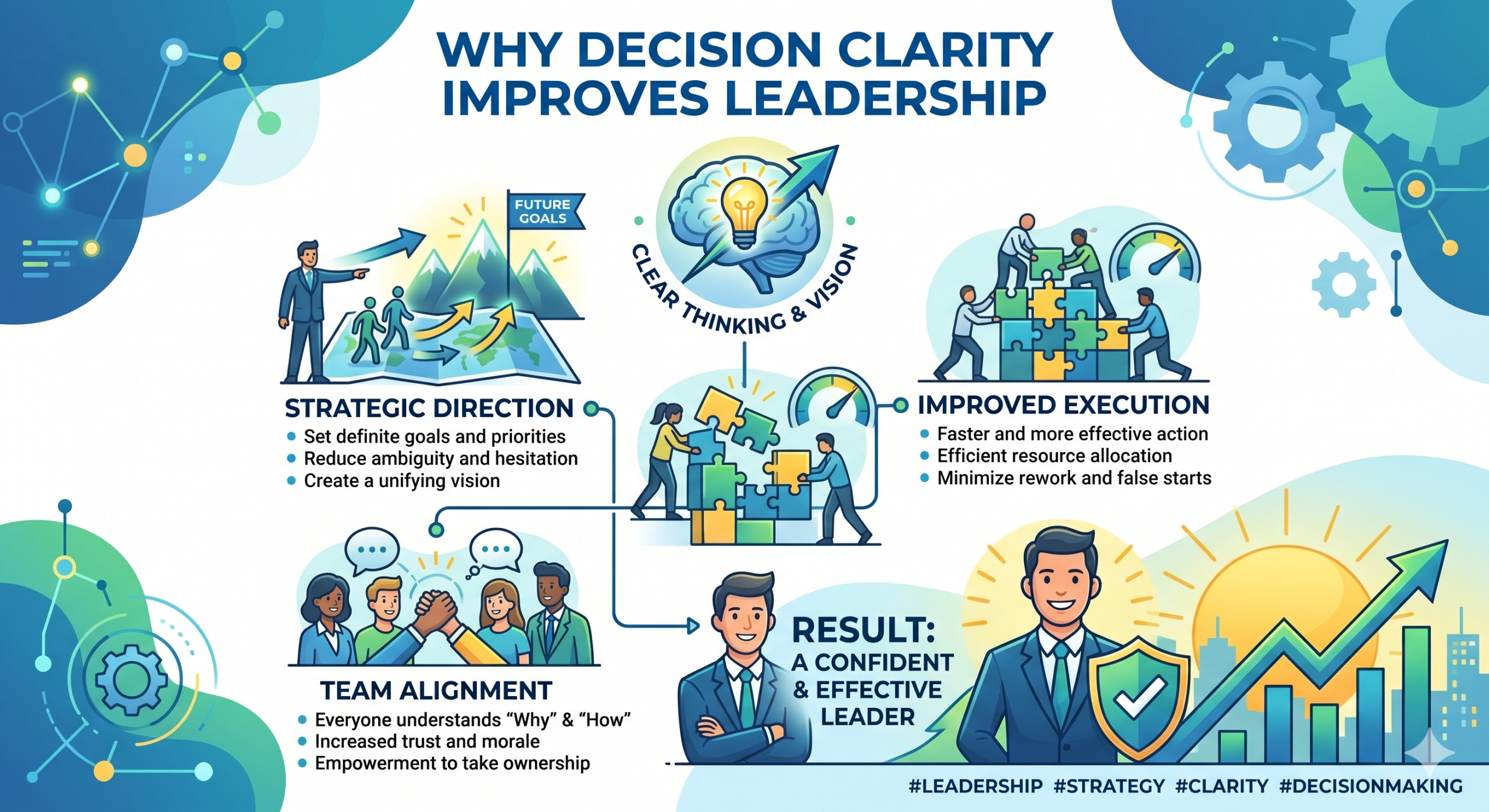
In today’s fast-moving professional environment, leadership is no longer defined only by authority or experience. It is defined by the ability to make clear, confident, and timely decisions. Decision clarity refers to the ability of a leader to evaluate information, eliminate confusion, and choose a direction with confidence. When leaders operate with clarity, they create stability, build trust, and drive consistent progress within their teams. Without clarity, even the most talented teams struggle with direction and performance. This is why decision clarity is becoming one of the most essential traits of effective leadership in modern workplaces.
What Decision Clarity Really Means in Leadership
Decision clarity is not about making quick choices without thinking. It is about having a structured thought process that allows leaders to analyze situations, understand possible outcomes, and commit to a clear path forward. Leaders with decision clarity communicate their choices with confidence and ensure that their teams understand the reasoning behind them.
Key elements of decision clarity include:
- Clear understanding of goals and priorities
- Ability to filter relevant vs irrelevant information
- Confidence in communicating final decisions
- Consistency in actions and direction
In contrast, unclear decisions often result in hesitation, repeated discussions, and wasted time. Clear decision-making ensures that teams move forward with purpose and focus.
How Decision Clarity Builds Trust Within Teams
Trust is a critical element of successful leadership, and it is directly influenced by how leaders make decisions. When leaders consistently demonstrate clarity in their decisions, team members feel secure and confident in their direction.
Decision clarity builds trust by:
- Reducing confusion in daily tasks
- Setting clear expectations
- Demonstrating leadership confidence
- Creating transparency in actions
On the other hand, unclear or constantly changing decisions can create uncertainty and reduce trust. Decision clarity eliminates this uncertainty and strengthens the relationship between leaders and their teams.
The Role of Decision Clarity in Improving Team Productivity
Productivity is often affected not by the lack of effort, but by the lack of direction. When leaders provide clear decisions, teams spend less time guessing and more time executing.
Ways clarity improves productivity:
- Minimizes rework and errors
- Helps teams prioritize effectively
- Speeds up execution
- Aligns efforts toward common goals
As a result, organizations experience faster execution, better outcomes, and improved overall performance. Leaders who prioritize clarity create an environment where productivity naturally increases.
Reducing Stress and Overwhelm Through Clear Leadership Decisions
Workplace stress is frequently caused by uncertainty and ambiguity. When employees are unsure about goals, expectations, or next steps, it creates mental pressure and confusion.
Decision clarity reduces stress by:
- Providing a clear roadmap for tasks
- Eliminating constant second-guessing
- Creating a structured workflow
- Improving confidence in execution
For leaders, clarity also reduces personal stress, as they spend less time revisiting decisions or managing confusion. A clear decision-making approach creates a more structured and calm work environment.
How Decision Clarity Enhances Strategic Thinking
Strategic thinking requires a long-term vision and the ability to make decisions that align with that vision. Decision clarity plays a key role in this process by helping leaders stay focused on their objectives.
Strategic benefits of clarity include:
- Better alignment with long-term goals
- Improved evaluation of opportunities
- Reduced distractions from irrelevant options
- Stronger focus on sustainable growth
Decision clarity ensures that every action contributes to a larger strategy, making leadership more impactful and results-driven.
Using the Best Job Tool to Support Better Decision-Making
In the digital era, leaders have access to various platforms that can support better decision-making. Using the Best Job Tool can help leaders gather insights, analyze workforce trends, and make informed hiring and management decisions.
How the Best Job Tool supports clarity:
- Provides data-driven insights
- Reduces guesswork in hiring
- Enhances workforce planning
- Improves decision accuracy
By leveraging technology, leaders can improve the accuracy and efficiency of their decisions, ensuring better outcomes for the organization.
Conclusion
Decision clarity is not just a skill; it is a foundation of effective leadership. It influences trust, productivity, team morale, and long-term success. Leaders who develop clarity in their decision-making process create a structured and confident work environment where teams can perform at their best. In a world filled with constant change and uncertainty, clarity becomes a competitive advantage. By focusing on clear thinking, effective communication, and the use of the Best Job Tool, leaders can enhance their impact and drive sustainable growth.






Leave a Reply