Introduction
The modern workforce is evolving toward flexibility and diversification. Many professionals now choose to work across multiple organizations instead of relying on a single employer. While this approach offers greater control and income diversity, it also introduces complexity. This is why understanding how to balance part-time roles across different companies is essential for long-term success.
Managing multiple roles requires more than time management. It demands clarity, discipline, and structured execution. Without these elements, productivity can decline and professional credibility may suffer.
However, when handled strategically, part-time roles can create a stable, flexible, and growth-oriented career.
Understanding the shift toward multi-role careers
Professionals are increasingly moving away from traditional employment models. Instead, they prefer diversified work structures that allow them to explore multiple opportunities.
This shift is driven by the need for flexibility, financial security, and continuous learning. Working across different companies enables individuals to build broader experience and reduce dependency on a single income source.
Moreover, exposure to different environments enhances adaptability. It allows professionals to develop a wider perspective and stronger problem-solving skills.
Therefore, multi-role careers are not just a trend. They represent a strategic evolution in how work is approached.
How to balance part-time roles across different companies effectively
Balancing multiple roles begins with clarity. Each role must have clearly defined responsibilities, expectations, and deliverables.
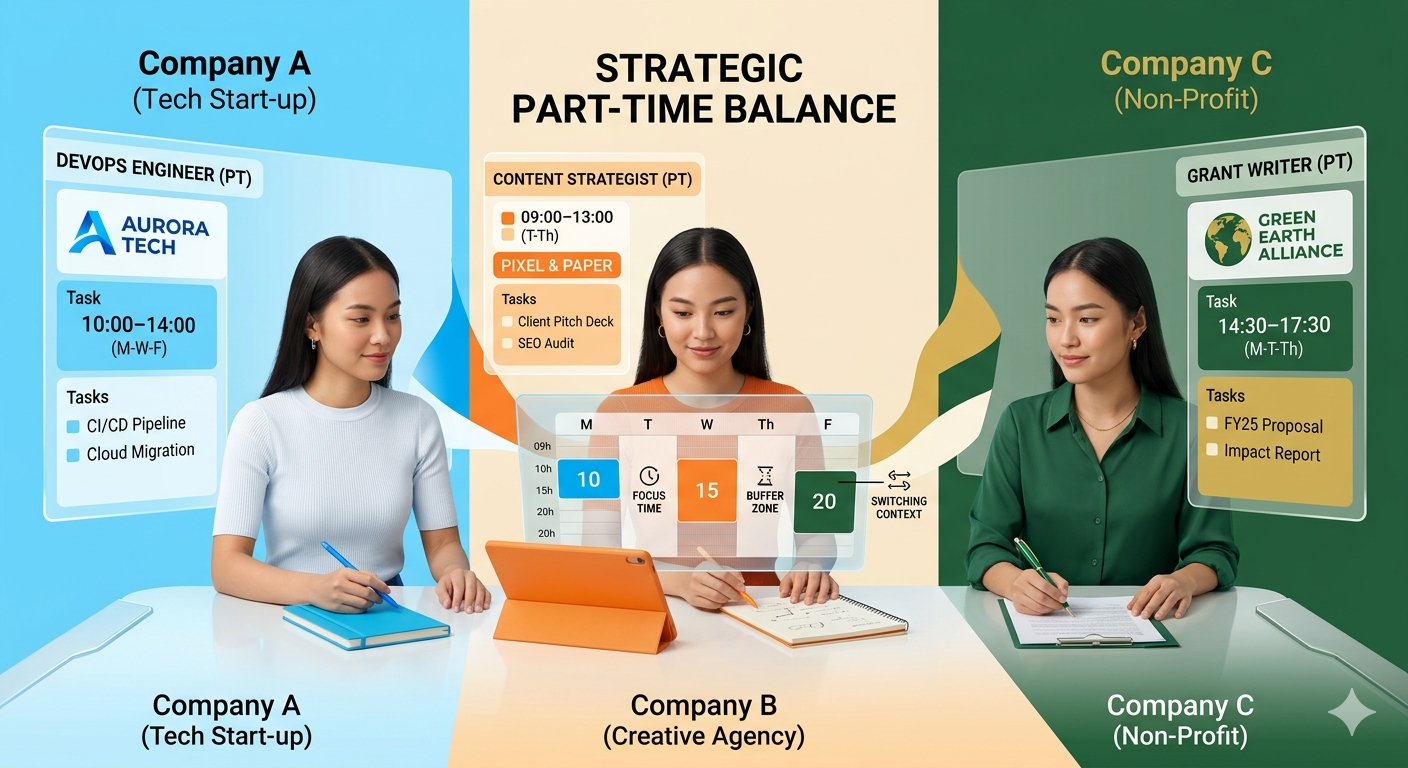
Professionals should allocate dedicated time blocks for each organization. This prevents overlap and ensures focused execution. Switching frequently between roles without structure can reduce efficiency and increase errors.
Additionally, prioritization plays a critical role. Tasks should be managed based on urgency and impact rather than convenience.
When professionals create structured workflows, they reduce confusion and maintain consistency across roles.
Establishing clear boundaries and expectations
One of the most important aspects of managing multiple roles is setting boundaries. Without clear limits, work from different organizations can overlap and create unnecessary stress.
Professionals should define working hours for each role and communicate availability clearly. This ensures that expectations are aligned from the beginning.
Additionally, it is important to avoid accepting overlapping commitments that may compromise performance. Transparency with employers builds trust and prevents misunderstandings.
Strong boundaries not only protect productivity but also preserve professional relationships.
Structuring time for maximum efficiency
Time management becomes significantly more important when handling multiple roles. A lack of structure can quickly lead to missed deadlines and reduced quality of work.
Professionals should plan their schedules in advance. Allocating specific days or hours to each role improves focus and reduces cognitive overload.
Moreover, grouping similar tasks together enhances efficiency. For example, handling communication tasks in one block can save time and mental effort.
Including buffer time between tasks also helps manage unexpected changes. This ensures smoother transitions between responsibilities.
Maintaining consistency and reliability
Consistency is a key factor in building trust across multiple organizations. Employers expect reliability, regardless of whether a role is part-time or full-time.
Professionals must deliver work on time and maintain quality standards. Consistent performance strengthens credibility and increases opportunities for long-term collaboration.
Additionally, maintaining consistent communication is equally important. Regular updates help align expectations and reduce uncertainty.
Reliability ensures that professionals are seen as dependable, even when working across multiple companies.
Avoiding burnout through balanced workload management
While multiple roles can be rewarding, they can also lead to burnout if not managed carefully. Overcommitment is a common mistake among professionals handling several responsibilities.
It is essential to assess workload realistically. Taking on more than what can be managed effectively often leads to reduced performance.
Additionally, scheduling breaks and downtime is necessary for maintaining energy and focus. Rest is not a luxury but a requirement for sustainable productivity.
Recognizing early signs of stress and adjusting workload accordingly helps maintain long-term balance.
Aligning roles with skills and long-term goals
Not every opportunity contributes positively to a multi-role career. Professionals should choose roles that align with their expertise and long-term objectives.
Working within familiar skill sets improves efficiency and reduces the effort required to deliver results. It also enhances confidence and performance.
Additionally, selecting roles that complement each other creates synergy. Skills developed in one role can often be applied to another.
Alignment ensures that multiple roles contribute to overall career growth rather than creating fragmentation.
Strengthening communication across organizations
Effective communication is critical when managing multiple roles. Clear and professional interaction helps avoid confusion and ensures smooth collaboration.
Professionals should set expectations early and provide regular updates on progress. This builds transparency and trust.
Additionally, addressing challenges promptly prevents small issues from becoming larger problems.
Maintaining professionalism in communication across all roles reinforces credibility and strengthens relationships.
Using systems and tools for organization
Managing multiple roles requires strong organizational systems. Without proper tools, it becomes difficult to track tasks and deadlines.
Professionals should use digital tools to manage schedules, projects, and communication. This improves visibility and reduces the risk of errors.
Additionally, maintaining separate systems for each role can prevent confusion. Organized workflows save time and improve efficiency.
Automation of repetitive tasks can further enhance productivity and reduce manual effort.
Leveraging the best job tool for better opportunities
Using the best job tool can support professionals in managing and expanding their multi-role careers. It helps identify opportunities that align with availability and skills.
Additionally, it enables professionals to discover flexible roles across different industries. This supports diversification and career growth.
Moreover, structured platforms simplify the process of managing applications and opportunities.
Therefore, the best job tool becomes an essential resource for professionals balancing multiple roles.
Conclusion
Understanding how to balance part-time roles across different companies is essential in today’s flexible work environment. It requires structured planning, clear boundaries, and consistent execution.
Professionals who manage their time effectively, maintain reliability, and align their roles strategically can build sustainable and successful multi-role careers.
With the right approach, multiple roles can provide both stability and growth. By combining discipline with the best job tool, professionals can unlock new opportunities and maintain long-term success.
Find Your Dream Job Today – Explore Endless Career Opportunities and Secure Your Next Role with Best Job Tool.





Leave a Reply