Introduction
In today’s time, competition is very high. Many candidates apply for the same job, but only a few get selected. In such situations, when we see our peers growing faster and getting jobs earlier, we start comparing ourselves with them.
Comparing yourself with peers is normal, but if you don’t control it, it can create disadvantages for you. Slowly, you may start losing your confidence, which can affect your decision-making.
That’s why it is very important to handle comparison with peers.
In this article, we are going to understand how you can handle comparison with peers who got jobs earlier, along with some practical steps.
How to Handle Comparison With Peers Who Got Jobs Faster?
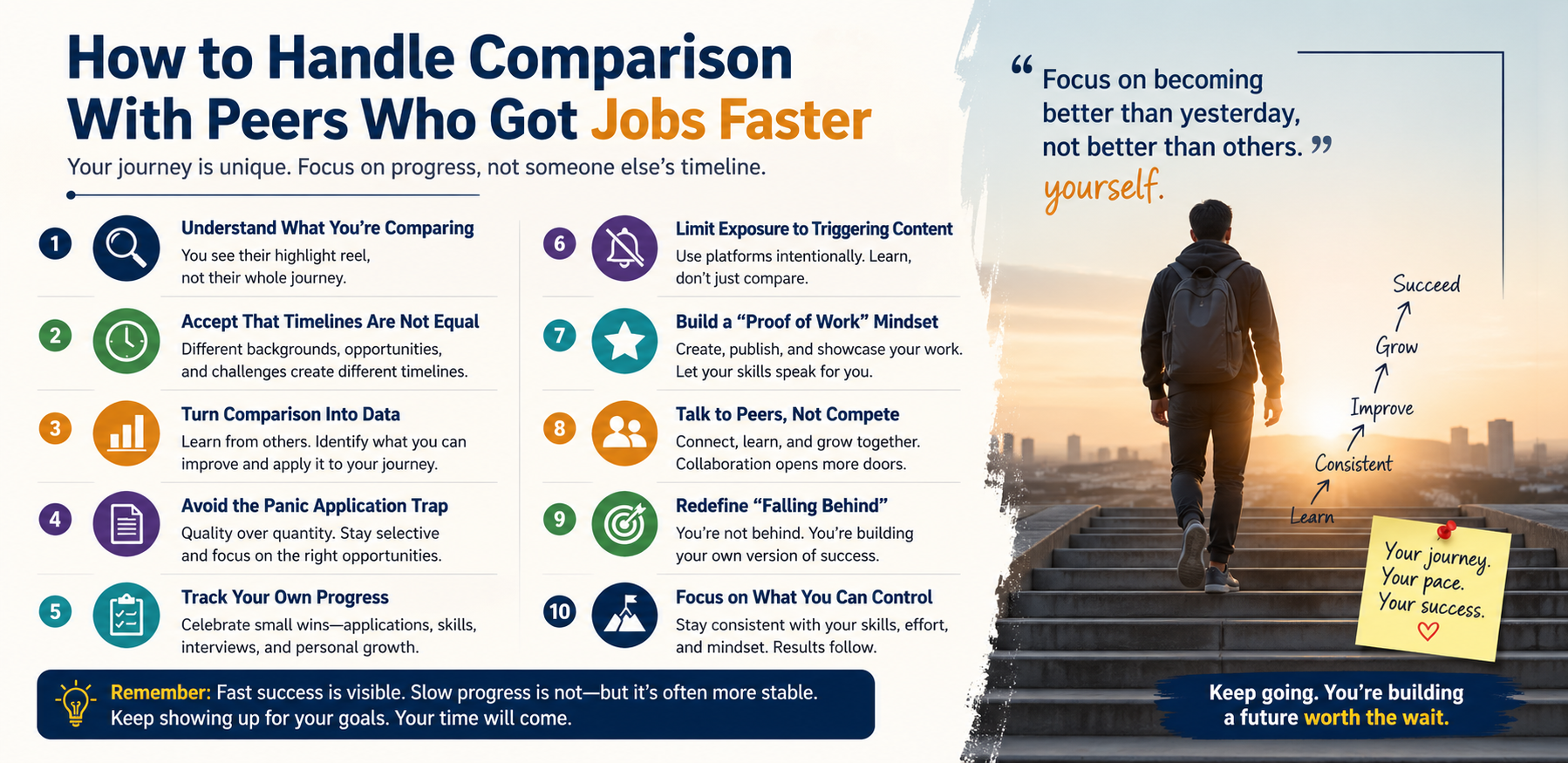
1. Understand What You’re Actually Comparing
When we hear about someone or see an online post where someone announces their job offer, we usually think, “They are so lucky. They got a job so quickly, and I am still struggling.”
But the important thing is to focus on the full reality.
We should try to understand how they got the job — their background, advantages, referrals, number of rejections, and skills. When we look at all these factors, we realize that, just like us, they also struggled to reach that point.
And in the same way, by continuing our efforts, we will also get a job one day.
2. Accept That Timelines Are Not Equal
It is not necessary that if two people start searching for a job at the same time, they will get results at the same time. This doesn’t happen because both people are different. Their thinking, abilities, and actions are different, which strongly affect the results.
Many factors play an important role in changing the outcome, such as skill level, network strength, location, opportunities, risk-taking ability, and consistency.
A person who works hard, regularly applies for jobs, builds a strong network, and focuses on improving their skills is more likely to get a job faster compared to someone who only focuses on applying for jobs.
3. Turn Comparison Into Data to Handle Comparison With Peers
To handle comparison, the most important thing is to understand others’ success.
If you feel demotivated by others’ success, you may get stuck and stop growing. But if you learn from others and apply those lessons to yourself, your chances of getting a job will increase.
If your friends got jobs earlier than you, first try to understand what they did differently that you can also do. Ask yourself questions like: Are they applying more consistently? Do they have a better resume? Are they networking actively? Are they targeting a specific role?
This way, instead of feeling demotivated, you will focus more on improving yourself.
4. Avoid the “Panic Application” Trap
When we see others getting jobs quickly, we often feel pressure. We start thinking that we are falling behind. Because of this pressure, we either apply everywhere without thinking or accept low-quality roles just to get a job fast. But this can negatively affect your future.
That is why it is better to stay selective. If you focus on roles that truly match your skills, your chances of getting a job increase. Most importantly, focus on the quality of your applications rather than the quantity.
5. Track Your Own Progress to Handle Comparison With Peers
One of the biggest reasons we compare ourselves with others is that we focus too much on results. Many people only look at whether they achieved their goal or not, and because of this, they start feeling demotivated.
Instead, you should focus on and track your progress.
Track things like how many applications you sent, how many interviews you received, what skills you learned, and how your portfolio is improving. When you track your progress, you start seeing that you are actually growing.
This helps you compare yourself less with others and focus more on your own actions.
6. Limit Exposure to Triggering Content
If you keep constantly scrolling job updates, it can increase your anxiety.
You don’t need to quit platforms like LinkedIn—you just need to use them intentionally. Spend more time learning instead of comparing. Follow people who share useful insights, not just achievements, and take breaks when needed.
Conclusion
Comparing yourself to peers who got jobs faster can feel discouraging, but it doesn’t define your journey. Everyone’s path is shaped by different experiences, opportunities, and timing. What matters more than speed is direction and consistency.
Instead of letting comparison lower your confidence, use it as a signal to reflect, learn, and improve your approach. Focus on building your skills, strengthening your portfolio, and applying with clarity rather than urgency.
“Focus on your own journey and explore better opportunities on Best Job Tool where your progress matters more than comparisons.”


Leave a Reply