Introduction
It is very important for companies to conduct structured interviews without sounding robotic so they can run the hiring process fairly and consistently.
Structured interviews are important because they help companies compare candidates fairly, reduce personal bias, improve hiring decisions, keep interviews focused, and create a better hiring process.
If a company conducts structured interviews properly, it gets a better chance to select the best candidate, and the company’s image also improves.
In this article, we will understand how a company can run structured interviews without sounding robotic.
How to Run Structured Interviews Without Sounding Robotic?
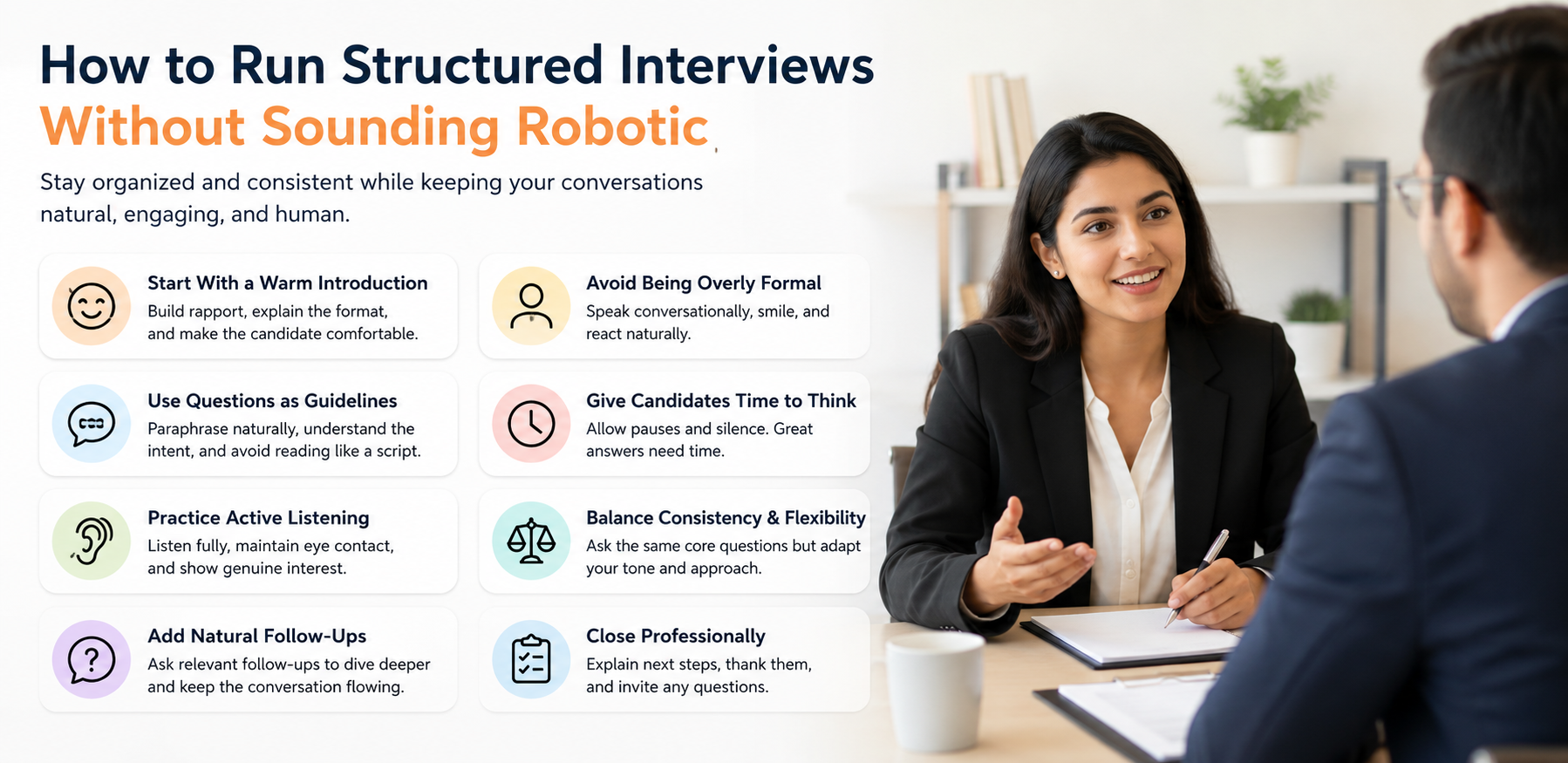
1. Start With a Warm Introduction for Structured Interviews
During an interview, if the candidate enters, greets you, and you immediately start asking questions, the candidate may feel very nervous and uncomfortable. Because of this, the interview may not go well. That is why it is important to first make the candidate feel comfortable.
To make the candidate comfortable, you can introduce yourself, explain the interview format, or thank the candidate for joining. When candidates feel comfortable, their nervousness reduces, and they are able to give their best effort during the interview.
2. Use Questions as Guidelines, Not Scripts
It is important for recruiters to avoid asking questions like they are reading from a script. Recruiters should ask questions in a natural communication style because an interview is an interaction between the candidate and the recruiter where both get a chance to know each other.
If a recruiter asks questions in a scripted way, they can easily sound robotic, and the interview may become just a question-and-answer round instead of an effective interaction.
3. Practice Active Listening for Structured Interviews
A recruiter’s job is not only to ask questions. It is also important to listen to the candidate carefully so the candidate feels heard and understood.
A good recruiter maintains eye contact, responds naturally, and does not interrupt. Because of this, the candidate feels that the recruiter is listening carefully, and the interview becomes more engaging.
4. Add Natural Follow-Up Questions
To conduct a structured interview, you can add natural follow-up questions because they help you understand the candidate better and create a real conversation.
You can ask follow-up questions like, “What was the biggest challenge there?” or “How did your team react?”
5. Avoid Sounding Overly Formal
An interview is a professional process, and both the recruiter and the candidate should behave professionally during the interview. But this does not mean that the recruiter needs to be overly formal because that can make them sound very formal and robotic. As a result, candidates may become nervous, and the interview can become difficult for them.
That is why recruiters should be professional but not overly formal. Try to speak clearly, use simple language, and smile during interviews because it can make candidates feel comfortable. When candidates feel comfortable, you can see their real side more clearly.
6. Give Candidates Time to Think
One of the most effective ways to make interviews structured is to give candidates time to think. If you ask questions in a hurry and force candidates to answer quickly, they may feel pressured. Because of this, they may not give clear answers, and the interaction can become stressful.
That is why recruiters should allow candidates a few seconds to think before speaking.
Conclusion
Structured interviews work best when they combine consistency with genuine human interaction. While having a clear format helps companies evaluate candidates fairly, the way questions are delivered matters just as much. Candidates remember interviewers who listen carefully, communicate naturally, and create a comfortable environment.
By balancing preparation with authentic conversation, recruiters and hiring managers can conduct structured interviews that feel professional, engaging, and far less robotic.
“Build smarter and more human-centered hiring processes with better interview strategies on Best Job Tool.”



Leave a Reply