Introduction
Many job seekers rely solely on resumes and LinkedIn profiles to showcase their qualifications. While these tools remain important, they often fail to fully demonstrate how a candidate thinks, solves problems, Library and creates results. Recruiters increasingly want evidence of real-world impact rather than just a list of responsibilities.
A mini-case-study library is one of the most effective ways to stand out in a competitive job market. Instead of simply claiming that you have certain skills, you provide examples that show how you applied those skills to solve challenges and achieve measurable outcomes.
The best part is that you do not need decades of experience to create one. Students, freshers, career changers, freelancers, and experienced professionals can all benefit from documenting projects, achievements, and learning experiences in a structured format.
A well-developed case-study library becomes a powerful career asset that supports interviews, networking conversations, portfolio presentations, and job applications.
What Is a Mini-Case-Study Library?
A mini-case-study library is a collection of short project summaries that demonstrate your skills and professional impact.
Each case study typically explains:
- The challenge or situation
- Your role
- Actions you took
- Results achieved
- Key lessons learned
Think of it as a portfolio of problem-solving examples.
Rather than telling recruiters what you can do, you show them how you have delivered value in real situations.
Why Recruiters Value Case Studies
Recruiters often review hundreds of resumes for a single role.
Most resumes contain similar phrases such as:
- Team player
- Problem solver
- Strong communicator
- Results-driven professional
Mini-case studies provide evidence behind those claims.
They help recruiters understand:
- Your thought process
- Decision-making ability
- Technical skills
- Leadership potential
- Communication capabilities
- Business impact
Concrete examples are often more memorable than lists of qualifications.
Start With Projects You Have Already Completed
Many professionals assume they lack enough experience to create case studies.
In reality, valuable examples can come from various sources.
Potential projects include:
Academic Projects
Research assignments, group projects, and capstone work.
Internships
Process improvements, reports, or contributions made during internships.
Freelance Work
Client projects and consulting assignments.
Volunteer Activities
Community initiatives and nonprofit support work.
Full-Time Employment
Workplace achievements and business improvements.
The goal is to demonstrate skills and results rather than project size.
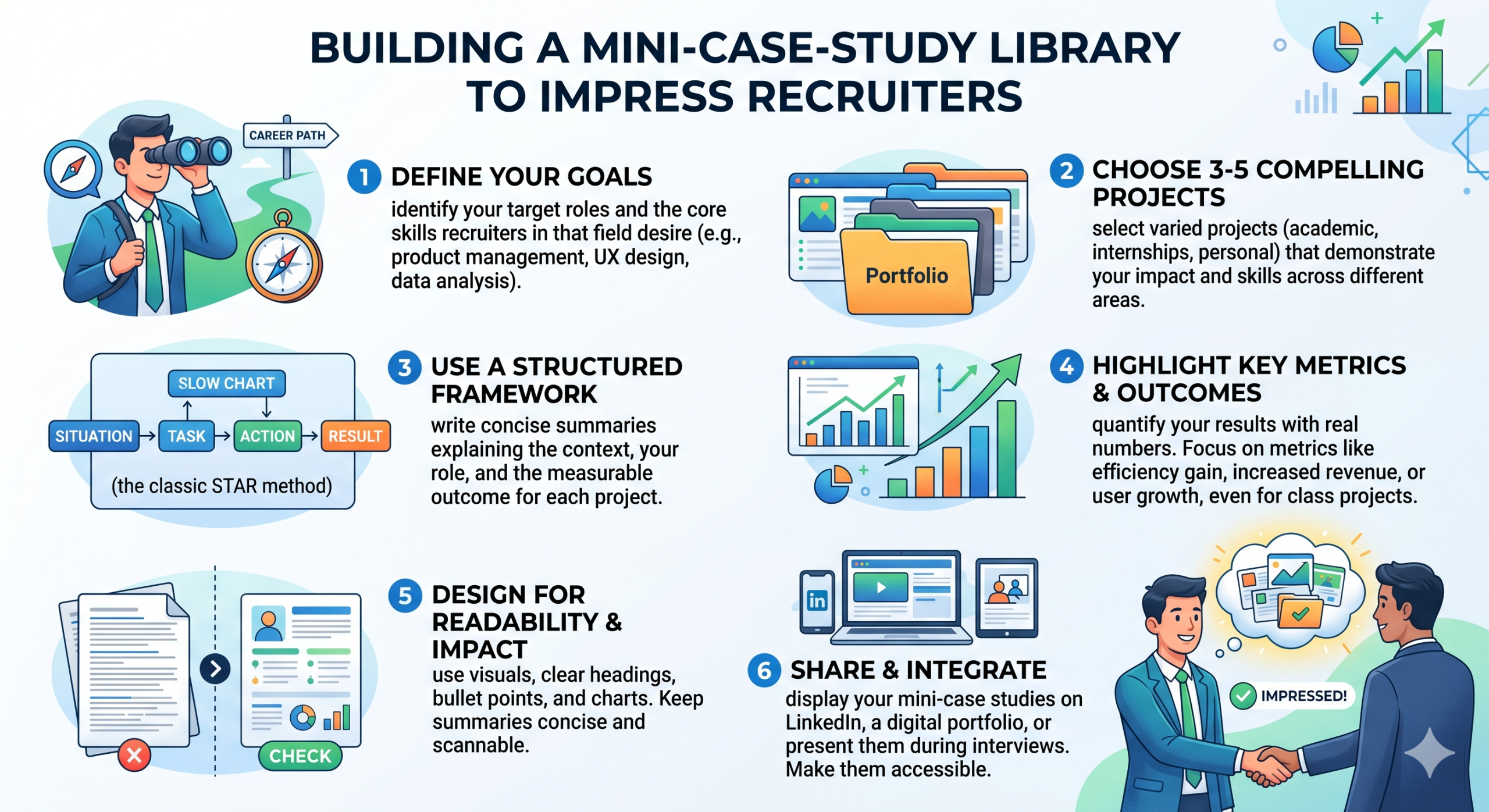
Use a Simple Structure for Every Case Study
Consistency makes your library easier to review.
A practical format includes:
Situation
Describe the challenge or objective.
Task
Explain your specific responsibility.
Action
Outline the steps you took.
Result
Highlight measurable outcomes whenever possible.
Example:
Situation: A student organization struggled with low event attendance.
Task: Increase participation for upcoming events.
Action: Developed a social media promotion strategy and improved event communication.
Result: Attendance increased by 40% over three months.
This format helps recruiters quickly understand your contribution and impact.
Focus on Results and Outcomes
Strong case studies emphasize outcomes rather than activities.
Instead of writing:
- Managed social media accounts.
Write:
- Developed content campaigns that increased engagement by 35%.
Instead of:
- Assisted with recruitment activities.
Write:
- Helped streamline candidate screening, reducing hiring time by 15%.
Whenever possible, include:
- Percentages
- Revenue impact
- Time savings
- Productivity improvements
- Customer satisfaction improvements
Measurable results strengthen credibility.
Include a Variety of Skills
A strong case-study library should demonstrate multiple competencies.
Examples include:
Leadership
Managing teams or initiatives.
Communication
Presentations, stakeholder engagement, and collaboration.
Problem-Solving
Identifying challenges and implementing solutions.
Productivity
Improving efficiency and workflow processes.
Technical Skills
Using tools, software, or analytical methods.
A diverse collection provides a more complete picture of your capabilities.
Create Case Studies for Remote Work Experience
As remote work continues to grow, recruiters often look for evidence that candidates can succeed in distributed environments.
Remote-focused case studies may highlight:
- Virtual collaboration
- Remote project management
- Online communication
- Productivity systems
- Cross-functional teamwork
Examples can demonstrate your ability to work independently while maintaining strong collaboration.
This can be particularly valuable for remote and global opportunities.
Build Case Studies Around Learning Experiences
Not every case study needs to involve major success.
Projects that include learning experiences can also be valuable.
For example:
- Implementing a new process
- Solving an unexpected challenge
- Adapting to changing requirements
- Recovering from mistakes
Recruiters often appreciate candidates who demonstrate growth, resilience, and continuous improvement.
The ability to learn from experience is a highly valued professional trait.
Organize Your Library Professionally
Your case-study collection should be easy to access and present.
Popular formats include:
PDF Portfolio
Professional and easy to share.
Personal Website
Provides ongoing visibility.
LinkedIn Featured Section
Highlights key projects publicly.
Presentation Deck
Useful during interviews and networking discussions.
Choose a format that aligns with your industry and career goals.
Professional presentation enhances credibility.
Use Case Studies During Interviews
A mini-case-study library becomes particularly valuable during interviews.
Many interview questions ask candidates to describe past experiences.
Examples include:
- Tell me about a challenge you solved.
- Describe a leadership experience.
- Explain a project you are proud of.
- Share an example of teamwork.
Having prepared case studies allows you to respond confidently with structured, evidence-based answers.
This preparation often improves interview performance significantly.
Update Your Library Regularly
Your portfolio should evolve alongside your career.
Consider updating it when:
- Completing new projects
- Achieving measurable results
- Learning new skills
- Finishing certifications
- Changing industries
Regular updates ensure your examples remain relevant and aligned with career objectives.
A current portfolio reflects ongoing growth and professional development.
Incorporate Productivity and Career Development Projects
Case studies do not need to be limited to formal employment.
Examples can include:
- Personal productivity systems
- Time-management improvements
- Learning initiatives
- Career transition projects
- Professional development activities
These examples demonstrate initiative and self-management skills that employers value highly.
Especially in remote environments, self-directed achievements can be powerful indicators of future success.
Financial Benefits of a Strong Portfolio
A compelling case-study library can contribute to stronger career outcomes.
Potential benefits include:
- More interview opportunities
- Better salary negotiations
- Increased recruiter interest
- Improved personal branding
- Greater professional visibility
Investing time in documenting achievements often generates long-term returns throughout your career.
Your portfolio becomes a valuable professional asset.
Using Career Platforms to Identify Relevant Skills
Creating effective case studies becomes easier when you understand what employers are seeking.
Global job platforms such as BEST JOB TOOL help professionals identify in-demand skills, emerging roles, and workforce trends across industries.
BEST JOB TOOL also provides insights into remote work opportunities and employer expectations, allowing candidates to align their case studies with current market needs.
By studying industry requirements, professionals can create stronger portfolios that resonate with recruiters and hiring managers.
Conclusion
A mini-case-study library is one of the most effective tools for demonstrating professional value in today’s competitive job market. Rather than relying solely on resumes and job titles, candidates can showcase real examples of problem-solving, leadership, communication, productivity, and measurable impact.
Whether you are a student, fresher, career changer, freelancer, or experienced professional, documenting your achievements through structured case studies can significantly improve your ability to stand out. These examples provide recruiters with concrete evidence of your capabilities and help create stronger interview conversations.
As hiring increasingly focuses on demonstrated skills and results, professionals who build and maintain a strong case-study library position themselves for greater opportunities. Combined with insights from platforms like BEST JOB TOOL, a well-crafted portfolio can become a powerful asset for long-term career growth and success.




Leave a Reply