Introduction
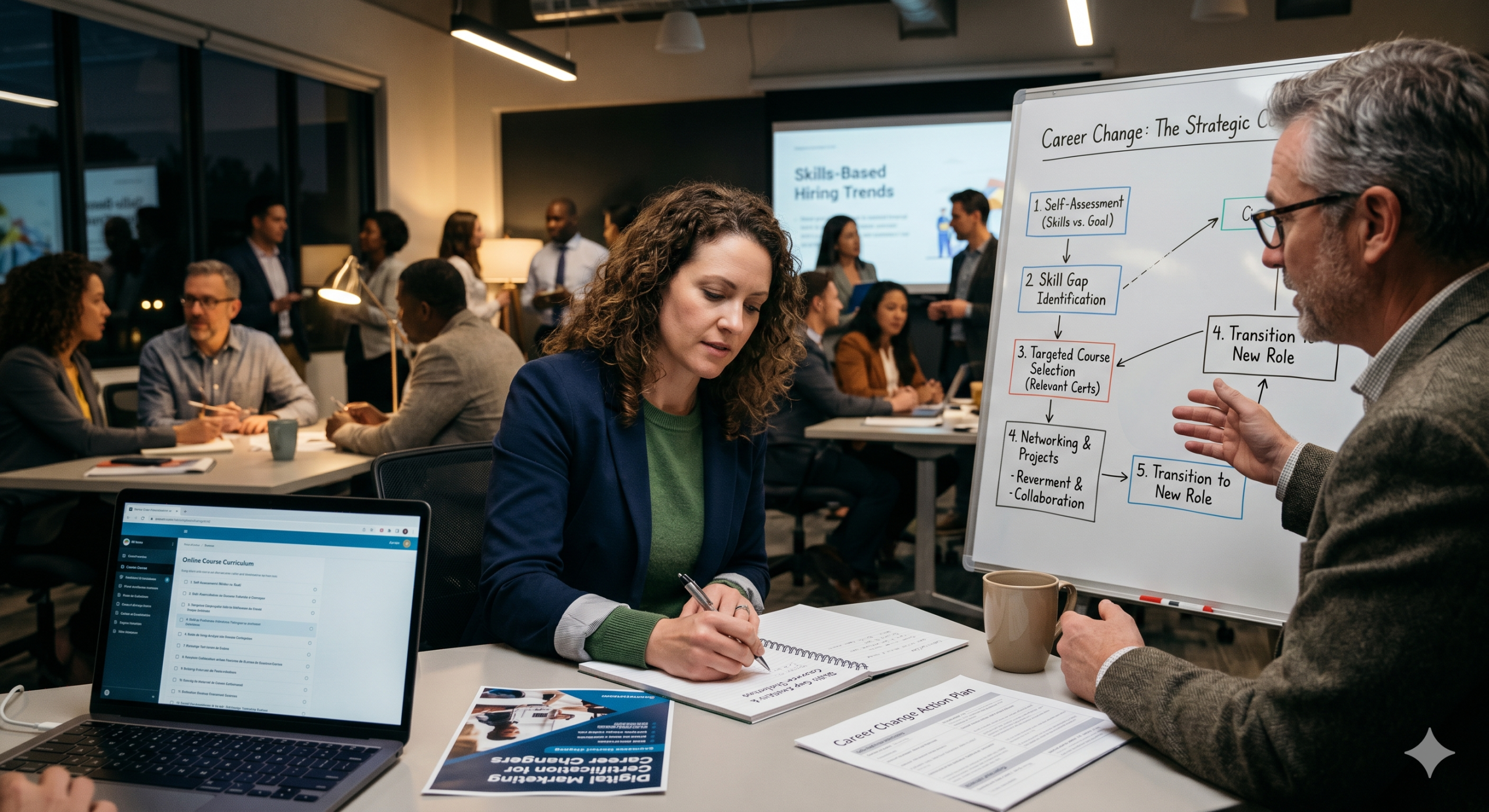
Changing careers can feel overwhelming, especially when moving into an industry where you have little direct experience. Many professionals respond by enrolling in numerous courses, collecting certificates, and spending strategically months learning. While education is valuable, taking courses without a clear strategy often leads to wasted time, money, and effort.
The most successful career changers use courses differently. They view learning as a tool to bridge specific skill gaps rather than as a substitute for experience. Instead of collecting dozens of certificates, they focus on acquiring practical knowledge that helps them demonstrate competence to employers.
In today’s workforce, where remote work, digital learning, and skills-based hiring continue to grow, strategic learning has become one of the most effective ways to transition into a new profession. The key is choosing courses that directly support your career goals and combining them with practical application.
This guide explains how to use courses effectively during a career change and avoid common mistakes that slow professional progress.
Start With a Clear Career Target
Before enrolling in any course, define your destination.
Many people begin learning before deciding where they want to go.
Ask yourself:
- What role do I want?
- Which industry interests me?
- What responsibilities appeal to me?
- What skills do employers require?
Examples include:
- Digital Marketing Specialist
- Data Analyst
- Project Manager
- Human Resources Professional
- UX Researcher
- Customer Success Manager
A clear target allows you to select courses that support a specific outcome.
Without direction, learning often becomes unfocused.
Research the Skills Employers Actually Want
Not every course teaches skills that employers value.
Before investing time in training, study job descriptions.
Look for recurring requirements such as:
- Technical skills
- Software proficiency
- Industry knowledge
- Communication abilities
- Analytical capabilities
- Project management experience
Create a list of frequently requested competencies.
This list becomes the foundation of your learning plan.
Courses should help close these specific gaps.
Focus on High-Impact Skill Gaps
Career changers often attempt to learn everything at once.
A more effective approach is prioritization.
Identify:
Skills You Already Have
Transferable skills from previous roles.
Examples:
- Communication
- Leadership
- Customer service
- Problem-solving
- Project coordination
Skills You Need to Develop
New capabilities required for your target profession.
Focus your learning on these areas.
This approach reduces unnecessary coursework and accelerates career transitions.
Choose Practical Courses Over Theoretical Ones
Employers generally care more about what you can do than what you know.
When evaluating courses, prioritize those that include:
- Real projects
- Case studies
- Simulations
- Assignments
- Portfolio-building exercises
Practical learning creates evidence of your abilities.
For example:
A data analytics course that includes dashboard projects is often more valuable than one focused entirely on theory.
The goal is to develop skills you can demonstrate during interviews.
Build a Portfolio Alongside Learning
Courses become significantly more valuable when paired with practical work.
As you complete training:
- Create projects
- Build case studies
- Document outcomes
- Share results online
Examples include:
Marketing Career Change
Create sample campaigns and content strategies.
Data Analytics Career Change
Develop dashboards and data Strategically visualizations.
Project Management Career Change
Build project plans and process improvement examples.
A portfolio transforms learning into proof of capability.
Recruiters often respond more positively to demonstrated skills than certificates alone.
Avoid the Certificate Collection Trap
Many career changers believe more certificates automatically improve employability.
In reality, employers often prefer:
- Relevant experience
- Demonstrated skills
- Problem-solving ability
- Practical examples
Ten unrelated certificates rarely provide more value than one strong project.
Instead of asking:
- “Which course should I take next?”
Ask:
- “How can I apply what I already learned?”
Application is where career value is created.
Use Courses to Understand Industry Language
One hidden benefit of courses is exposure to professional terminology.
Every industry has its own language.
Learning helps you understand:
- Common tools
- Industry frameworks
- Professional concepts
- Business challenges
- Current trends
This knowledge improves:
- Interviews
- Networking conversations
- Resume writing
- Professional confidence
Being able to speak the language of your target industry can significantly improve credibility.
Leverage Remote Learning Opportunities
Remote education has made career transitions more accessible than ever.
Benefits include:
- Flexible schedules
- Lower costs
- Global access
- Self-paced learning
- Industry-recognized certifications
Professionals can now learn Strategically while maintaining existing employment.
This reduces financial risk during career transitions.
Remote learning also helps develop self-management skills that are valuable in today’s workforce.
Combine Learning With Networking
Courses alone rarely create opportunities.
Networking often accelerates career transitions significantly.
Consider:
- Joining course communities
- Participating in webinars
- Connecting with instructors
- Engaging with industry professionals
- Sharing learning progress on Strategically LinkedIn
Networking helps you:
- Learn industry expectations
- Discover opportunities
- Gain mentorship
- Build professional visibility
Relationships often complement learning more effectively than additional certifications.
Create a Career Transition Timeline
Strategic learning requires structure.
Develop a timeline that includes:
Month 1
Research roles and identify skill gaps.
Month 2–3
Complete foundational courses.
Month 4–5
Build projects and portfolio examples.
Month 6
Begin networking and applying for opportunities.
A timeline creates accountability and prevents endless preparation.
Many career changers spend too long learning and not enough time applying their skills.
Include Productivity and Financial Planning
Career transitions require both time and financial resources.
Productivity strategies may include:
- Weekly learning goals
- Time blocking
- Project milestones
- Progress tracking
Financial planning should include:
- Course budgets strategically
- Emergency savings
- Transition timelines
- Income expectations
Managing both learning and finances strategically reduces stress and improves decision-making.
A sustainable transition is often more successful than a rushed one.
Showcase Learning Effectively on Your Resume
Employers value relevant learning when it is presented correctly.
Instead of listing certificates only, include:
Skills Developed
Highlight practical competencies.
Projects Completed
Showcase real applications.
Results Achieved
Demonstrate measurable outcomes.
This approach shifts attention from education to capability.
Recruiters often care more about outcomes than course completion alone.
Finding the Right Learning Priorities
Understanding market demand helps ensure your learning efforts align with employer needs.
Global career platforms such as BEST JOB TOOL help professionals identify in-demand skills, emerging roles, and workforce trends across industries.
BEST JOB TOOL also provides insights into remote work opportunities and evolving employer expectations, allowing career changers to focus their learning on areas with strong growth potential.
Aligning courses with market demand increases the likelihood of a successful transition.
Conclusion
Courses can be powerful tools during a career change, but only when used strategically. The goal is not to accumulate certificates—it is to build the skills, knowledge, and confidence necessary to succeed in a new field.
Successful career changers start with a clear target, identify specific skill gaps, choose practical learning opportunities, and apply new knowledge through projects and real-world experience. They combine learning with networking, portfolio development, productivity systems, and financial planning to create a structured path toward their goals.
As skills-based hiring continues to Strategically expand and remote learning becomes more accessible, strategic education offers a practical route into new industries. Combined with career insights and opportunities available through BEST JOB TOOL, a focused learning strategy can help professionals transition successfully and build rewarding careers in entirely new fields.





Leave a Reply