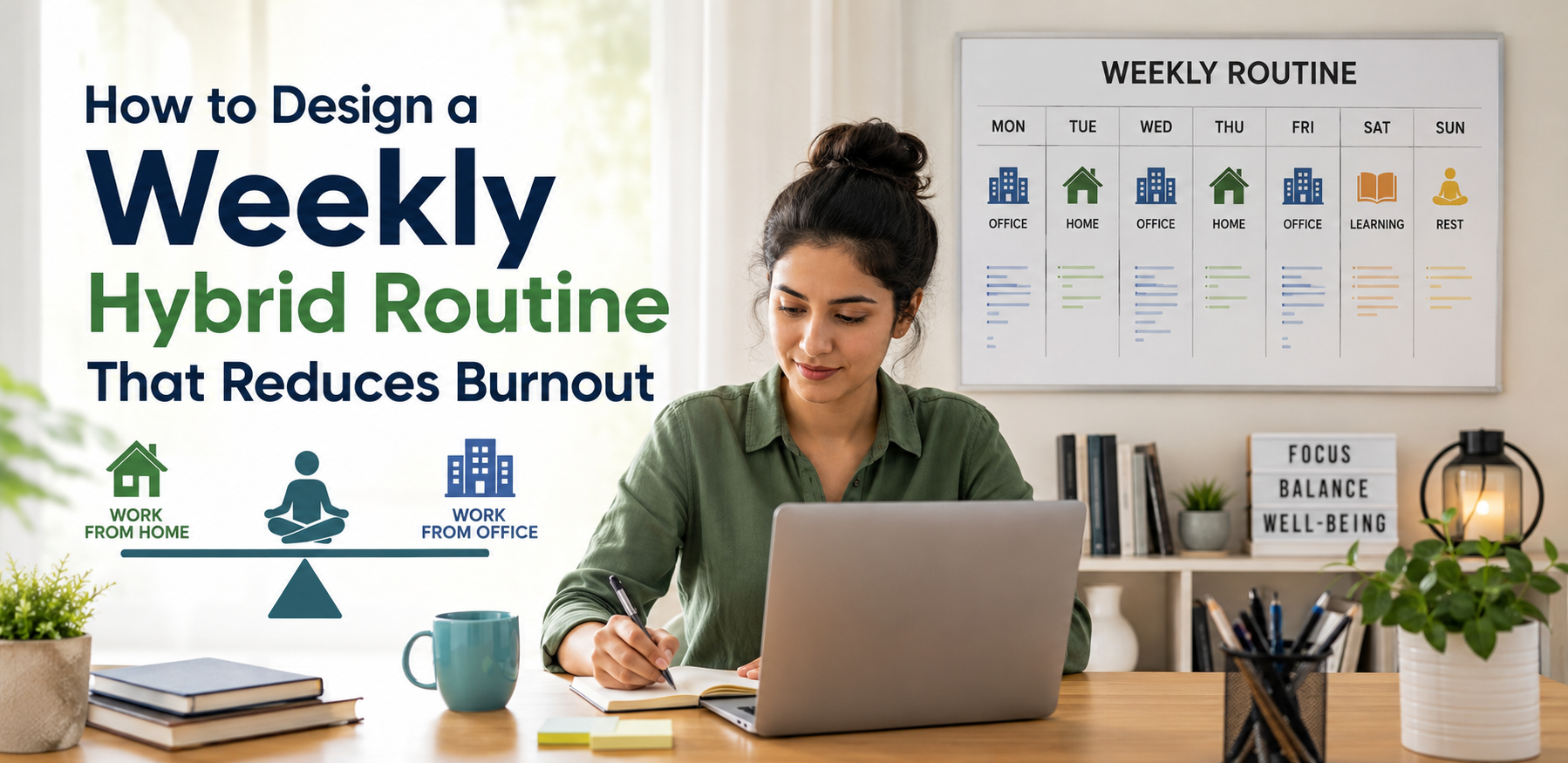
Introduction: Design a Weekly Hybrid Routine
Burnout is becoming very common in today’s work culture. Many people are working in hybrid roles, where they split their time between home and office. While this model gives flexibility, it also creates confusion, imbalance, and mental fatigue if not managed properly.
A good weekly hybrid routine can help reduce stress, improve focus, and bring stability to your life. In this article, we will understand how to design a weekly hybrid routine that helps you avoid burnout and stay productive.
What is a Hybrid Routine?
A hybrid routine means you divide your working days between:
- Working from home (WFH)
- Working from office (WFO)
For example:
- 2–3 days in office
- 2–3 days at home
- 1 flexible or rest day (sometimes)
But a hybrid routine is not just about where you work. It is also about how you manage energy, tasks, rest, and personal life across the week.
How to Design a Weekly Hybrid Routine That Reduces Burnout?
Step 1: Understand Your Energy Pattern
Everyone has a different energy level during the week. Before creating a routine, observe yourself:
- When do you feel most productive?
- Which days feel stressful?
- Do you feel more focused at home or office?
- How long does it take to recover after office travel?
For example:
- Some people feel fresh on Monday and Tuesday
- Some feel tired after office days
- Some work better at home in deep focus tasks
Understanding your energy pattern helps you design a routine that fits your real life, not an ideal schedule.
Step 2: Fix Your Office and Home Days Smartly
Do not randomly select office days. Instead, plan them based on task type and energy.
Office days are best for:
- Meetings and collaboration
- Team discussions
- Planning sessions
- Brainstorming work
- Tasks that need communication
Home days are best for:
- Deep focused work
- Writing, coding, designing
- Research tasks
- Completing individual projects
Example structure:
- Monday: Office
- Tuesday: Home
- Wednesday: Office
- Thursday: Home
- Friday: Office
- Saturday: Light work or learning
- Sunday: Rest
This is just an example. You can adjust based on your job.
Step 3: Create a Weekly Theme Plan
Instead of treating every day the same, give themes to your days.
Example:
- Monday: Planning + meetings
- Tuesday: Deep work
- Wednesday: Collaboration
- Thursday: Execution work
- Friday: Review + finishing tasks
- Saturday: Skill building or personal growth
- Sunday: Rest and reset
This reduces confusion and helps your brain understand what to expect each day.
Step 4: Add Buffer Time Between Work and Personal Life
One major reason for burnout is no gap between work and personal life.
You should always add buffer time like:
- 30–60 minutes after work for relaxation
- Short walk after office work
- No screen time before sleep
- Light music or reading after work
This helps your brain understand that work has ended.
Step 5: Balance Deep Work and Light Work
Not all tasks require the same energy.
Deep work includes:
- Problem-solving
- Writing reports
- Coding
- Strategy building
Light work includes:
- Emails
- Small updates
- Meetings
- Admin tasks
A good hybrid routine mixes both. Do deep work when your energy is high and light work when your energy is low.
Example:
- Morning: Deep work
- Afternoon: Meetings
- Evening: Light tasks
Step 6: Keep One Recovery Day
Many people ignore recovery time. This leads to mental exhaustion.
A recovery day means:
- No heavy work
- No stressful tasks
- Only light activities
You can use this day for:
- Sleep
- Family time
- Hobbies
- Walks
- Planning next week
Even one proper rest day can reduce burnout significantly.
Conclusion: Design a Weekly Hybrid Routine
A weekly hybrid routine is not about strict rules. It is about balance, structure, and awareness. When you understand your energy, plan your office and home days properly, and include rest, you naturally reduce burnout.
The goal is simple: work smarter, not harder.
A good hybrid routine gives you:
- Better focus
- Less stress
- More productivity
- Improved mental health
- Balanced personal life
Start small, adjust weekly, and build a routine that truly fits your life.
You can read more such blogs with the help of Best Job Tool.






Leave a Reply