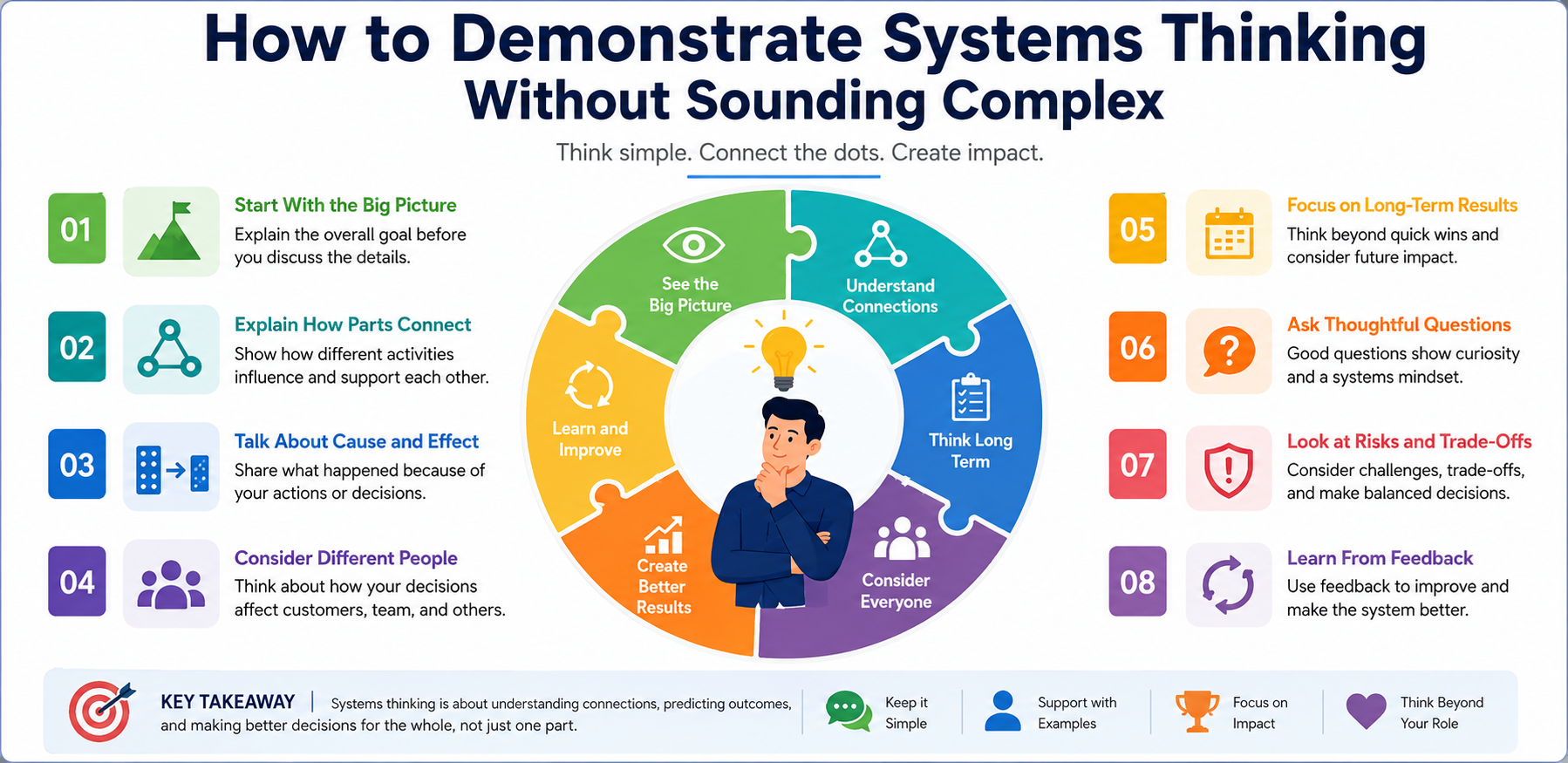
Introduction: Demonstrate Systems Thinking
Many job seekers believe they need to use difficult words or technical language to impress interviewers. They think speaking in a complicated way makes them sound smarter. However, this is not true. In most interviews, recruiters appreciate candidates who explain their ideas in a simple and clear way.
One skill that employers value is systems thinking. Although the term sounds technical, the idea is actually very simple. Systems thinking means understanding how different parts of a situation work together instead of looking at only one part. It helps people make better decisions, solve problems more effectively, and understand the bigger picture.
The good news is that you do not need to use business jargon or complicated explanations to demonstrate systems thinking. You simply need to show that you understand relationships, causes, effects, and long-term outcomes.
In this article, you will learn practical ways to demonstrate systems thinking naturally and confidently without sounding overly complex.
What Is Systems Thinking?
Before learning how to show systems thinking, it is important to understand what it means.
Systems thinking is the ability to see how different parts of a process, team, or organization are connected. Instead of solving one problem without considering the consequences, a systems thinker looks at the complete picture.
For example, imagine a company wants to speed up customer support.
A person without systems thinking might simply suggest hiring more support agents.
A systems thinker would ask questions like:
- Why are customers contacting support?
- Can the product be improved?
- Can FAQs answer common questions?
- Can automation reduce repetitive work?
- Will hiring more people solve the real issue?
This approach focuses on understanding the root cause instead of only fixing the immediate problem.
How to Demonstrate Systems Thinking Without Sounding Complex?
1. Start With the Big Picture
One of the easiest ways to show systems thinking is to explain the overall goal before discussing small details.
Instead of saying:
“I focused on finishing my task.”
You can say:
“My goal was to help the entire project move forward, so I completed my task while coordinating with other team members.”
This simple change shows that you understand how your work fits into a larger process.
Interviewers appreciate candidates who think beyond their individual responsibilities.
2. Explain How Different Parts Connect
Systems thinking is about connections.
Whenever you describe a project, explain how different activities affected one another.
For example:
“Improving the onboarding process reduced customer confusion, which also lowered support requests and improved customer satisfaction.”
Notice that this explanation is simple.
There are no difficult business terms.
Instead, it clearly explains how one improvement created several positive results.
3. Talk About Cause and Effect
Good systems thinkers understand that every action creates consequences.
When answering interview questions, explain what happened because of your decisions.
For example:
“We changed the reporting schedule, which gave managers earlier information. As a result, problems were identified faster, and project delays became less common.”
This shows logical thinking without sounding complicated.
4. Mention Different Stakeholders
Another way to demonstrate systems thinking is by considering how decisions affect different people.
Instead of saying:
“We completed the project quickly.”
You can say:
“We completed the project quickly while making sure customers, team members, and managers all received the information they needed.”
This shows awareness of multiple perspectives.
Employers like candidates who think about everyone involved.
5. Focus on Long-Term Results
Many people only discuss immediate success.
Systems thinkers also think about the future.
For example:
“Instead of fixing the issue temporarily, we created a process that prevented the same problem from happening again.”
This demonstrates planning and sustainable problem-solving.
6. Ask Thoughtful Questions
Interviewers often evaluate your thinking through the questions you ask.
Good questions include:
- How does this team work with other departments?
- What challenges affect multiple teams?
- How is success measured across the organization?
- What improvements are the company currently focusing on?
These questions show curiosity and an interest in understanding the whole organization.
Conclusion: Demonstrate Systems Thinking
Systems thinking does not require complicated words or advanced business knowledge. It is simply the ability to understand how different parts of a situation connect and influence one another. Employers value this skill because it leads to better problem-solving, smarter decisions, and stronger teamwork.
The best way to demonstrate systems thinking is to communicate clearly, explain cause and effect, consider different perspectives, and support your ideas with real examples. Focus on the bigger picture while keeping your language simple and easy to understand. When you consistently show that you think beyond individual tasks and consider the impact of your decisions, you will leave a positive impression on interviewers and employers alike.






Leave a Reply